LEADERSHIP FRICTION: How Canadian Leaders Can Take the Parking Brake Off Productivity

by Leslie Rohonczy, IMC, PCC, Executive Coach & Author

(LISTEN TO THE NARRATED AUDIOARTICLE VERSION)

What if the biggest drag on organizational performance isn't effort or access, but the way leaders unintentionally slow things down? Canada has spent years trying to solve its productivity problem. I can't help but wonder whether we're diagnosing the wrong patient.

Governments debate productivity, economists analyze it, CEOs talk about it on earnings calls, and we hear about technology, innovation, regulation, investment, artificial intelligence, and labour shortages in the media and online. Those conversations matter because according to OECD's 2025 Economic Survey, Canada's productivity has been lagging its peers for many years.

But after spending almost two decades coaching leaders inside organizations, I've become convinced there's another part of the conversation that deserves more attention: Leadership. More specifically, how small leadership behaviours that seem completely harmless on their own can slow an organization to a crawl.

Imagine driving your car with the parking brake engaged on one click. You'd probably still get where you're going, but the engine would need to work a little harder, and you'd burn a bit more fuel. You might not even notice it at first.

Now imagine clicking that parking brake up another notch; then another; and another. Eventually, you'd be pressing the accelerator harder and harder, while wondering why the car feels sluggish.

That's what I see inside many organizations. One extra approval; one more meeting that "everyone should attend"; one leader stepping in to do because it's faster than explaining; one decision climbing another level because it feels safer to have the boss review it first." None of those things feels like a crisis, but collectively, it's like driving with the parking brake on.

Leaders who create the most friction are often the hardest-working people in the organization. They're dedicated, they care deeply, they're incredibly capable... and they're also exhausted. I've lost count of the number of leaders who've told me, "I'm involved in everything," with a touch of pride. When they offer this up as evidence of their commitment, I see it as a warning light on their leadership dashboard.

One senior executive I coached was frustrated that every important decision landed on her desk. She genuinely believed her leaders lacked confidence. I spent several weeks observing her leadership team meetings and one-on-one meetings. Whenever a difficult question surfaced, all eyes turned toward her. Experience had taught them that if they waited a few more seconds, the answers would arrive. From her perspective, she was simply being helpful. But before anyone else had a chance to wrestle with the issue (and learn from the experience), she'd offered a suggestion, answered the question, or made the decision herself.

As a leader, when you're capable, experienced, and genuinely committed to helping your people succeed, stepping in feels responsible, and the truth is that sometimes it is. But the challenge comes when that strong desire to help turns into over-functioning.

One of the practices I use to coach leaders is called 'Leave It Where It Lies'. It's super simple, and a great practice to experiment with. If someone else owns the work, the decision, or the problem, leave the ownership with them. Coach them, support them, challenge their thinking, and ask powerful questions designed to create greater awareness. Just don't slip the backpack onto your own shoulders because you think you can carry it more easily.

Unnecessary approvals send a message. Jumping in to rescue teaches a lesson, and decisions you reclaim make the next one more likely to find its way back to your desk. None of that shows up on your productivity dashboard, but it definitely slows the entire organization down, one click of the parking brake at a time.

What if, instead of focusing on becoming more personally productive, we focused on removing friction for everyone around us instead? Ask: "Where have I become a bottleneck? What am I holding that someone else is ready to carry? What would happen if I resisted the urge to help for just sixty more seconds?"


YOUR COACHING CHALLENGE

Over the next week, become a student of your own leadership friction. Don't try to change anything at first. Just notice the moments when you feel the urge to step in, approve something, answer a question, solve a problem, rescue someone who's struggling, or join a meeting because you're worried they might need you.

When you notice the impulse, pause and ask yourself:

  • Does this really belong to me? If not, who does it belong to?

  • What might happen if I leave ownership with the owner?

  • How might I build capability, instead of dependency?

Then make a conscious choice. You may still decide to step in, and sometimes that's exactly what good leadership requires. The goal isn't to become less helpful. It's to become more intentional about when your help creates momentum, and when it just adds another click to the parking brake.

Canada's productivity challenge is real, and solving it will require action from everyone: governments, educators, investors, innovators, and business leaders alike. And inside our own organizations, every one of us can start making a contribution tomorrow morning.

Remember that the parking brake doesn't come off all at once; it comes off one click at a time. What if that's how organizations can become more productive, too?

 If you’d like to explore leadership productivity in your organization, reach out for a free exploratory executive coaching conversation at www.leslierohonczy.com.

SAVING YOUR DEVELOPMENT BUDGET FOR STRUGGLING EMPLOYEES? Invest in Your Strongest Performers for Real ROI

by Leslie Rohonczy, IMC, PCC, Executive Coach & Author

(LISTEN TO THE NARRATED AUDIOARTICLE VERSION)

Think about the strongest performer on your team. When was the last time you deliberately invested in their growth and development?

If it's been a hot minute, that's understandable. Our attention naturally gravitates toward the people who need us most: the employee who's struggling, the new hire who's still finding their feet, or the people navigating conflict, missing deadlines, and falling short of expectations. Those are the situations that feel urgent, and they deserve our attention.

Our highest performers are usually bright, dependable, consistent, and able to solve problems before they ever reach our desks. They deliver what we need when we need it, and they rarely ask for help. And that's exactly where the opportunity begins.

I've become convinced that one of leadership's greatest missed opportunities is failing to keep developing our strongest people. Every leader understands the cost of poor performance: missed deadlines, quality issues, customer complaints, conflict, and a hundred other visible problems that demand our attention every day.

The cost of under-investing in a high performer is much harder to see because it doesn't show up as an urgent crisis. If it does appear on your radar, it'll probably look like unrealized potential: future executives who plateau before anyone notices; high-performing individual contributors who continue troubleshooting instead of learning how to multiply their impact through others; teams that miss the opportunity to learn from people who could have become exceptional mentors, peer coaches, and role models; and organizations that continue benefiting from what these people already know how to do while investing very little in what they might become capable of next.

Most organizations invest significant time and money in courses, conferences, mentoring programs, leadership programs, executive coaching, stretch assignments, and succession planning. The intention is clearly there. But the challenge is knowing where to invest next.

When someone is struggling, the path usually feels obvious. You can see the gap, identify the missing skill, and work together to close it. High performers are different. They're already succeeding, producing excellent work, and they've earned trust. So, it's no surprise that many leaders find themselves wondering, "What exactly would I coach them on?"

I've heard versions of that question many times. "She's forgotten more about finance than I'll ever know." "He's the smartest engineer in the company." "What could I possibly teach someone who's already better than I am?" Those are common, honest questions that reveal one of the biggest misconceptions about leadership development.

There's often another concern sitting just beneath those questions. You may worry that developmental feedback could demotivate someone, especially a high performer who's already succeeding.

In my experience observing hundreds of one-on-one conversations between leaders and their employees over fifteen years, thoughtful developmental feedback is usually received as a meaningful investment in someone's growth. For many high performers, the message isn't, "I'm not good enough." It's, "My leader sees even more potential in me, and is willing to invest in helping me reach it."

Early in our careers, development is largely about building capability. We learn technical skills, improve our communication, strengthen our presentations, become better at delegation, and learn how to navigate conflict. Progress is easy to recognize because we're continually adding new tools to our toolkit.

As we become more experienced, development changes. The work becomes far more reflective. Instead of asking, "What do I need to learn?", the conversation shifts toward questions like:

  • What strengths have contributed to my success?

  • How do those strengths affect the people around me?

  • Where might those strengths be overused?

  • What assumptions have become so familiar that I no longer notice them?

  • How will the next level of leadership ask something different of me?

Those are leadership conversations. Some of the greatest leadership growth I've seen has come from helping someone see a familiar strength through a completely different lens.

One CEO I worked with realized his decisiveness had gradually begun shutting down healthy debate on the executive team. He wasn't trying to dominate discussions. He was simply moving quickly because that's what had always made him successful. Once he saw the pattern, he began inviting opposing viewpoints before making important decisions. His team became far more engaged, and the quality of their decisions improved.

Another leader discovered she was solving too many problems herself. She genuinely believed she was helping her team. Instead, she was unintentionally preventing them from developing their own judgment. As she experimented with stepping back, her team stepped into greater accountability and performance.

A dependable director prided herself on being indispensable, until she came to realize that she had become the biggest barrier to developing her people. Her greatest contribution was no longer doing more. It was creating opportunities for others to grow. (And bonus, she had more capacity for the strategic work she wanted to do.)

None of these leaders needed fixing. Their strengths simply needed to evolve.

Leadership potential isn't a fixed quantity. Some people are already performing at a remarkably high level, and they still have enormous capacity to grow. They may become your future executives, trusted advisors, exceptional mentors, or the people who elevate the performance of everyone around them, simply because of how they show up.

Current performance tells only part of the story. The more interesting question is how much untapped potential still sits beyond what you're seeing today.

We may know our strongest people still have room to grow, but we aren't sure what to talk about in a one-on-one beyond project updates and performance. If that feels familiar, here are six coaching conversations worth having.

  1. Shift the conversation from performance to perspective. Instead of asking, "How's the project going?", ask, "What are you noticing about yourself as a leader that surprised you recently?" or "Where do you think your strengths have the biggest impact on other people?" High performers rarely need help doing the work. They often benefit from understanding the impact they have while doing it.

  2. Challenge how they think, not simply what they do. Invite them into conversations where there isn't an obvious answer. Ask them to weigh competing priorities, explore trade-offs, or think several years ahead. Stretching judgment often creates more growth than assigning another project.

  3. Help them shift from individual excellence to multiplying others. Ask questions like, "Who else could do this?" or "How could this project become a development opportunity for someone on your team?" Future leaders create results through other people, not just through their own expertise.

  4. Coach the impact they have on others. Ask, "What behaviours do you think your colleagues have started copying from you?" or "If everyone on the team approached work exactly the way you do, what would improve, and what challenges might emerge?" Those questions often reveal blind spots that performance reviews never touch.

  5. Create room for experimentation. High performers often feel enormous pressure to keep getting everything right. Talk openly about where it's safe to test ideas, challenge assumptions, and learn through experience. Continued growth requires space to experiment, not just expectations to deliver.

  6. 6.      Give honest, forward-looking feedback. High performers hear "great job" all the time. What they hear much less often is, "Here's what the next level of leadership will ask of you." Helping someone understand what tomorrow requires can reignite their development in ways praise never will.

If you begin having conversations like these, something important happens: your strongest people continue evolving, your future leaders begin emerging earlier, and your culture becomes stronger because excellence begins multiplying instead of simply performing. And that's an extraordinary return on investment.

Thinking about the recent FIFA World Cup, it strikes me that we don’t ever question why the best players in the world still have coaches. We understand that excellence doesn't maintain itself. It requires continual challenge, fresh perspective, honest feedback, and deliberate development. We see the same pattern in Olympic sport, elite music, aviation, medicine, and business. Brené Brown has spoken openly about the coaches and mentors who've helped her continue growing throughout her career.

Organizations have the same opportunity. Every year, they invest enormous effort closing performance gaps. Far fewer invest the same energy expanding excellence. One protects today's results, and the other builds tomorrow's leaders.

Your next exceptional executive may already be sitting right there on your team. Maybe the next culture influencer is already solving problems just three desks away. Or an extraordinary potential mentor may be excited about an opportunity to help others stretch and grow, too.

The question is no longer whether those people have more potential; it’s: how will you deliberately help them discover it?


YOUR COACHING CHALLENGE

Before your next one-on-one with your strongest performer, resist the temptation to spend the hour reviewing projects and priorities. Spend the conversation exploring who they're becoming instead.

Ask them:

  • what they're learning about themselves as a leader

  • which of their strengths they'll eventually need to redefine

  • where they suspect their biggest blind spot might be

  • what future leadership responsibilities will require them to do differently than what made them successful today

Then notice what happens. You may discover you've spent years managing someone's performance, when their greatest opportunity was developing their leadership.

If you're curious about unlocking the next level of leadership potential in your strongest people, I'd love to explore the opportunities with you. Reach out for a free Executive Coaching conversation with me at www.leslierohonczy.com.

LET'S STOP CALLING IT CHANGE RESISTANCE: Mistaking Confusion for Resistance is Solving the Wrong Problem

by Leslie Rohonczy, IMC, PCC, Executive Coach & Author

(LISTEN TO NARRATED AUDIOARTICLE VERSION)

"People just don't like change." I've heard that sentence hundreds of times over the years, usually from a frustrated leader trying to explain why an important initiative isn't gaining traction.

I don't buy it. People change all the time. We change jobs, get married, become parents, move across the country, learn new technologies, adapt to reorganizations, new bosses, new colleagues, and entirely new careers. If humans were naturally resistant to change, civilization would have ground to a halt somewhere around the invention of indoor plumbing.

So perhaps we've been diagnosing the wrong problem all along. In my experience, people aren't nearly as resistant to change as leaders imagine. But they ARE resistant to confusion, and that's a big difference.

Imagine you're standing in an airport waiting to board a flight. The departure board suddenly flashes "Gate Changed." No problem. You gather your things and head to the new gate. Now imagine the board starts changing every few minutes. Gate 18. Gate 26. Back to Gate 18. Flight delayed. Actually... on time. Please wait for further announcements. No explanation. No updates. No one seems to know what's happening.

You haven't become resistant to flying; you've become exhausted by trying to make sense of conflicting information. And that's what organizational change often feels like.

One executive I coached was convinced her leadership team was pushing back on a major transformation. "They just won't get on board," she told me. As we unpacked what was happening, a different picture emerged. Different executives were communicating different priorities. Success hadn't been clearly defined. As a result, some teams had already started changing their processes, while others had been told to wait. Timelines shifted weekly. Nobody knew which decisions had actually been made and which were still under discussion. Her team wasn't resisting the future, as she'd thought; they were just trying to survive the present. That distinction completely changes the leadership response.

If we assume people hate change, we tend to push harder. We communicate more frequently; another town hall with another corporate slide deck. We repeat the vision one more time, hoping it'll resonate, and that enthusiasm will eventually take over.

Sometimes the problem isn't a lack of communication. It's a lack of clarity.

Cognitive psychology and neuroscience researchers have long recognized that uncertainty increases cognitive load. When we can't confidently predict what's happening around us, our brains naturally direct more energy to monitoring for risk and filling in the gaps. That leaves us with less mental capacity for creativity, problem-solving, collaboration and learning.

When information is missing, we rarely leave the blanks empty. Our brains naturally want to connect all the bits and pieces of data we do have, by filling in the story with imagined information. It's a normal human response. And we rarely get it right. "I guess my role isn't important anymore." "They've probably already made the decision." "I'd better wait before I commit." "They're changing direction again."

As an executive coach, I spend a surprising amount of time helping leaders separate facts from the stories they've unconsciously constructed. Organizations do exactly the same thing. Confusion is a story factory. The irony is that leaders often perceive these behaviours as evidence that people are resistant or hesitant. People are asking lots of questions, waiting, and not taking initiative. From the leader's perspective, it looks like reluctance. But from the employee's perspective, it feels more like self-protection.

If we're striving to eliminate uncertainty, we're on a fool's errand. It just isn't possible. Markets shift, customers evolve, governments turn over, technology advances, and tactical plans evolve.

What if instead, we focused on eliminating unnecessary confusion. How? By making decisions visible, clearly explaining what is known, what remains uncertain, and when more information will be available, while carefully distinguishing between firm decisions and emerging possibilities. And by transparently acknowledging the ambiguity, rather than masking it with false certainty. And by recognizing that clarity is not achieved through a single announcement, but cultivated through an ongoing, intentional leadership practice.

In coaching conversations, when I hear a leader say, "My team is resisting change," I almost always become curious about something else. I wonder what the team might be confused about. And when I ask that question, it usually leads us somewhere much more useful. Because once confusion is reduced, something remarkable often happens: the resistance starts dissipating on its own.

Perhaps people were never resisting the change. Perhaps they were just trying to find stability as the ground moved under them, before taking the next step. And that is a very human thing to do.


YOUR COACHING CHALLENGE

Choose a current change your team is navigating and set aside 20 minutes to work through this exercise.

  1. Write down the change in one clear sentence.

  2. List the key areas where confusion might exist. For example: priorities, roles, timelines, decision-making, success measures.

  3. For each area, ask yourself: What have I explicitly communicated? What might still be unclear or inconsistent? Where could people be filling in the gaps with their own assumptions?

  4. Identify one or two specific actions you can take this week to reduce that confusion, such as clarifying a decision, aligning messaging with your leadership team peers, or naming what is still unknown.

  5. Check in with your team and ask them directly: “What feels unclear right now?” Listen without correcting or defending.

  6. Reflect on what shifted when you focused on increasing clarity.

If you're curious about creating greater clarity, alignment, and confidence in your leadership team, I'd love to explore it with you. Reach out for a free exploratory Executive Coaching conversation at www.leslierohonczy.com

LEADERSHIP ALTITUDE: Are You a Helicopter, Jet, or Starship?

(LISTEN TO NARRATED AUDIOARTICLE VERSION)

I talk a lot about altitude with my executive coaching clients. One conversation in particular was with a senior leader who sat down across from me and said, "I'm working ridiculous hours, I'm constantly busy, and yet it feels like I'm falling further behind every week."

What struck me wasn't the workload itself, but the contradiction. Things were ticking along well, her team was delivering, and her dashboard showed everything was under control. But she spent most of her days bouncing from issue to issue, rarely finishing what she had planned to accomplish before the next urgent matter popped up. Because she was dependable and responsive, decisions, problems, requests, and approvals continually found their way to her. And every day, she felt like she was climbing up the down escalator.

As we unpacked her reality, we noticed a pattern emerging. There was a common thread at play: decisions flowed through her; problems landed on her desk; questions had to be answered by her. Her team depended on her for direction, approvals, information, and problem-solving, leaving her days consumed by operational details, responding to issues, and helping people navigate obstacles.

Of course, these are all important activities, to be sure. It might be tempting to think that she was not delegating well, or that she was a workaholic, but the real issue turned out to be her leadership altitude. She was spending most of her time operating at a Manager altitude, instead of the more strategic Vice-President altitude. In essence, she hadn't adjusted her altitude with her new responsibilities and span of control. That conversation stayed with me because I've seen countless versions of it throughout my years of executive coaching: leaders unaware they are flying at the wrong altitude.


THE ALTITUDE GAP

One of the most common, and most challenging, leadership transitions a leader can make is the shift from managing day-to-day operations and individual contributors, to leading other leaders, systems, functions, and strategy.

As leaders move through organizations, the horizon line they're responsible for monitoring expands. They become accountable for larger systems, more people, greater complexity, and decisions whose consequences may not appear for years. But many leaders continue operating at the altitude that made them successful in their previous role.

The behaviours that help someone become an outstanding Supervisor differ from those required to become an outstanding Director. The strengths that help someone succeed as a Director may eventually become limitations as they move into Vice-President, Executive, and C-suite leadership. That's why so many talented leaders feel overwhelmed. They're trying to lead a large organization while spending most of their time solving low-altitude problems.

Over the years, I've developed metaphors for leadership using three aircraft: the Helicopter, the Jet, and the Starship. Each operates at a different altitude and provides a different perspective. And each becomes increasingly important as a leader's scope of responsibility expands.


THE HELICOPTER

Imagine your leadership as a helicopter hovering a few hundred feet above the ground. You're no longer standing in the middle of the action, but you're still close enough to see what's happening on the ground. You can spot bottlenecks, notice tension between teams, identify missed handoffs, and observe where work is getting stuck.

This is the altitude of operational leadership, where leaders coach people, remove obstacles, allocate resources, clarify priorities, and help teams navigate challenges. Helicopter altitude keeps leaders connected to reality because they can still see the work as it unfolds.

Most of us spend a significant portion of our early leadership careers here. Supervisors, Managers, Team Leads, Project Managers, and frontline leaders often need to operate predominantly at this altitude because their success depends on helping people execute effectively to produce results.

The challenge is that Helicopter altitude feels productive. You can see a problem and solve it. You can answer a question and help someone move forward. You can remove a roadblock and watch progress happen almost immediately. The feedback is instant, and that sense of usefulness can become habitual.

Over time, some leaders become so accustomed to solving problems that they unknowingly train everyone around them to bring problems to them. Decisions, accountability, and responsibility all begin to migrate upward. And before long, the leader knows everything that's happening this week and very little about what needs to happen three months or three years from now.

I've worked with executives whose calendars looked like emergency dispatch units. Every issue found its way to them, minor conflicts required their involvement, and difficult decision somehow became their responsibility. They were admired, trusted, hardworking... and exhausted.


THE JET

As leaders move into larger and more complex roles, another shift begins to happen. The work itself becomes less visible. At first, it can feel uncomfortable, especially if you've built their careers on being knowledgeable, responsive, and closely connected to the work. Climbing higher often means giving up some of that visibility.

A Director overseeing six teams can't possibly keep track of every conversation, customer issue, project challenge, or interpersonal conflict occurring across their organization. And a Vice-President, responsible for several other leaders, hundreds of employees, and complex organizations, certainly can't.

What emerges in its place is something different: noticing patterns. Instead of seeing a single employee struggling, leaders begin noticing recurring turnover across a department. Instead of focusing on one delayed project, they begin recognizing a resource allocation issue affecting multiple teams. Individual events still matter, but they become clues pointing toward something larger, rather than signals to jump into action and solve them.

This is Jet altitude. The horizon expands dramatically. Details become harder to see (as they must), but the broader landscape becomes clearer. Leaders begin examining how departments interact, where priorities collide, what external conditions will likely impact their business, how information flows through the organization, and which systems are producing the outcomes they see.

The questions change as well. Rather than asking, "How do we solve this problem?" leaders begin asking, "Why does this problem keep appearing?" Rather than focusing on individual performance, they start paying attention to the systems and structure, processes, communication channels, incentives, governance, and culture.

Many leaders arrive at positions that require Jet altitude long before they become comfortable operating there. They continue solving issues one at a time, when the real opportunity is to improve the system creating those issues in the first place.

Jet altitude comes with its own traps, however. Leaders can become so fascinated by the system of strategy, frameworks, organizational design, and planning that they lose touch with the people living inside it. Most of us have experienced a strategic initiative that looked brilliant in a boardroom and bewildering everywhere else. Reality has a way of exposing details that weren't visible from 40,000 feet.


THE STARSHIP

The further leaders advance, the more another question begins to emerge. The focus shifts from "What's happening?" and "Why is it happening?" to a different question altogether: "What will happen next?" This is where Starship altitude becomes necessary.

Imagine looking back at Earth from space. Cities fade from view. Roads become invisible. Eventually, even national borders lose their meaning. Our perspective changes completely.

At Starship altitude, we stop focusing primarily on operations and organizational systems. Our attention shifts toward forces that may shape the organization for years, and sometimes decades, into the future.

We begin asking different kinds of questions: What technological shifts are reshaping the industry? How will demographics change the workforce? What customer expectations are emerging? What assumptions do we hold today that future leaders may laugh at? What must this organization become if it hopes to remain relevant ten or twenty years from now?

This is the altitude of enterprise leadership. It's where leaders wrestle with the big, bold questions of purpose, direction, positioning, legacy, and long-term relevance. They are less concerned with certainty, and more with understanding what version of the future may be emerging and how today's decisions might improve the organization's chances of thriving within them.

Starship altitude is partly about learning to notice what others overlook. Tomorrow rarely arrives all at once. The clues are usually visible long before the disruption becomes obvious, but they can be easy to miss when your attention is consumed by today's challenges.

Starship altitude has risks of its own. We've all encountered leaders who seem permanently stationed in orbit. They speak passionately about the next decade while their teams are struggling with problems that have existed for the last two years. Their vision may be compelling, but their connection to present-day reality becomes increasingly thin.

Organizations need leaders who can imagine the future, but they also need leaders who understand the realities of today.


WHEN SUCCESS BECOMES A LIABILITY

Promotions can create an unexpected problem: the behaviours that helped us earn a promotion to the next level of leadership frequently become the very behaviours that limit us afterwards.

The Manager who built a reputation for being responsive becomes the Vice-President who can't stop getting involved. The Director who became successful through personal expertise struggles to delegate decisions. The executive who built a career by solving problems continues solving them long after the role requires system-level thinking instead.

That's why leadership transitions can feel surprisingly uncomfortable. The issue is rarely intelligence, capability, commitment, or work ethic. It's altitude. The role requires one perspective while the leader continues operating from another.

That's exactly what was happening with the Vice-President I mentioned earlier. She was struggling because her responsibilities had evolved, but her altitude had not. Once she began spending less time solving operational issues and more time leading at the altitude her role demanded, something interesting happened. Her calendar became less crowded; her teams became more capable; her decisions became more strategic. And she finally stopped feeling like she was climbing the down escalator. What a relief!


YOUR COACHING CHALLENGE

The Altitude Audit: Set aside 10 minutes and reflect on the past two weeks. First, ask yourself:

  • Have I been spending most of my time at Helicopter altitude, focused on tasks, issues, and execution?

  • Have I been operating primarily at Jet altitude, focused on systems, priorities, and cross-functional outcomes?

  • Have I been spending meaningful time at Starship altitude, scanning the horizon and thinking about the future?

Now ask a second question: What altitude does my role actually require most often?

Notice any gap between where you've been spending your time and where your leadership responsibilities require you to be. Then reflect on:

  • What keeps pulling me toward my current altitude?

  • What leadership challenges might be connected to this gap?

  • What important signals, opportunities, or risks might I be missing?

  • What is one thing I could do this week to operate at the altitude my role requires?

Many leadership challenges are not capability problems; they're altitude problems. Sometimes the most important growth a leader can make is learning to see a different horizon.

If you're curious about how your own leadership altitude may be helping or limiting your effectiveness, I'd love to help you explore it. Reach out for a free exploratory executive coaching conversation at www.leslierohonczy.com.

OUR CAREER-LIMITING ADDICTION TO CERTAINTY: Why Some Leadership Decisions Stay Stuck

(LISTEN TO NARRATED AUDIOARTICLE VERSION)

Are you waiting for information you can’t possibly obtain? I don't mean that you're looking in the wrong place. I’m talking about information you’re waiting for that literally does not yet exist.

That may sound strange, but I see it regularly in my executive coaching work with leaders. The decision might involve any number of challenging scenarios: a strategic shift, a career move, a difficult conversation, an investment in a new opportunity. The details vary, but the pattern is remarkably consistent: a leader wants more information, clearer insight, and greater confidence that the decision will work out as they intend. On the surface, that sounds sensible. And most of us would prefer thoughtful leaders to impulsive ones.

The challenge, however, is one of diminishing returns: some decisions eventually reach a point where additional thinking stops producing additional clarity. The facts have been gathered, the options have been explored, trusted people have offered their perspectives, and the risks are reasonably well understood. But there it sits, parked, waiting for... what?

In my executive coaching work with leaders, I've noticed that people rarely get stuck because they haven't thought enough. By the time they're talking to me, they've usually considered their situation from every conceivable angle. They've researched, talked it through with trusted colleagues, slept on it, revisited it, and probably had the conversation with themselves a dozen times.

But something often goes unnoticed: the quest for information that belongs to a future chapter of the story. They assume that if they think a little deeper, analyze a little harder, or wait a little longer, the missing piece will eventually appear. Sometimes it does, and sometimes the information they're looking for can only emerge after action begins.

I was reminded of this recently while speaking with a client who was considering a significant career move. She had done her homework thoroughly. She understood the opportunity, the risks, and the trade-offs involved. She had spoken with people she respected and spent considerable time reflecting on the decision. At one point, she made a joke about it and said she was waiting for the universe to send her a registered letter confirming she was making the right choice. The image made us both smile because it captured the situation, and her wiring, perfectly. (Sometimes, clients come up with the perfect metaphor on their own.)

She wasn't avoiding the decision or being careless. She had simply reached the point where further analysis was unlikely to produce anything meaningfully new. The information she wanted was on the other side of the decision, the result of experiencing it firsthand.

Many leadership decisions eventually arrive at this point. More analysis feels productive because analysis has served us well throughout our careers. Gathering information is often the right response to uncertainty. The difficulty comes when we continue gathering long after we've exhausted what the current chapter can teach us.

Ronald Heifetz's work on Adaptive Leadership offers a useful distinction here. Technical problems can often be solved through expertise and existing knowledge. Adaptive challenges are different. They require learning, experimentation, and movement into territory where important answers emerge only after action has begun.

Senior leaders encounter these challenges constantly. Markets change. Technologies reshape industries. Customer expectations evolve. Business models that once seemed stable begin to shift. In situations like these, leaders often keep searching for information that nobody has access to yet. Not the board. Not the consultants. Not the person with twenty years of industry experience.

Reality is frustrating that way. It tends to hold onto certain information until somebody actually does something. Leaders who would never describe themselves as risk-averse can find themselves waiting for reassurance that cannot be obtained ahead of time. The decision remains under review, another meeting gets scheduled, another discussion takes place, and the future remains politely on hold.

Meanwhile, reality keeps moving. Competitors make decisions, employees draw conclusions, and opportunities evolve. More importantly, new information appears when somebody tests an idea, enters a market, has a conversation, launches a project, accepts a role, or declines one. Action reveals things that analysis cannot.

That's why people who move sometimes appear to have better information than everyone else. In many cases, they created it. I’m not advising recklessness or abandoning thoughtful analysis. Good leaders should examine assumptions, consider consequences, and seek wise counsel. The challenge is recognising when analysis has delivered everything it can reasonably provide. Many important leadership decisions don't begin with certainty. They begin with a willingness to learn.

My client eventually made her move. What struck me afterwards wasn't whether the decision worked out. It was how little new information appeared between the moment she felt stuck and the moment she finally acted. The certainty she had been waiting for never arrived. What arrived was the next chapter of information. Once she stepped into the experience, she began learning things that had been impossible to know beforehand. Those insights had never been available to her while she was standing still.

That realization has stayed with me because it applies to far more than career decisions. Some of the information we want most is unavailable until we begin moving toward it.

YOUR COACHING CHALLENGE

  • Think about a decision you've been carrying for a while.

  • Write down the information you believe you still need before acting. Then write down what information could only become available after you take action.

  • As you compare the two lists, notice whether you've been waiting for information that genuinely exists or information that belongs to a future chapter of the story.

  • If certainty never arrives, what decision would you make based on what you already know?

  • Sit with that question for a few minutes and notice what emerges.

Reach out for a free exploratory Executive Coaching conversation at www.leslierohonczy.com.

WHAT MUSICIANS CAN TEACH US ABOUT LEADERSHIP: Lessons from the Stage

(LISTEN TO NARRATED AUDIOARTICLE VERSION)

I've read hundreds of leadership books. Some were brilliant, some were forgettable, and a surprising number appeared to have been written by people who’ve likely never actually met another human being in the wild.

In fact, some of the most useful leadership advice I've ever encountered came from a conductor, a bass player, a jazz musician, a record producer, and a pop star.

Let’s start with one of the most profound leadership books I’ve ever read. It was co-written by Benjamin Zander, conductor of the Boston Philharmonic Orchestra, and Rosamund Stone Zander, who was trained as a family systems therapist and has coached organizations around the world. I read their book, The Art of Possibility years ago, and it has stayed with me in a way most leadership books haven’t.

That raises a fair question. Why write about a book that is more than two decades old when leaders are already drowning in newer books, newer models, newer acronyms, and newer ways to make a perfectly good meeting sound like a government procurement process?

Because while some ideas age, other ideas deepen. The Zanders’ work has deepened for me because it speaks to something leaders are still wrestling with every day: How do you help people perform at their best when pressure is high, trust is fragile, attention is scattered, and everyone is carrying more than they are saying out loud?

Benjamin Zander has a famous line that has lodged itself permanently in my leadership brain: the conductor does not make a sound. The person standing at the front, a visible focal point for the performance, and getting all the attention and accolades, never plays a single note. In fact, they don’t make a sound. That idea is so simple it almost sneaks past you. A conductor has enormous responsibility and very little direct control, which is a pretty accurate description of senior leadership on most days.

You can't force trust. It doesn’t magically appear because you demand it. Engagement is not something people hand over on command. Creativity, courage, and ownership don't show up because someone in a leadership role says they should, no matter how inspiring your town hall deck may be.

What you can do is create conditions for clarity. You can set the tempo. You can help people hear one another. You can notice when the brass section is overpowering the strings, which is also an excellent metaphor for certain executive teams I've seen in action.

This is where I think musicians have a strange and wonderful advantage as leadership teachers. They spend their lives working with the same forces leaders work with every day: ego, pressure, collaboration, uncertainty, discipline, and the occasional public flop.

They also can't hide behind strategy language when things go sideways. If the music is off, everyone knows it, even if they can't name the particular instrument or musical error. But they feel it.

Victor Wooten, the great bassist and author of another of my favourite books, The Music Lesson, offers a leadership insight I wish we talked about more. He writes about music as a language, something learned through listening, feel, relationship, and practice. Victor talks about how we learn language as babies, as a metaphor for becoming a skilled musician. As babies, we’re not taught the grammatical rules and structure of the English language; we learn to speak English by being immersed in it, observing, experimenting, and trying new moves.

Leadership is similar. We can study the grammar of leadership all day, and I love a good leadership model as much as the next executive coach, but people do not experience us as models. They experience our attention, curiosity, timing, style, and whether we listen before we jump in with the answer we had already tucked in our pocket.

Wooten also writes about space as part of music. That one should be required reading for anyone who has ever filled a silence in a meeting because the pause made them feel squirmy. But silence isn't something to be avoided at all costs. The moment a pause appears, there's no need to rush to fill it with another opinion, explanation, or attempt to move the conversation along.

Musicians know the value of silent pauses, called ‘rests’ in music notation. The rests are part of the music, equally as important (and sometimes even more important than) the notes. In leadership, the pause is often where the more honest thought finally has room to arrive.

Herbie Hancock has told a story about playing with Miles Davis that has stayed with me for years. During a performance, Hancock played what he thought was the wrong chord, and was rattled in the moment. Miles responded by playing something that made the chord work. That story captures one of the most mature leadership behaviours I know: the ability to work with what has happened rather than burn energy wishing the original plan had survived contact with reality.

Leaders face wrong chords all the time. A project stalls, a stakeholder reacts badly, a talented person disappoints you, or the meeting takes a turn no one predicted. Some leaders freeze because reality has deviated from the sheet music in front of them. Others adjust and find the next note by listening for what's emerging.

Then there's Taylor Swift. She may seem like an unusual addition to a list that includes conductors, jazz musicians, classical performers, and music producers, but I think she offers one of the most powerful leadership lessons of all.

Years ago, when ownership of her master recordings became a highly public issue, she faced a situation many leaders encounter in one form or another. Something important was no longer under her control.

Most people, when faced with that situation, focus on the fight. They pour their energy into winning the argument, defeating the opponent, or getting back what was lost. Taylor Swift chose a different path. Rather than spending years fighting a battle on someone else's terms, she re-recorded her catalogue and created a new version of the future. That strikes me as a remarkably useful leadership lesson.

When leaders feel stuck, they often assume they have two choices: accept reality or fight reality. Sometimes there is a third option. Build a different game. I can't tell you how many times I've watched leaders exhaust themselves trying to force a door open when they would have been far better served looking for a different entrance altogether.

Rick Rubin brings a different kind of wisdom into the conversation. In his amazing book, The Creative Act, he writes about creativity through the lens of attention, receptivity, and noticing what wants to emerge. That may sound a bit woo-woo until you consider the damage that can be caused by action without awareness. Many leaders are praised for moving quickly, making decisions, and pushing things forward, even when they are moving quickly in the wrong direction. Rubin’s work reminds me that insight often starts before action. It starts with noticing the pattern, the tension, the missing conversation, or the thing everyone has learned to politely step around.

Yo-Yo Ma offers another leadership lesson, especially through his long-standing work with Silkroad, the organization he founded to bring together artists and cultural traditions from around the world to create something meaningful together. At first glance, that sounds like a music project. In reality, it is a masterclass in collaboration across difference. How do people with different histories, perspectives, experiences, and ways of seeing the world create something together without sacrificing what makes each of them unique?

That feels painfully relevant right now. Many leaders are trying to create alignment in environments where people don't see the world the same way, don't process information the same way, and don't always feel safe saying what they really think. Ma's work reflects a deep respect for curiosity, difference, and the discipline required to create something meaningful across traditions. Curiosity is not decorative in those conditions. It is operationally useful.

Then there is Wynton Marsalis, who has often described jazz as a metaphor for democracy. I think it also offers a useful lens for leadership. Jazz succeeds because each musician has the freedom to contribute their own voice while staying accountable to the rhythm, structure, and needs of the ensemble.

That is also what healthy organizations are trying to build. People need room to think and contribute, but they also need enough shared structure that the whole thing does not turn into twelve soloists competing for oxygen.

I think this is why music keeps giving me better leadership metaphors than most leadership books. Music understands influence without control. It understands dynamics, tension, timing, cadence, pace, listening, calibration, collaboration, and the reality that performance depends on both individual mastery and collective trust. When we pay attention to the whole sound, we notice who is carrying too much and who has gone silent, and we can sense when the tempo is too fast for the quality of performance that’s required.

True leadership is not about proving your own brilliance; it's about making more brilliance possible around you. What stays with me is that every one of these musicians, in very different ways, points to the same truth. Leadership involves shaping the conditions that allow great performances to happen, helping people contribute their best work and connect it to something larger than themselves. The leaders people remember are the ones who helped others find their voice, trust one another, and create something better than any one person could have produced alone.

If you want to expand your leadership repertoire, reach out for a free exploratory Executive Coaching conversation at www.leslierohonczy.com.

YOU DON'T NEED TO BE LESS HUMAN TO BECOME MORE STRATEGIC: Growing into Senior Leadership Without Losing Yourself

Leslie Rohonczy, IMC, PCC, Executive Coach & Author

 (LISTEN TO NARRATED AUDIOARTICLE VERSION)

I don’t often write about the end of a coaching engagement. Usually, the stories I share in these Leadership articles come from the beginning, when a leader is naming the thing that isn’t working, or from the messy middle, where self-awareness is rising, old habits are getting exposed, and trying on different ways of leading can feel awkward, vulnerable, and occasionally a bit like wearing someone else’s shoes. The ending is different. It's where you find out what actually changed.

I recently wrapped up a coaching program with a senior leader I’ve had the genuine pleasure of working with over several months. Near the end of our conversation, she named something that many leaders I've coached have wrestled with. She reflected on how much of her early career success had come from being deeply involved, highly responsive, emotionally available, and someone people could count on without hesitation. She built strong teams, led in a highly hands-on, relational way, and noticed what others missed.

She said, “What I’m realizing is that the strengths that helped me succeed as a Manager and Director still matter, but how I express them has to change as I grow into a more senior role.”

That landed, because I have heard versions of this tension many times in coaching conversations. A leader gets promoted because they are capable, dependable, thoughtful, and trusted. They build a reputation by being the person who gets things done, notices what others miss, responds quickly, supports their people, and carries a lot without complaint. Then, somewhere along the way, the feedback changes. Suddenly, they are being told to be more strategic, to lead at a higher level, to stay out of the operational weeds, or to focus less on execution and more on enterprise thinking.

And what many deeply relational leaders hear in that feedback is something far more unsettling. "Does that mean I need to stop caring so much? Be less available? Become one of those polished executives who have mastered the art of sounding profound while saying almost nothing at all?"

It can create a genuine identity wobble because, for many leaders, especially high performers, the behaviours that built their early success were quite intentional. They became trusted because they were emotionally present for their people. They became promotable because they were dependable and productive. They earned influence because people experienced them as thoughtful, caring, and deeply committed. So when leadership growth requires change, it can create a real fear that the people around you may experience you as less caring, less accessible, or somehow less 'you'. Becoming more strategic can feel unsettlingly close to becoming less recognisable to yourself.

My client said something else in our closing conversation that I suspect will resonate with more than a few people. We were talking about confidence in the context of external validation, positive feedback, visible signs of success, and being seen as capable. She said, “Even just becoming aware of that has shifted my thinking.” Because once you notice that your confidence has been partly outsourced to the reactions of others, you begin to reclaim some authorship over it.

She also described a deeply human aspect of this coaching work: we build insight and self-awareness, and our confidence can feel steady for weeks, until something comes along that throws us off balance, and we find ourselves slipping back into old habits of thinking and reacting. That’s normal. Greater self-awareness does not mean those moments disappear forever. It means we recognize them faster. With practice, the distance between being triggered and catching ourselves in our 'old way' gets shorter and shorter. We still have the occasional wobble. We just recover quicker.

I see this pattern so often in coaching with leaders growing into more senior leadership roles. Many eventually discover that some of their most valued strengths become 'over-strengths' at more senior levels. Responsiveness can become reflexive order-taking, where the instinct to be helpful overrides the discipline to assess whether the ask actually belongs at your altitude. Inclusiveness can become over-consulting, where the desire to bring people along starts slowing decision-making long after sufficient input has been gathered. Ownership can become over-functioning, where personal accountability turns into doing work that should be delegated, because trusting others feels riskier than stepping in yourself. Emotional generosity can become protective insulation, where the instinct to care protects people from meaningful accountability, hard truths, and the consequences that would ultimately help them grow.

Those qualities are not inherently problematic. The challenge is that leadership context changes, and with it, what the role actually requires. Many of the skills that help someone thrive as a manager aren't the same ones required for senior or executive leaders to be successful. If you remain endlessly accessible, when do you think? If every decision requires broad consensus, when do you decide? If you keep solving problems your team should be solving, how do they grow? And if your calendar looks like a losing game of executive Tetris, where exactly is strategic leadership supposed to happen?

This is where many leaders give me the hairy eyeball, because this developmental ask can feel emotionally confusing, as the internal questions sound like: "Am I becoming colder? Am I losing what made me effective? Am I becoming less authentic?"

In my experience, the leaders who successfully navigate this transition don't become less human as they grow, but they do become more discerning. They get clearer about where their time creates the most value, become more intentional with their energy and attention, stop equating constant 'doing' with leadership contribution, and learn that protecting thinking time is part of the role, not an indulgence. They also become more willing to disappoint someone in the short term if the longer-term decision serves the broader organization. That is leadership maturity in action.

Let me put on the gender lens for a minute. For many women, there can be extra complexity layered into this transition. I say this thoughtfully, not as a sweeping generalization. Many women have spent years being socially rewarded for being accommodating, relational, highly capable, emotionally tuned in, and endlessly dependable. Add perfectionism, caregiving conditioning, or internalized pressure to be both competent and likeable, and this transition can carry extra emotional texture. And that means the leadership identity work can sometimes be more nuanced for women.

What I have consistently seen in leaders who navigate this transition well is something I deeply respect. They don't harden or become emotionally beige, and they don't confuse detachment with sophistication. They keep their humanity, while becoming much more deliberate about where that humanity gets expressed.

Before we wrapped up, my client said something that captured this beautifully: “It’s really about becoming more aware of where I put my energy and time. The things that helped me succeed still matter. But how I do them has just evolved.” That is leadership growth. Learning how to lead in a way that matches the altitude of the role, without losing the parts of yourself that made people want to follow your lead in the first place.


YOUR COACHING CHALLENGE

For the next two weeks, become a curious observer of your own leadership habits.

Pay attention to moments where you instinctively step in, respond immediately, over-consult, solve a problem that arguably belongs to someone else, say yes when your calendar is already gasping for oxygen, or stay deeply involved in work that may no longer require your altitude.

The goal is not to change anything immediately. The goal is to notice. Catch yourself in real time and ask: Is this a strength serving the current role, or a legacy habit from an earlier chapter of leadership?

At the end of your observation period, spend some time reflecting on these questions:

  1. Which behaviour(s) showed up most often?

  2. Which of these once served you well, and how?

  3. What leadership need were these behaviours originally helping you meet: competence, control, belonging, approval, usefulness, certainty, or something else?

  4. Which of these habits now creates drag, exhaustion, bottlenecks, or unintended consequences for you and/or others?

  5. Where might your team, your peers, or your organization need something different from you now?

  6. What is one small experiment you could try that would better match the altitude of your current role?

If you're a leader navigating this leadership transition and want to grow your strategic impact without losing the humanity that helps people trust you, reach out for a free exploratory Executive Coaching conversation at www.leslierohonczy.com

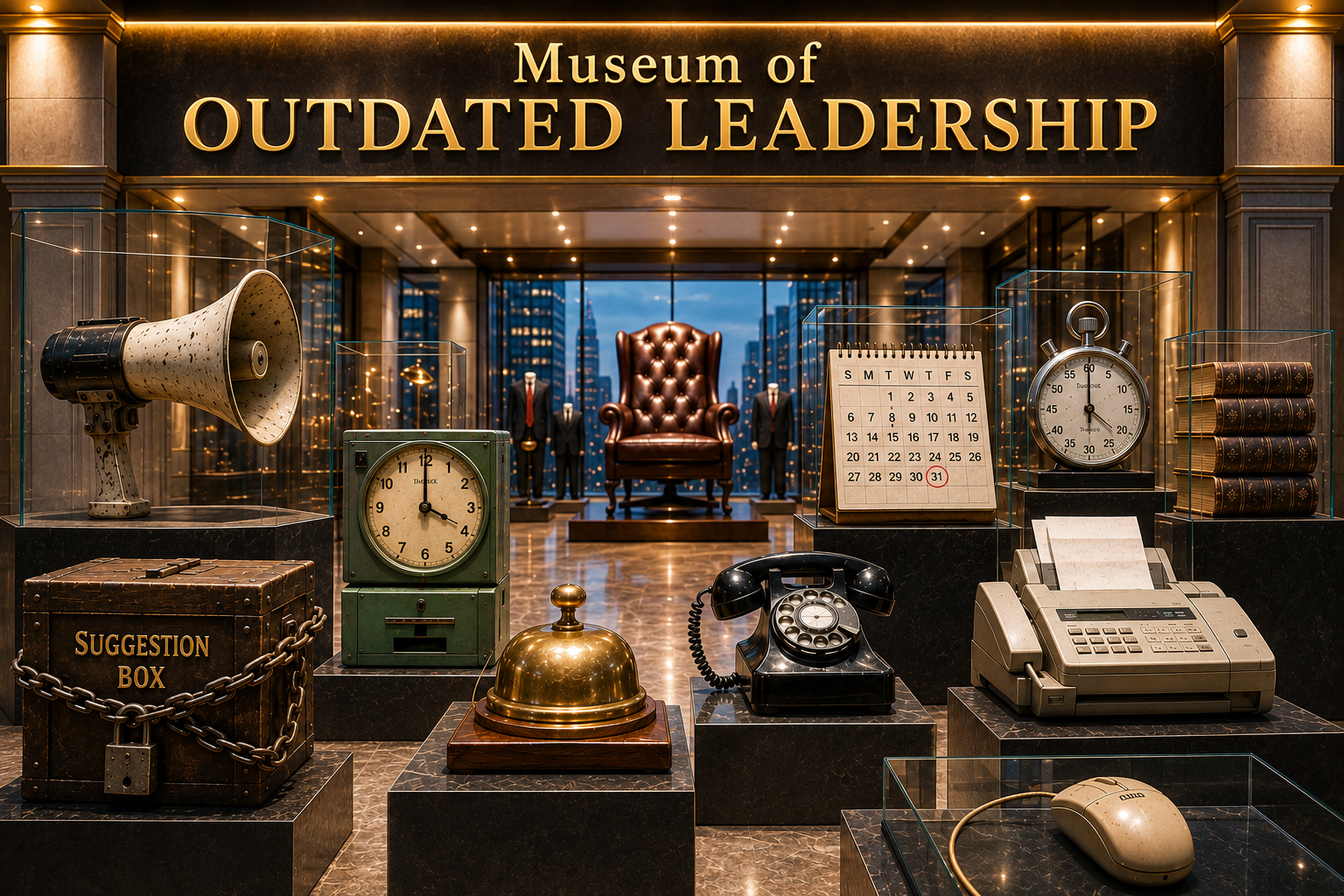
STILL FOLLOWING MOLDY LEADERSHIP ADVICE? What We've Unlearned Since Then

Leslie Rohonczy, IMC, PCC, Executive Coach & Author

 (LISTEN TO NARRATED AUDIOARTICLE VERSION)

I recently fell down one of those internet rabbit holes that begins with good intentions and ends with me wondering how humanity has survived itself thus far. One of the rabbit holes I fell into (consider yourself warned) was a website called theretrocodex.com, which is essentially a curated archive of things people once believed with remarkable confidence, only to be proven outrageously wrong later. Medical advice, scientific assumptions, cultural 'facts,' all neatly organized by decade, like a museum of human certainty gone terribly sideways. Honestly, it is fantastic!

There is something I find comforting about discovering that entire generations confidently believed things that now sound absurd. Weirdly, it makes me hopeful about the future, and hey, I'll take hope wherever I can find it these days.

Did you know, for example, that margarine was once marketed as a healthy alternative to butter? Or that doctors once endorsed cigarettes? Entire industries were built on 'facts' that now seem unfathomable to most of us.

And naturally, I wondered: where is the RetroCodex for leadership? Well, friends, I'm sorry to be the bearer of bad news, but there isn't one. But if one did exist, some of the outdated leadership beliefs I've helped clients with in my executive coaching work would deserve a prominent place of honour, right beside smoking cigarettes in the office and mandatory skirts and stockings dress code (yep, it used to be a thing.)

The uncomfortable truth is that outdated leadership beliefs rarely look outdated when you're on the inside of them. They usually appear dressed up as other things, like professionalism, accountability, belonging, executive presence, or 'the way things are done around here.'

So in the spirit of public service, let’s scrape the mold off a few winners and see how today's truth challenges those outdated assumptions.

1.  GOOD LEADERS ALWAYS HAVE THE ANSWERS

This one has had an impressively long shelf life. For decades, leadership was often associated with certainty. The person at the top was expected to know, decide, direct, and project confidence, preferably without visible hesitation. That may have worked when business environments were slower and hierarchies were tighter. Today, that model starts to crack under complexity.

Amy Edmondson’s research on psychological safety at Harvard has shown that high-performing teams thrive when leaders create the conditions where people can raise concerns, share ideas, and challenge assumptions without fear. Learning organisations depend on candour, not theatrical certainty.

We have all seen the alternative: a leader makes a spectacularly wrong decision with unwavering confidence, and no one flags their concerns.

TODAY'S TRUTH: Don't pretend to know everything. People can often tell when you're bullshitting anyway, and that erodes trust faster than honest uncertainty ever will. Focus instead on creating enough trust that the best thinking in the system actually surfaces.

2.  IF YOU WANT SOMETHING DONE RIGHT, DO IT YOURSELF

Ahhh... the unofficial anthem of overwhelmed leaders everywhere. This belief often disguises itself as high standards. Sometimes it's called accountability. Sometimes it is a genuine focus on quality. And sometimes, if we are being really honest, it is ego dressed up in sensible shoes.

Liz Wiseman’s work in Multipliers draws a sharp distinction between leaders who expand the capability around them and those who unintentionally diminish it by becoming the bottleneck.

If every important decision, approval, rescue mission, or client issue must pass through you, that is not leadership excellence. It is a leadership model built on dependency.

TODAY'S TRUTH: Your job is not to be the hero of every operational subplot. Modern leadership means building capability, trusting good people with meaningful ownership, and resisting the seductive little voice that says, “Honestly, it’ll just be faster if I do it myself.”

3.  PROFESSIONALISM MEANS EMOTIONAL RESTRAINT

There was a time when professionalism seemed to require becoming emotionally indistinguishable from office furniture. Steady; controlled; stoic even (and before the modern Stoicism enthusiasts come for me, I'm referring to emotional suppression, not Stoic philosophy.) 

The assumption was that emotion made leaders look weak, messy, or unstable. Daniel Goleman’s work on emotional intelligence helped challenge that premise by showing that leadership is deeply relational work. People don't stop being human when they log in to work in the morning.

This does not mean unfiltered emotional leakage, dramatic oversharing, or turning every meeting into personal theatre, but real emotion that others can feel, recognize, and understand because it's authentic and universally human.

TODAY'S TRUTH: Professionalism is not the same as emotional suppression. Knowing and naming what you're feeling, understanding how it affects your behaviour, and paying attention to what others may be experiencing in response to you are all aspects of emotional maturity.

4.  PEOPLE NEED TO BE WATCHED TO STAY PRODUCTIVE

Well, this belief got a fresh makeover during the Covid pandemic, didn't it? While remote work was a lifesaver (and business saver), it was also uncharted territory for businesses. Suddenly, some leaders became strangely obsessed with green dots, login times, and whether Margaret was really still working at 4:17 p.m.

Microsoft’s 2022 Work Trend Index report identified what they called productivity paranoia: 87% of employees said they were productive at work, but only 12% of leaders said they had full confidence their team was productive. Yikes, talk about a delta! This should not have surprised anyone: adults generally perform better when treated like adults.

TODAY'S TRUTH: Trust, clear expectations, autonomy, and meaningful accountability outperform surveillance. If your management strategy involves monitoring mouse movement, the issue may be less about productivity and more about trust and empowerment. Either way, it's worth exploring with a curious mindset.

5.  PSYCHOLOGICAL SAFETY MEANS BEING NICE

This one needs to be escorted out of the building along with its little cardboard box full of platitudes, toxic positivity, and matching 'Teamwork Makes the Dream Work' mugs.

Somewhere along the way, psychological safety got mistaken for permanent politeness, with no space or tolerance for disagreement, no discomfort, and no challenge. But that interpretation misses the point entirely.

Amy Edmondson has been clear that psychological safety supports high standards and honest conversations. It creates the conditions for people to speak honestly, take interpersonal risks, admit mistakes, and challenge thinking.

TODAY'S TRUTH: On a high-performing, healthy team, people can respectfully disagree, raise concerns, share their authentic views, and challenge ideas without fearing social punishment. If everyone is smiling while important truths remain unsaid, what you may be looking at is conflict avoidance dressed up as harmony.

6.  YOU NEED MORE EXECUTIVE PRESENCE

Translation: Somehow be more impressive (but we will provide zero operational definition for what that means, or how to do it.)

Executive presence has suffered some unfortunate branding. For years, executive presence has been confused with airtime, extroversion, charisma, confidence theatre, and that oddly polished panel-discussion voice people seem to acquire at conferences.

Susan Cain’s bestselling book Quiet challenged the long-standing assumption that extroversion naturally equals leadership effectiveness. Adam Grant’s research has also highlighted that leadership effectiveness depends far more on context and behaviour than personality stereotypes.

TODAY'S TRUTH: Influence is not volume, charisma, theatre, or performative posturing. Some of the most compelling leaders I've seen in action are quiet. They don't suck all the air out of the room trying to show how smart they are. They may say less, but when they do speak, people pay attention because their contribution actually moves the conversation forward.

7.  IF I'M BUSY, I'M IMPORTANT

Does your calendar resemble an aggressive game of Tetris? For years, chronic busyness has functioned as a strange status symbol. Packed calendars, midnight email replies, and performative exhaustion sends the message that if I am overwhelmed, I must be important.

Microsoft’s research on the 'infinite workday' has shown how digital work has steadily eroded boundaries, recovery time, and focus.

Packed calendars and performative exhaustion do not signal importance. Sometimes they convey weak boundaries, poor capacity management, or reactive operational focus with little strategic value.

TODAY'S TRUTH: Busy is not a leadership competency. Modern leadership requires protected thinking time, sound judgment, and enough strategic altitude to notice what others miss. If your calendar leaves no room to think, you may be demonstrating operational stamina while actively undermining your strategic credibility.

8.  LEADERS ARE NOT TO BE CHALLENGED

There was a time when leaders were expected to project authority and maintain distance. They did not invite dissent, challenge, input, or inconvenient truths from the people below them. Leadership was something to be respected, and in some workplaces, even feared. Suggesting to your boss that they might handle something differently would have been career-limiting behaviour.

Some remnants of that thinking still linger. Edgar Schein wrote extensively about how hierarchy can inhibit honest communication, especially when leaders fail to create the conditions for upward candour. And as leaders progress up the ladder and gain more authority, people often become even more selective about what they share with them.

TODAY'S TRUTH: If people decide that telling you the truth is unsafe, inconvenient, or pointless, you may be the last person to know what is actually going wrong. Strong leaders create the conditions for honest feedback to travel upward, not just downward.


SO WHAT IS STILL SITTING IN YOUR LEADERSHIP ATTIC?

The tricky thing about outdated leadership beliefs is that many of them genuinely did work back in the day, or at least seemed to. Some rewarded us earlier in our careers, which is exactly what makes them so sticky. The people who believed those old RetroCodex 'facts' were not foolish; they were operating with the assumptions, norms, and accepted wisdom of their time. Leadership is no different.

Nobody wakes up in the morning and consciously decides to lead like it's 1987. Old beliefs linger because they once helped us succeed, feel competent, or stay safe in systems that rewarded them. That does not make someone a bad leader. It simply means leadership has evolved.

Some of today’s most confidently held leadership beliefs will eventually look just as dated. The more interesting question is which ones you may still be holding onto without realizing it.

YOUR COACHING CHALLENGE

Most outdated leadership beliefs do not announce themselves with a little flag that says Hello, I am obsolete. They tend to feel sensible, responsible, and strangely familiar. This practice is designed to help you uncover one belief that may still be shaping your leadership, and then test whether it still deserves shelf space.

YOUR LEADERSHIP RETROCODEX

STEP 1: SPOT THE MOLD: Read through the beliefs in this article and notice which one made you uncomfortable, slightly defensive, oddly validated, or uncomfortably seen. That reaction is useful. Complete this sentence: One leadership belief I may still be holding onto is... Examples: "Good leaders should always have the answer." "If I want something done right, I should handle it myself." "Being busy means I am valuable."

STEP 2: TRACE ITS ORIGIN STORY: Most leadership beliefs started life as adaptations, not mistakes. Ask yourself: Where did I learn this? Who modelled this for me, or rewarded me for it? When did this belief first help me succeed? What did it help me avoid?

STEP 3: EXAMINE THE CURRENT COST: Now get brutally honest. Ask yourself: How might this belief be limiting me now? What does it cost my team? How does it affect trust? What undesirable behaviour does this belief keep reinforcing?

STEP 4: WRITE THE UPDATED LEADERSHIP TRUTH: If your old belief belongs in the RetroCodex, what replaces it? Complete this sentence: Today’s truth for me is... Example: Old belief: I need to stay involved in everything important. Today’s truth: My leadership value grows when I build capability instead of dependency.

STEP 5: RUN A LIVE EXPERIMENT: Within the next week, experiment with deliberately behaving according to your updated belief. Say less in the meeting. Delegate the thing. Ask the uncomfortable question. Admit you don't know. Protect thinking time. Invite dissent. Whatever your belief requires.

STEP 6: REFLECTION QUESTIONS: What happened? What surprised me? What story did my inner narrator start telling? What felt easier than expected? What still felt risky? What does this tell me about my next experiment?

If outdated leadership beliefs are influencing how you lead, and you're curious about what stronger, more modern patterns might serve you better, reach out for a free exploratory Executive Coaching conversation at www.leslierohonczy.com.

HAS YOUR TEAM BECOME BEIGE? How Humour, Playfulness, and Humanity Make Your Team Stronger

By Leslie Rohonczy, IMC™, PCC

(LISTEN TO NARRATED AUDIOARTICLE VERSION) 

There’s a guy at the front of the room, droning over his Powerpoints with the emotional range of a beige filing cabinet. Someone mumbles, “Great point, Ken,” without looking up from his phone. Someone else suggests they “circle back for confirmation and feedback” after the meeting. The rest of the team is not-so-subtly filling out their Meeting Buzzword Bingo cards: “Low-hanging fruit.” “Move the needle.” “Bandwidth.” “Synergy.” “Let’s socialize this.” And the senior leader stares into the abyss of his endless, joyless, budget meeting.

There is no joy here. Nobody laughs. Nobody relaxes. Not a single smirk was had.

And we still wonder why creativity, innovation, and engagement are disappearing faster than the free donuts in the lunchroom.

I spend a lot of time coaching senior leaders, and I’ve noticed something, well, funny. The leaders with the healthiest, highest-functioning teams are usually the most human. Not sloppy or inappropriate. And not trying too hard, like trying to amp up the latest TikTok slang.” Trust me, nobody wants to hear the VP say “it’s giving disruption.”

The best leaders often know how to create emotional oxygen - and they do it with humour and forms of play. Their teams laugh. There’s looseness. People interrupt each other with excitement. Someone occasionally says something weird, and they all laugh together; not 'at', but 'with' each other. The atmosphere feels alive.

And before somebody rushes into the comments to say, “Well, business is serious,” yes, of course it is. So is heart surgery. Research on surgical teams has shown that appropriate humour can reduce tension, strengthen team cohesion, and help clinicians cope in high-stress environments. Serious work has never required emotional sterility. Human beings are not machines.

Research has also consistently linked humour and positive emotional states with lower stress, stronger social bonding, better creativity, and improved cognitive flexibility under pressure; all aspects that contribute to high-performance teams.

A study published in the journal Emotion found that positive moods broaden attention and improve creative problem solving ("The Broaden-and-Build Theory of Positive Emotions," Fredrickson, 2001). Research from Stanford Graduate School of Business has also explored how humour increases status and interpersonal connection in leaders ("Humour, Power, and Status," Cooper, Kong & Crossley, 2018). Even the Mayo Clinic has written extensively about humour’s physiological impact on stress reduction and resilience ("Stress Relief from Laughter? It’s No Joke," Mayo Clinic, updated 2023).

It makes sense. Nobody does their sharpest thinking while simultaneously trying not to sound foolish. You can feel people editing themselves before they speak. Every sentence arrives pre-approved by Legal, rinsed and fluffed by Corporate Communications, and carefully scrubbed of anything that might accidentally sound human.

Meanwhile, belly laughs are coming from down the hall. "Why can't I be part of THOSE meetings?", we grumble. Teams doing extraordinary work often sound like they're having fun. It's a little chaotic, there’s energy, and teasing. There's room for personality and authenticity, and enough psychological safety that people stop rehearsing every sentence before speaking.

I once worked with an executive who was widely respected for her brilliant strategic mind. She was equally well known (one might say notorious) for her relentless intensity and razor-sharp scrutiny. When she entered meetings, it was a sphincter-shifting moment for her team. People physically changed posture! Backs straightened. Shoulders tightened. Voices flattened. And any remnants of humour disappeared instantly. Think the Devil Wears Prada's Miranda Priestly without the zinger punchlines. When she arrived on the floor, instant messages pinged across the team, as staff alerted each other to her presence. You could almost hear everybody’s internal monologue as she arrived: “Okay, everyone, gird your loins.”

In one of our coaching sessions, she said she wanted to find a way to get her team of Vice Presidents to lead more strategically. She thought they typically spent too much time in the weeds, and she'd noticed that they answered carefully, second-guessed themselves, and spoke as if they were students trying not to disappoint a terrifying university professor. She didn't realize that every interaction with her felt high stakes. Again, a wonderful human being and a smart leader with good intentions. But somewhere along the line, she had unconsciously equated seriousness and a critical edge with good leadership. 

Lots of leaders do this. Everything becomes heavy, measured, controlled, earnest, and they become emotionally exhausting in the name of professionalism. Meanwhile, their employees are sitting there thinking: “At what point does a meeting legally qualify as a hostage situation?"

Humour matters because tension matters. Every workplace has tension: deadlines, politics, conflict, pressure, uncertainty, competing priorities. And leaders have enormous influence over whether that tension becomes corrosive or connective.

Connective tension is when the right kind of humour releases pressure without dismissing reality. It tells people: “We can survive hard things without becoming emotionally constipated.” That’s leadership.

And no, this is not permission to become the office comedian. Some leaders hear “bring more humour” and think they suddenly need to transform their PowerPoint presentation into a 12-minute stand-up routine. Please... just don’t. There’s a difference between performative humour and relational humour. One desperately needs attention. The other creates connection.

The most effective humour in leadership is usually self-aware, gentle, and human. It often comes from leaders who are comfortable enough with themselves to stop 'performing perfection'. That kind of humour builds trust because it lowers perceived hierarchy. People exhale around leaders who feel emotionally real and who can laugh at themselves.

I remember one CEO telling me about a disastrous presentation where his technology failed. His speaking notes disappeared, and he accidentally advanced to a slide containing a private reminder that simply said:

“SLOW DOWN. YOU LOOK LIKE A MAN BEING CHASED THROUGH THE WOODS BY A WOLVERINE.”

The entire audience burst out laughing. According to him, it became the strongest presentation connection point he'd had all year. Why? Because everybody suddenly relaxed. The mask cracked. Collective humanity appeared.

Nobody trusts perfection anymore, anyway. We’ve all met those leaders who speak in flawless corporate language while looking like they haven’t experienced a genuine emotion since 2014. That’s not executive presence; that's a corporate chatbot with a pension plan.

Playfulness also matters far more than most organizations realize. I'm not talking about childishness, but rather playfulness. Curiosity, experimentation, lightness, and the willingness to think sideways. Some of the strongest leadership teams I’ve ever encountered, or been lucky enough to be part of, spent some of their meeting time laughing, because they trusted each other enough to think and speak freely.

Research into “Happiness and Productivity” (University of Warwick, 2014) found that happiness can increase productivity by about 12 percent. Other studies have also connected positive emotional states with better problem-solving and broader cognitive flexibility.

This matters because some organizations slowly drain the spontaneity out of communication. People stop speaking casually. Comments get 'optimized', and every email starts sounding like it was reviewed by three lawyers and a hostage negotiator. Listen, nobody wants to say the wrong thing or look foolish. And when nobody is willing to loosen their grip for even ten seconds, eventually, people stop bringing bold ideas altogether. Boldness requires psychological safety, but we humans get cautious when our environment feels emotionally risky.

One of the most useful questions a leader can ask is this: “When was the last time this team laughed together naturally?” I'm not talking about forced fun, like mandatory bowling or trust falls. (Hey, nothing says “this workplace understands human dignity” quite like falling backward into the arms of Steve from Procurement.) I mean real laughter; the kind that happens when people feel safe enough to stop managing themselves so tightly.

Laughter can be diagnostic. Humour is often evidence of the presence of trust, of belonging, and nervous system regulation.  Healthy teams laugh. Not all day, and not constantly, but regularly. And leaders who understand that have an enormous advantage, especially now. Our modern workplaces are tired. People are carrying stress levels that would have sounded medically concerning ten years ago. Many employees feel emotionally overextended, socially cautious, and mentally saturated.

Leaders who can create moments of fun, relief, humanity, and emotional brightness without becoming performative become magnetic. People are drawn toward leaders who can help them feel human.


YOUR COACHING CHALLENGE

For the next two weeks, treat this like a social experiment. Your mission is to see whether small moments of humour and humanity change the emotional climate around you.

Try a few of these:

  • Show up to one meeting and announce a ban on corporate jargon entirely. Tell them that every time somebody says, “circle back,” “bandwidth,” or “move the needle,” you will all dramatically sigh like a Victorian widow.

  • Tell one story where you were genuinely ridiculous, awkward, or silly. Not polished vulnerability, but the kind where people laugh because they recognize themselves in it.

  • Notice how often people shrink their own ideas before speaking. You can usually tell what's coming because they offer qualifiers like “Maybe this is stupid…” “I haven’t thought this through…” "I might be wrong but..." When it happens, interrupt the self-editing with warmth: “Say the thing.” “No disclaimers.” “Now I really want to hear it.”

  • Monitor for Beige. Give everyone permission to call out moments when the team starts sounding emotionally over-polished. Encourage callouts like “That sounds a bit beige.” “Your answer sounds suspiciously lawyer-approved,” or “Try that again, but as a human.”

Then reflect on these questions:

  1. Which experiment created the biggest shift in energy, and what changed specifically?

  2. What surprised you most about your team’s response to a little more humanity?

  3. How often did you notice people softening, shrinking, or beige-ifying their contributions before speaking?

  4. What happened when you interrupted that pattern and invited the real thought instead?

  5. If your team had permission to be a little less polished and a little more human going forward, what might become possible?

Somewhere along the way, many organizations trained personality out of professionalism. I think it’s time to bring a little of it back.

If your team has become emotionally cautious, overly polished, or painfully beige, and you want to build a leadership culture where people think more freely, collaborate more honestly, and actually enjoy working together again, reach out for a free exploratory Executive Coaching conversation at www.leslierohonczy.com.
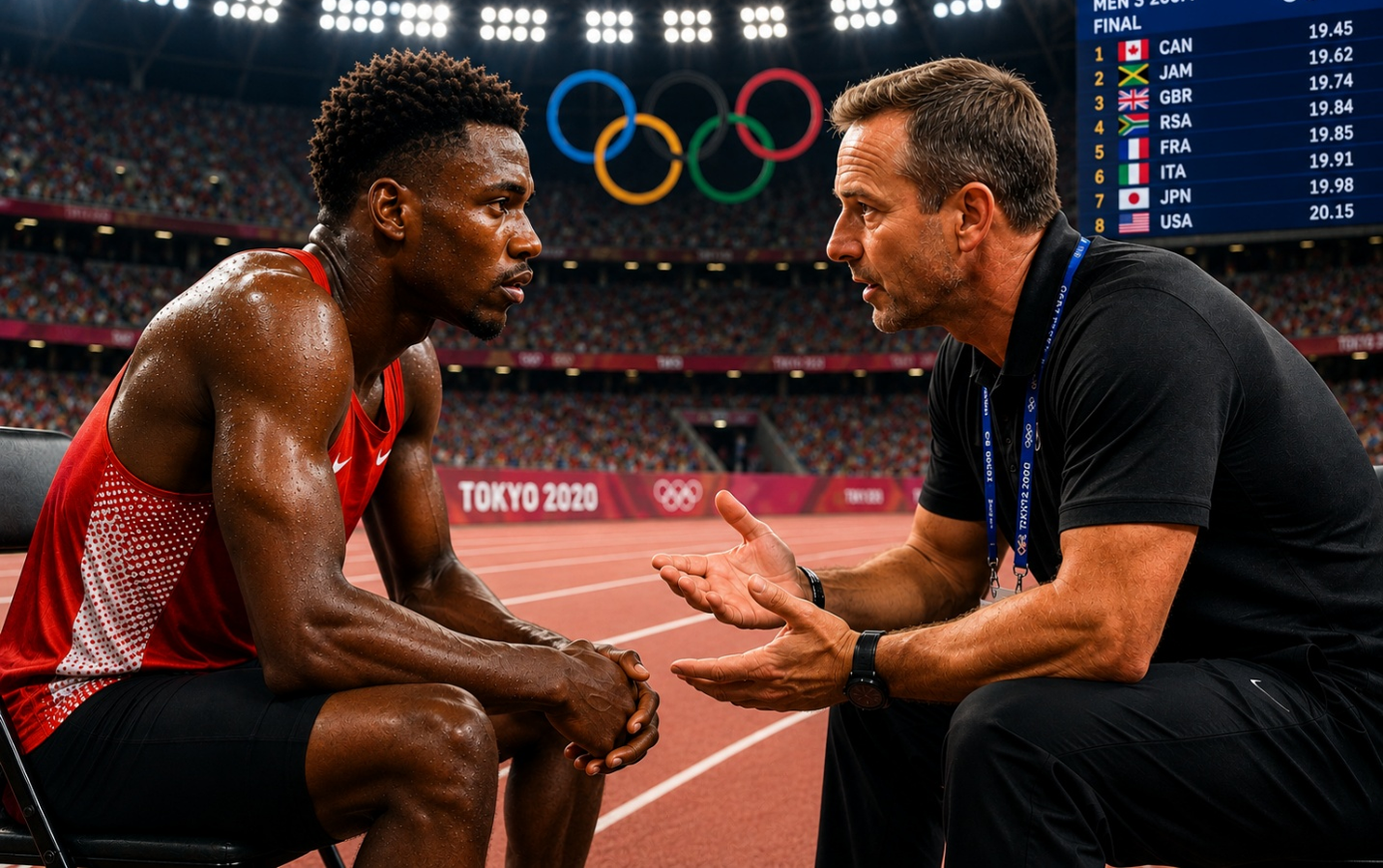
HOW DO YOU KNOW YOUR LEADERSHIP IS WORKING? Accurate Self-Assessment for High-Performance Leadership

(LISTEN TO NARRATED AUDIOARTICLE VERSION)

Most leaders I work with don’t struggle with effort. They’re showing up, working hard, and trying to get it right. The harder question just below the surface is whether all of that effort is translating into high-performance leadership.

If that question feels a bit uncomfortable, that’s understandable. Accurate self-assessment can be challenging. And as your leadership career moves up, signals get softer. People choose their words more carefully, and that makes it easy to fill in the gaps with our own assumptions. If things aren’t falling apart, it must be working. If the team is delivering, leadership must be effective. If no one is pushing back, things must be aligned. I’ve seen this play out with strong leaders more than once, and it rarely leads where they expect.

High-performance leadership shows up in patterns over time and in what happens when we are not present. The most useful indicators are often easy to miss because they sit in the background of day-to-day work. A more accurate read starts to show up when we pay attention to what repeats, not what happens once.

  • Ownership: When something important is in motion, where does it land? Does it move forward through others, or return to us? Work that consistently comes back often points to how expectations, trust, or decisions are set. Leaders who are highly responsive tend to step in quickly, which may help in the moment but can train the system to route work back to them. Over time, ownership concentrates instead of spreading.

  • Contribution: In meetings, are we hearing fully formed ideas, or cautious half-steps? High-performing teams speak before everything is perfectly shaped. When everything sounds safe, something is likely being held back. Leaders who jump in quickly with their own thinking can shorten the space others need to think out loud or challenge direction, which narrows contribution (even while conversations feel efficient).

  • Decision Durability: When an agreement has been made, does it stick, reopen, shift, or stall? Agreement can happen quickly, while commitment shows up later. A decisive leader can drive toward closure fast, which can be useful, but it can also lead to premature agreement that doesn’t hold after people leave the room.

  • Presence: How much depends on us being there? If momentum rises with our involvement and drops without it, the system is relying on us more than it should. What happens when we step out of an email thread or a meeting? Does work stall until we join, or do conversations stall until we weigh in with our opinion? High responsiveness amplifies this pattern by speeding up progress when we engage and slowing it down when we step back, creating uneven momentum.

If we watch closely, we start to notice patterns in how these signals show up in our everyday rhythm. And once those patterns become visible to us, we can't unsee them. A more interesting question then begins to emerge: How does my leadership style influence outcomes over time?

That question keeps our development work grounded in curiosity, and it opens up a different way of looking at what’s happening. If our impact is shaped by what others experience, rather than by what we intended, then a gap can open up. We may believe we are creating clarity while others feel pressure, or think we are being supportive while others experience us stepping in too quickly.

And here's another angle worth paying attention to: leadership is experienced over time through tone and timing. People learn how to respond to us based on repeated interactions, and those responses shape what becomes possible.

When we look at it this way, our self-assessment becomes more accurate because attention shifts toward observable patterns instead of internal confidence.

This is where experimentation becomes useful, because small adjustments create insights about what actually changes.


YOUR COACHING CHALLENGE

Choose one situation this week and run a small, deliberate experiment. Keep it simple so you can see what changes.

  • In a meeting where you normally drive the conversation, hold your view for a few beats longer than usual, then watch who steps in and what emerges before you speak.

  • Choose one decision that was made in a meeting and name ownership before closing the discussion, then leave the decision untouched for a few days and observe whether it holds or drifts.

Capture what you notice in real time. Look for shifts in ownership, contribution, and follow-through, and use those signals to adjust your next move.

Over time, your observations become data you can rely on. They show you where your leadership is creating movement, and where it is getting in the way. That’s the shift that sticks.

 If you are curious about how to evolve your leadership, reach out for a free exploratory Executive Coaching conversation at www.leslierohonczy.com.