
(LISTEN TO NARRATED AUDIOARTICLE VERSION)
I've read hundreds of leadership books. Some were brilliant, some were forgettable, and a surprising number appeared to have been written by people who’ve likely never actually met another human being in the wild.
In fact, some of the most useful leadership advice I've ever encountered came from a conductor, a bass player, a jazz musician, a record producer, and a pop star.
Let’s start with one of the most profound leadership books I’ve ever read. It was co-written by Benjamin Zander, conductor of the Boston Philharmonic Orchestra, and Rosamund Stone Zander, who was trained as a family systems therapist and has coached organizations around the world. I read their book, The Art of Possibility years ago, and it has stayed with me in a way most leadership books haven’t.
That raises a fair question. Why write about a book that is more than two decades old when leaders are already drowning in newer books, newer models, newer acronyms, and newer ways to make a perfectly good meeting sound like a government procurement process?
Because while some ideas age, other ideas deepen. The Zanders’ work has deepened for me because it speaks to something leaders are still wrestling with every day: How do you help people perform at their best when pressure is high, trust is fragile, attention is scattered, and everyone is carrying more than they are saying out loud?
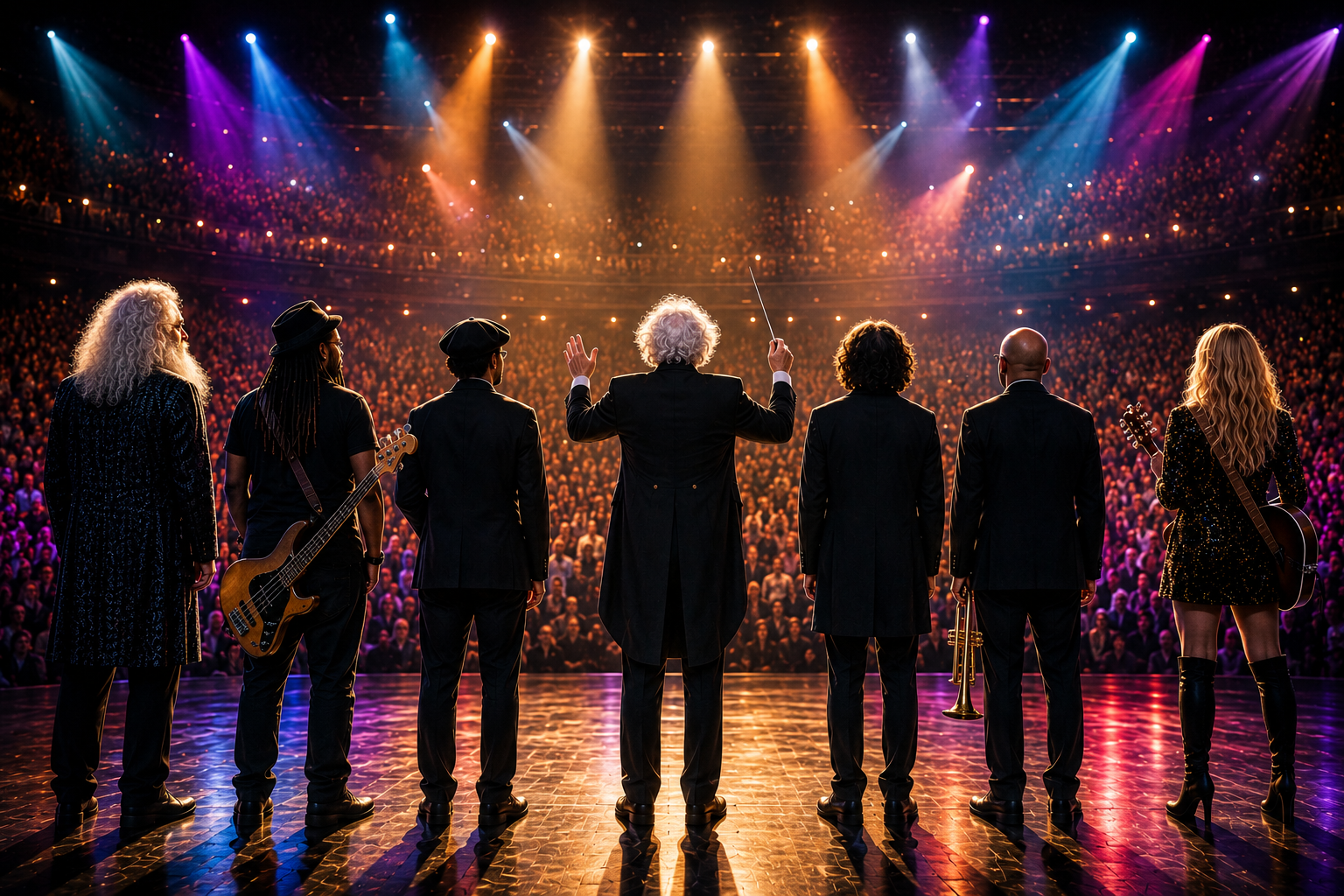
Benjamin Zander has a famous line that has lodged itself permanently in my leadership brain: the conductor does not make a sound. The person standing at the front, a visible focal point for the performance, and getting all the attention and accolades, never plays a single note. In fact, they don’t make a sound. That idea is so simple it almost sneaks past you. A conductor has enormous responsibility and very little direct control, which is a pretty accurate description of senior leadership on most days.
You can't force trust. It doesn’t magically appear because you demand it. Engagement is not something people hand over on command. Creativity, courage, and ownership don't show up because someone in a leadership role says they should, no matter how inspiring your town hall deck may be.
What you can do is create conditions for clarity. You can set the tempo. You can help people hear one another. You can notice when the brass section is overpowering the strings, which is also an excellent metaphor for certain executive teams I've seen in action.
This is where I think musicians have a strange and wonderful advantage as leadership teachers. They spend their lives working with the same forces leaders work with every day: ego, pressure, collaboration, uncertainty, discipline, and the occasional public flop.
They also can't hide behind strategy language when things go sideways. If the music is off, everyone knows it, even if they can't name the particular instrument or musical error. But they feel it.
Victor Wooten, the great bassist and author of another of my favourite books, The Music Lesson, offers a leadership insight I wish we talked about more. He writes about music as a language, something learned through listening, feel, relationship, and practice. Victor talks about how we learn language as babies, as a metaphor for becoming a skilled musician. As babies, we’re not taught the grammatical rules and structure of the English language; we learn to speak English by being immersed in it, observing, experimenting, and trying new moves.
Leadership is similar. We can study the grammar of leadership all day, and I love a good leadership model as much as the next executive coach, but people do not experience us as models. They experience our attention, curiosity, timing, style, and whether we listen before we jump in with the answer we had already tucked in our pocket.
Wooten also writes about space as part of music. That one should be required reading for anyone who has ever filled a silence in a meeting because the pause made them feel squirmy. But silence isn't something to be avoided at all costs. The moment a pause appears, there's no need to rush to fill it with another opinion, explanation, or attempt to move the conversation along.
Musicians know the value of silent pauses, called ‘rests’ in music notation. The rests are part of the music, equally as important (and sometimes even more important than) the notes. In leadership, the pause is often where the more honest thought finally has room to arrive.
Herbie Hancock has told a story about playing with Miles Davis that has stayed with me for years. During a performance, Hancock played what he thought was the wrong chord, and was rattled in the moment. Miles responded by playing something that made the chord work. That story captures one of the most mature leadership behaviours I know: the ability to work with what has happened rather than burn energy wishing the original plan had survived contact with reality.
Leaders face wrong chords all the time. A project stalls, a stakeholder reacts badly, a talented person disappoints you, or the meeting takes a turn no one predicted. Some leaders freeze because reality has deviated from the sheet music in front of them. Others adjust and find the next note by listening for what's emerging.
Then there's Taylor Swift. She may seem like an unusual addition to a list that includes conductors, jazz musicians, classical performers, and music producers, but I think she offers one of the most powerful leadership lessons of all.
Years ago, when ownership of her master recordings became a highly public issue, she faced a situation many leaders encounter in one form or another. Something important was no longer under her control.
Most people, when faced with that situation, focus on the fight. They pour their energy into winning the argument, defeating the opponent, or getting back what was lost. Taylor Swift chose a different path. Rather than spending years fighting a battle on someone else's terms, she re-recorded her catalogue and created a new version of the future. That strikes me as a remarkably useful leadership lesson.
When leaders feel stuck, they often assume they have two choices: accept reality or fight reality. Sometimes there is a third option. Build a different game. I can't tell you how many times I've watched leaders exhaust themselves trying to force a door open when they would have been far better served looking for a different entrance altogether.
Rick Rubin brings a different kind of wisdom into the conversation. In his amazing book, The Creative Act, he writes about creativity through the lens of attention, receptivity, and noticing what wants to emerge. That may sound a bit woo-woo until you consider the damage that can be caused by action without awareness. Many leaders are praised for moving quickly, making decisions, and pushing things forward, even when they are moving quickly in the wrong direction. Rubin’s work reminds me that insight often starts before action. It starts with noticing the pattern, the tension, the missing conversation, or the thing everyone has learned to politely step around.
Yo-Yo Ma offers another leadership lesson, especially through his long-standing work with Silkroad, the organization he founded to bring together artists and cultural traditions from around the world to create something meaningful together. At first glance, that sounds like a music project. In reality, it is a masterclass in collaboration across difference. How do people with different histories, perspectives, experiences, and ways of seeing the world create something together without sacrificing what makes each of them unique?
That feels painfully relevant right now. Many leaders are trying to create alignment in environments where people don't see the world the same way, don't process information the same way, and don't always feel safe saying what they really think. Ma's work reflects a deep respect for curiosity, difference, and the discipline required to create something meaningful across traditions. Curiosity is not decorative in those conditions. It is operationally useful.
Then there is Wynton Marsalis, who has often described jazz as a metaphor for democracy. I think it also offers a useful lens for leadership. Jazz succeeds because each musician has the freedom to contribute their own voice while staying accountable to the rhythm, structure, and needs of the ensemble.
That is also what healthy organizations are trying to build. People need room to think and contribute, but they also need enough shared structure that the whole thing does not turn into twelve soloists competing for oxygen.
I think this is why music keeps giving me better leadership metaphors than most leadership books. Music understands influence without control. It understands dynamics, tension, timing, cadence, pace, listening, calibration, collaboration, and the reality that performance depends on both individual mastery and collective trust. When we pay attention to the whole sound, we notice who is carrying too much and who has gone silent, and we can sense when the tempo is too fast for the quality of performance that’s required.
True leadership is not about proving your own brilliance; it's about making more brilliance possible around you. What stays with me is that every one of these musicians, in very different ways, points to the same truth. Leadership involves shaping the conditions that allow great performances to happen, helping people contribute their best work and connect it to something larger than themselves. The leaders people remember are the ones who helped others find their voice, trust one another, and create something better than any one person could have produced alone.
If you want to expand your leadership repertoire, reach out for a free exploratory Executive Coaching conversation at www.leslierohonczy.com.