By Leslie Rohonczy, IMC™, PCC
Executive Coach | Leadership Development Expert | Author | Speaker | ©2026 | www.leslierohonczy.com
Has this ever happened to you: You walk out of a meeting convinced you sounded like an idiot, only to have someone tell you how valuable your contribution was. You suspect they’re just being generous. You were there. You heard yourself.
Or someone challenges your recommendation, and suddenly you’re defending it with everything you're worth, far more fiercely than it probably deserves. And you know you could reconsider, but now it feels like your credibility is on trial.
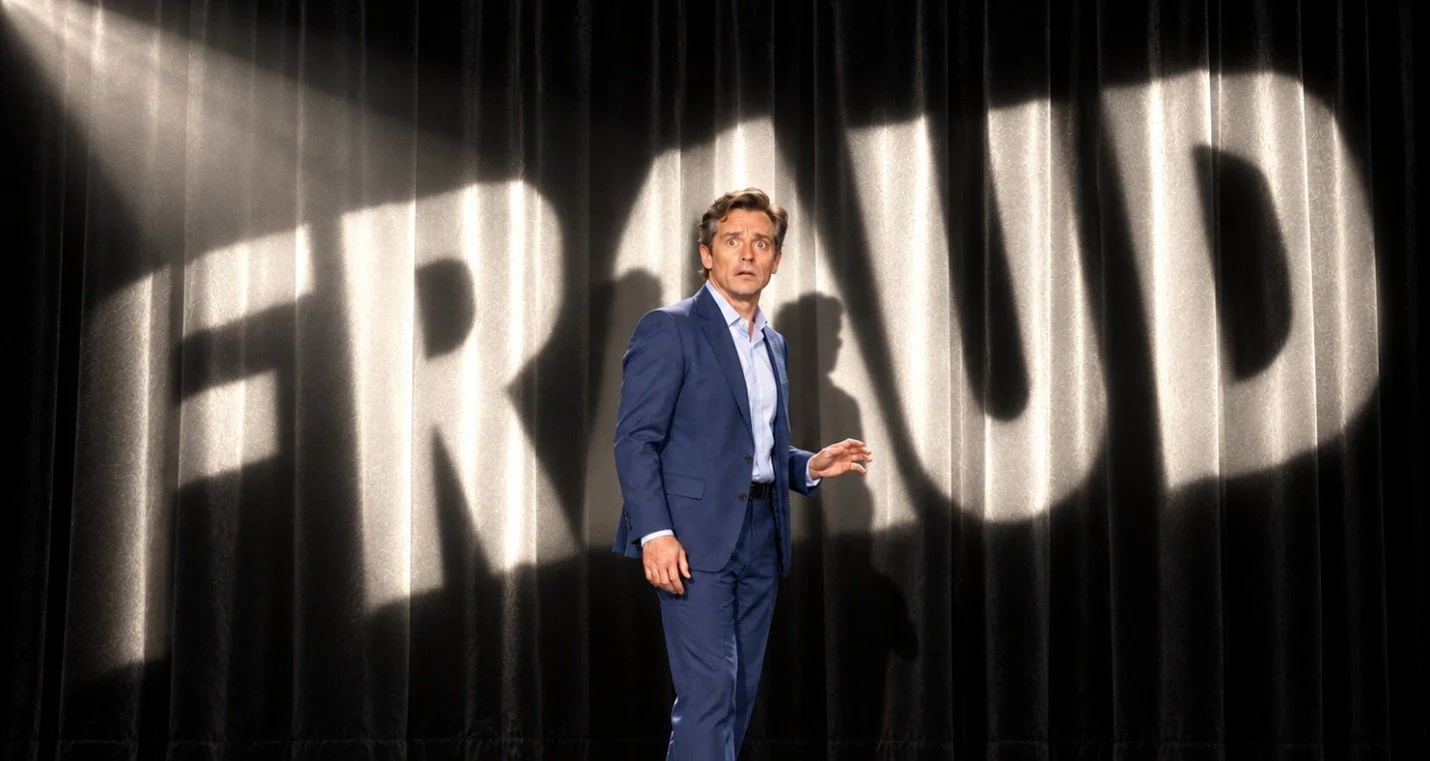
The fear of being exposed can make us react in seemingly opposite ways: hold back or double down. It can follow us through promotions, borrow from our strengths, and become harder to recognize as we gain authority. By then, other people may be working around a fear we haven’t yet admitted to ourselves.
The imposter response changes as leadership demands change. And the fear of being exposed can show up as hesitation in one leader and excessive certainty in another. Getting promoted doesn’t settle the question of whether you belong. Sometimes, it simply raises the stakes.
Imagine two leaders preparing for a difficult discussion. One rehearses her recommendation repeatedly, then introduces it with, “This might be a stupid idea, but…” The other arrives with a firm position and pushes back against every question. He’s determined that nobody will see him hesitate.
They look very different. Yet both could be wrestling with the same fear: What happens when people discover I’m not as capable as they think?
We tend to recognize the imposter response when someone minimizes their accomplishments or doubts their qualifications. It’s harder to spot when it arrives wearing authority and insisting on the last word.
WHAT ARE WE RESPONDING TO?
In my book, Coaching Life, I describe the imposter response as the fear of being found out, despite evidence of our capability. We explain away accomplishments as luck, good timing, or other people overestimating us. Somehow, our successes never quite count as proof.
I prefer the term “imposter response” instead of the familiar “imposter syndrome.” The original researchers called it the “impostor phenomenon,” but “syndrome” became the popular label, making the experience sound like a disorder. I think that “response” better captures what I want us to explore: what makes us feel exposed, and what we do to protect ourselves when that happens. It directs attention toward what we’re experiencing and the choices we make in how we respond.
There’s also a useful distinction between our inner critic and our imposter response. Our inner critic is the voice inside most of us that judges us. Our imposter response is preoccupied with how to avoid the shame of being exposed.
Looking at the imposter response through the lens of leadership, our efforts to avoid feeling exposed can create extra work for the people we lead. It can weaken their trust in our judgment and make them reluctant to tell us what we need to hear.
THE PROMOTION CHANGES THE QUESTION
Early in our careers, it's pretty easy to demonstrate our competence. We know how to do the work, and we can point to what we’ve produced. As we move into leadership, it gets harder to point to something and say, “I did that.” More of our contribution comes through other people’s work, and it can take months to see whether a decision paid off. We’re still contributing, but the evidence may look very different from how we used to prove that we were good at our jobs.
What we fear people will discover about us can change, too. A new manager might worry about leading former peers, while a senior executive fears being asked a question they can’t answer. Here are some ways those fears can show up at different leadership levels or when we enter unfamiliar territory.
FIRST LEADERSHIP ROLE: “Who am I to lead people who know more than I do?” We might cling to being the expert, do work that belongs to others, or avoid giving difficult feedback because we doubt our authority to give it.
LEADING OTHER MANAGERS: “If I’m not directly involved, how will anyone see my value?” We might oversee work too closely or insert ourselves into decisions our managers are equipped to make. Delegating can feel like making ourselves irrelevant.
SENIOR EXECUTIVE LEADERSHIP: “I’m expected to have answers I don’t have.” We might overprepare to avoid being caught off guard, conceal uncertainty, or delay a decision because we’re afraid of getting it wrong. We might also project more certainty than the evidence warrants.
ENTERING AN UNFAMILIAR ORGANIZATION OR MANDATE: “My previous success might not count here.” We might rush to prove our value before understanding what’s needed, copy the prevailing leadership style, or hold back a different perspective because we’re unsure how it will be received.
These are possible patterns, rather than a predictable progression. A seasoned executive can feel entirely capable leading a major transformation and suddenly fraudulent when presenting to a new board.
The underlying question is worth noticing: What do I believe I have to prove to deserve this role?
If the answer is “I must always know more than my team,” each capable person we hire becomes a potential threat. If it’s “I must be indispensable,” successful delegation becomes uncomfortable. We might even pull work back just as someone else begins to handle it well.
I explored a related tension in LEADING EXPERTS?: our responsibility for the work can exceed our personal expertise. How we handle that gap becomes part of the leadership others experience.
DOUBT DOESN’T ALWAYS LOOK DOUBTFUL
You can’t reliably judge someone’s self-trust by how confident they appear. A forceful delivery can be an attempt to conceal considerable fear, while someone who acknowledges uncertainty may be quite comfortable with their own capability.
Our responses can also borrow from our strengths. If we’re driven and action-oriented, we might work harder, take charge faster, and become increasingly controlling. If relationships matter deeply to us, we might look for reassurance or avoid a necessary conversation because someone’s disappointment would feel like a verdict on our worth.
An analytical leader might keep researching until there’s no possibility of being wrong. Someone who usually thinks out loud might fill every pause, afraid that silence will suggest they have nothing useful to contribute.
Thoroughness can become a delay that everyone else has to accommodate. Helpfulness can become taking over. Determination can make us remarkably difficult to advise.
None of these behaviors proves an imposter response is present. But they invite a better question: When I feel exposed, which of my strengths do I push beyond the point of being useful?
FEELING UNDESERVING CAN DISTORT THE EVIDENCE
There’s a trap here: once we believe we don’t belong, we can become unreliable interpreters of our own performance. Praise gets dismissed as kindness. A successful outcome gets credited entirely to the team, or to luck, with no acknowledgment of our contribution. One difficult meeting becomes evidence that the promotion was a mistake.
Feedback can become equally difficult to use. We may hear a specific development need as confirmation that we’re fundamentally unqualified. Or defend ourselves so strongly that we miss something we genuinely need to learn.
Accurate self-assessment requires room for both capability and limitation. “I handled that well” and “I need help with this” should be able to coexist without either cancelling the other out.
There's a caveat in all this: before we conclude that our confidence needs work, we need to ask what’s happening around us. Are we second-guessing ourselves because we lack experience, or is it really because our boss keeps overruling decisions we were authorized to make? Do we doubt our expertise because there’s a gap in our knowledge, or because our ideas are regularly dismissed until someone else repeats them?
Those circumstances call for different responses. We can work on self-trust while also challenging behavior that undermines it. If we treat every doubt as a personal shortcoming, we risk taking responsibility for conditions we should question, and trying to earn credibility from people who keep changing the requirements.
Starting from “I’m the problem” can prevent us from seeing any of those accurately. The useful inquiry is more specific: What evidence tells me I need to develop? What evidence shows I’m already capable? What conditions are making it harder to succeed?
WHEN OTHER PEOPLE HAVE TO HELP US FEEL CAPABLE
When our accurate self-assessment skills feel shaky, it feels like such a relief to get reassurance and a sense of control. We check, check again, request another revision, or step into a decision that someone else could've made. From our side, it feels like being responsible. From the team’s side, it becomes extra work they have to do to help settle our discomfort.
Imagine a director asking a manager to develop a recommendation. The manager does the work and presents a solid proposal. The director requests more detail, then another option, then another meeting. Sure, further analysis might be warranted, but suppose the real obstacle is that the director feels exposed approving something they couldn’t have developed themselves. That manager is now doing two jobs: solving the business problem and helping the director feel safe enough to accept the solution.
Over time, people may learn to praise an idea before questioning it, or seek approval they don’t need. They let the leader to make the final “improvement” because it feels safer. Their attention shifts toward managing the leader’s emotional needs along with the work.
We all need support. The concern is whether people can disagree with us or work independently without having to repair our sense of worth afterward. A useful pause before intervening is: What will this improve for the work? What relief am I hoping it will give me?
Sometimes both answers are legitimate. Sometimes that second question explains an intervention the work never needed.
HOW MUCH PROOF IS ENOUGH?
The demand to keep proving ourselves can be difficult to satisfy. We succeed, then decide the assignment wasn’t challenging enough, or that we simply got lucky. We receive recognition, then question whether the person really understands our work.
When we're in the habit of disqualifying the evidence, yet another achievement won’t settle the case. That’s why the developmental work needs to go beyond collecting reassurance. We can practice assessing our contribution fairly, naming a genuine gap without turning it into a personal indictment, and allowing others to contribute without interpreting their capability as evidence against our own.
This may mean asking a question we think we should already know the answer to. It may mean accepting a good recommendation while acknowledging that we need help understanding part of it. Or letting someone finish a task without adding our fingerprints.
Those choices can feel uncomfortable. They also allow the work to proceed without requiring everyone to participate in our ongoing audition. Our teams need access to our judgment, but if we’re using that judgment primarily to defend our credibility, how much of it is available for the responsibilities we were hired to carry?
YOUR COACHING CHALLENGE
Choose one recent leadership moment when you felt you had something to prove. Use the questions from this article to examine that moment in writing. Stay with that situation throughout, so you can trace how your fear influenced what you did.
WHAT FELT AT RISK? What happens when people discover I’m not as capable as they think? What did you imagine would happen if you couldn’t answer the question, needed help, or made a mistake? Then answer: What do I believe I have to prove to deserve this role?
HOW DID YOU PROTECT YOURSELF? When I feel exposed, which of my strengths do I push beyond the point of being useful? Describe what you actually did. Perhaps you kept checking, defended a weak recommendation, or took over work someone else could handle. What did that require from the people around you?
DOES YOUR ASSESSMENT HOLD UP? What evidence tells me I need to develop? What evidence shows I’m already capable? What conditions are making it harder to succeed? Give each question equal attention. Notice whether you can readily list your shortcomings but struggle to acknowledge your contribution, or whether you’re blaming yourself for circumstances you need to address.
WHAT WILL YOU DO DIFFERENTLY NEXT TIME? Before acting, ask: What will this improve for the work? What relief am I hoping it will give me? Choose one response to practice the next time you feel exposed. Make it specific: “I’ll ask for the explanation I need instead of pretending I understand,” or “I’ll leave the decision with its owner, even if being less involved makes me uncomfortable.” Afterward, compare what you feared with what actually happened. What did you learn, and did your different response give someone else more freedom to do their job?
You don’t have to feel fully confident before changing how you lead. You can start by noticing when your need to feel capable is making it harder for someone else to shine.
If you’d like support exploring how your imposter response affects your leadership, reach out for a free exploratory executive coaching conversation at leslierohonczy.com.
For more leadership articles, connect with Leslie Rohonczy on LinkedIn, or visit www.leslierohonczy.com