HOW WE CONNECT

THE ART OF TOUGH CONVERSATIONS: Best Practices for Leaders

by Leslie Rohonczy, Executive Coach, IMC, PCC | ©2024 | www.leslierohonczy.com

In the realm of leadership, tough conversations are inevitable. And no matter how high your level of seniority is, the challenging emotions we might experience during these interactions can be uncomfortable. Whether delivering critical feedback, discussing performance issues, or, perhaps most challenging of all, letting someone go, these conversations are an integral part of your leadership accountability.

 As an executive coach, I've helped many leaders navigate the emotional and professional complexities in preparing for challenging conversations. Here are some of the challenges I’ve seen senior leaders wrestle with, and some of the best practices to consider when preparing for tough conversations.


THE CHALLENGES


Emotional Toll | The emotional burden of tough conversations can be significant. Leaders often feel a sense of personal responsibility and empathy towards their employees, making the act of delivering bad news particularly stressful. This emotional toll on the leader can lead to procrastination, avoidance, and increased anxiety. For example, you may hesitate to let an underperforming team member go because you know the individual is going through personal hardships, such as a family illness. Your empathy can make it difficult to separate your personal feelings from your professional responsibilities.

 Maintaining Professionalism | Balancing empathy with professionalism is crucial. Leaders must convey the necessary messages without letting their emotions cloud their judgment or delivery. Striking this balance is often easier said than done, especially when the conversation has significant consequences for the employee. For example, during a performance review, you may feel tempted to downplay negative feedback to avoid hurting the employee’s feelings. However, this could lead to misunderstandings about the seriousness of the issues and hinder the employee's growth.

 Legal and Ethical Considerations | Navigating the legal and ethical implications of difficult conversations, particularly terminations, adds another layer of complexity to an already-challenging discussion. Ensuring the conversation is conducted fairly, respectfully, and in compliance with legal standards is essential to avoid potential repercussions. For example, when terminating an employee, ensure that the specific reasons for termination are well-documented and legally sound to prevent claims of wrongful dismissal or discrimination. This requires careful preparation and adherence to HR policies and legal guidelines.


BEST PRACTICES & ‘TRY-ITS’


Preparation is Key | Thorough preparation is vital for any tough conversation. Leaders should clearly outline the key points they need to convey and reflect on likely potential reactions from the employee. Practicing the conversation beforehand can help in articulating thoughts more clearly and confidently. Try-it: Before a meeting to discuss a significant performance issue, prepare by reviewing the employee’s performance records, noting specific incidents that illustrate the problem, and rehearse how to present this information in a clear, constructive, and respectful way.

 Be Direct but Compassionate | Honesty is crucial, but it must be balanced with compassion. Be direct about the issues at hand, but also express empathy and understanding. This approach helps to respect and maintain the person’s dignity while clearly communicating the necessary message. Clear is kind. Try-it: When informing an employee about their termination, you could say, “This decision was incredibly difficult, and I understand it’s a lot to take in. We’ve seen a consistent pattern in performance that hasn’t improved despite our efforts, and we need to make this change. I’m here to support you through this transition.”


Create a Safe Environment | Conduct the conversation in a private, comfortable setting where the employee feels safe. This environment encourages open communication and helps manage the emotional intensity of the situation. Ensure there are no interruptions and that the focus remains on the conversation topic. Try-it: Schedule the conversation in a private office or a neutral, quiet space where you won’t be interrupted. This setting helps the employee feel respected and ensures the conversation remains confidential.

 Listen Actively | Active listening is a critical skill during tough conversations. Allow the employee to express their thoughts and feelings without interruption. Acknowledge their emotions and show that you value their perspective. This approach fosters a sense of respect and understanding, even in difficult circumstances. Try-it: If an employee reacts emotionally to feedback, you might respond, “I hear that you’re feeling frustrated and upset. Your work is important to us, and I want to understand your perspective. Let’s talk more about what’s been challenging for you.”

 Provide Support and Resources | When letting someone go, offer support and resources to help them through this transition. Support could include outplacement services, references, or guidance on the next steps. Demonstrating your commitment to their well-being, especially through their departure, conveys that you care about them, and that the company is committed to supporting them. Try-it: After informing an employee of their termination, you could offer, “We’ve arranged for outplacement services to help you find your next opportunity. They’ll be really helpful in helping you navigate the next steps to finding the role that’s right for you.”

 Follow Up | After the conversation, follow up with the employee to ensure they are coping well. This could be a brief check-in or offering additional support if needed. For remaining team members, communicate about the change to the team as transparently as possible – while respecting the departing employee’s confidentiality – and address any concerns they might have. This will help you to monitor morale and trust within the team, as forced departures tend to create fear and anxiety in remaining employees. Try-it: A few days after a tough conversation with your employee, reach out to them with an email or call, saying, “I wanted to check in and see how you’re doing. If you need any additional support, please let me know.” And when an employee has been terminated, you can say to the remaining employees, “I want to address the recent changes and reassure you that we are here to support each of you through this transition. I won’t communicate the specific reasons for the departure, because I’m respecting their privacy, but I invite your questions and concerns.”


As a leader, tough conversations are part of your role. Embrace challenging conversations as opportunities to foster growth and resilience within your team and organization and as a leadership development opportunity. These experiences will not only help you strengthen your leadership, but they can help you cultivate a culture of candor and accountability in your organization.


WHAT’S YOUR ‘-NESS’ (And Are You Making the Most of It?)

Leslie Rohonczy, IMC™, PCC, Executive Coach, Leadership Expert, Speaker, Author


Finding Your '-Ness': The Journey to Your True Self

I get to work with some pretty amazing people every day, each on their own unique and personal journey of self-discovery and evolution. And with so much focus on running faster, jumping higher, and succeeding at any cost, it's easy to get caught up in thinking that our external achievements, titles, and accolades are what defines us. But there's a deeper, more profound definition of ourselves that beckons us all: the journey to find our '-ness'.

This concept can be elusive, but it is the essence of who we truly are; our soul, our intrinsic self. It takes practice, patience, and a lifetime of exploration, but it's a journey worth undertaking. In fact, some would argue (me, for one) that this hero’s journey is the one that matters most.


What is '-Ness'?

'-Ness' is a term that encapsulates the core of your being; the authentic self that exists beyond societal roles, expectations, and superficial layers. It's your unique combination of passions, values, strengths, talents, gifts, and quirks. Think of it as your soul’s personal fingerprint: distinctive, irreplaceable, and uniquely you.

For example, my own ‘Leslie-ness’ is related to creativity, empathy, and emotional intelligence. It makes me good at helping people understand their own wiring; at inspiring them to try something new; and at helping them to feel ‘seen’ and understood. My husband’s ‘Imre-ness’ is connected to planning, making others feel safe, and by being in service. How would you describe your own ‘-ness’?

Finding our '-ness' means connecting with our core self, below persona, beyond our title and training, to the deepest place that guides our beliefs, actions, decisions, and interactions. Consider other ‘-ness’ words: 'kind-ness,' 'bold-ness,' 'happi-ness,' and 'calm-ness'; each represents a state, or quality of being, that comes from within.

Your '-ness' is the sum of the authentic traits that blend together to form the essence of your true self. And finding your '-ness' means identifying and embracing those unique qualities and states of being.

When I’m coaching a client who wants to connect to his sense of purpose (let’s call him ‘Steve’), I’ll ask “what is your ‘Steve-ness’?” as a playful way to get him to tell me about himself; to better understand his gifts, how he sees himself, what he values about himself, and how he wants others to see him in return. -Ness is a valuable tool for us both!


The Lifelong Journey Within

For most of us, discovering our '-ness' is not an instant revelation, but rather, a gradual process that unfolds over a lifetime. It requires introspection, self-awareness, and a willingness to face both our light and shadow sides. The journey within can be exhilarating! It can also be challenging. And sometimes it’s both at the same time! But every step we take to discover and define our ‘-ness’ brings us closer to it.


1. Introspection and Self-Reflection

The first step in finding our '-ness' is introspection. This means setting aside time for self-reflection, away from the noise and distractions of everyday life. It involves reflecting on powerful questions: What truly matters to me? What are my core values? What activities bring me joy and fulfillment? What gifts do I value most in myself? Journaling, meditation, and spending time in nature can be powerful tools to guide this introspective process. And if these self-directed activities aren’t your jam, and you feel the need for more structured support, it can be powerful to work with a coach to help you dig deep.

2. Embracing Vulnerability

One of the most essential aspects of discovering your ‘-ness’ throughout this journey is embracing vulnerability. That means being honest with yourself about your fears, weak-nesses, and past mistakes. It’s about acknowledging that you are a work in progress and that it's okay to be imperfect. The renowned vulnerability researcher, Brené Brown, says in her book "Daring Greatly", that embracing our vulnerabilities is the path to greater creativity, innovation, and connection with others.

3. Listening to Your Inner Voice

In our busy lives, we often ignore our inner voice; the quiet, persistent whisper that guides us towards our true path. This inner voice is the manifestation of our '-ness'. Learning to listen to and trust this ‘knowing’ requires mindful-ness and a conscious effort to tune out external pressures and expectations. Practice mindful-ness meditation to help sharpen this inner listening.

4. Living Authentically

As you become more attuned to your '-ness', the next step is to look for more opportunities to live authentically in your ‘-ness’. This means aligning your actions and decisions with what allows you to be the most authentic version of yourself possible. It might involve making difficult choices, such as changing careers, ending relationships, or pursuing a path that others might not understand or accept. Authentic living is not about conforming to societal norms; it’s about honoring your unique essence.

5. Continuous Growth and Learning

Finding our '-ness' is not a one-time achievement; it’s an ongoing journey. As you grow and evolve, so will your understanding of your true self. This requires a commitment to continuous learning and self-improvement. When we stay curious, embrace new experiences, and are open to change, each new experience becomes an opportunity to discover more about ourselves.


The Rewards of Finding Your '-ness'

The journey to finding your '-ness' is challenging, but the rewards are profound. When you connect with your true self, you experience a sense of peace, purpose, and fulfillment that cannot be achieved through external accomplishments alone. Your relationships become more genuine; your work feels more meaningful; your life evolves to be more aligned with your deepest values.


Helping Others on Their Journey

As an executive coach, one of my most rewarding roles is to guide others on their journey to finding their '-ness'. I encourage my clients to explore their inner landscapes, name and confront fears, and embrace their authentic selves. Through this process, they not only become better leaders but also more fulfilled individuals.

Finding your '-ness' is not the end of the journey; it’s the beginning. Your ‘-ness’ becomes the foundation upon which you can build a life of true purpose and joy. It’s about being who you are meant to be, evolving and growing into your potential, and living a life that reflects your deepest truths. As you embark on this lifelong journey, remember that every step, no matter how small, brings you closer to your true self.

Embrace the most important journey of your life­­­: the one within. It is the only journey worth taking, and it is where the real adventure begins.


If you’re interested in discovering your '-ness' with the support of a certified Integral Master Coach™, reach out for a free consultation. I’d be happy to guide you through the transformative process that leads to greater self-aware-ness, authenticity, and fulfillment.

THE TRUTH ABOUT SUCCESSFUL INTERVIEWS: 3 Messages from an Executive Coach

by Leslie Rohonczy, Executive Coach, IMC, PCC | ©2024 | www.leslierohonczy.com


In the realm of job interviews, there’s a common misconception that candidates must meticulously craft themselves into the ‘perfect’ mould, fitting every criterion outlined by the prospective employer.

 In fact, you may have heard about research[1] highlighted in a Forbes article, that found men exhibit confidence when they meet 60% of the criteria, whereas women typically wait until they've ticked off every item on the list. This means that men tend to apply for a job when they meet approximately 60% of the listed qualifications. In comparison, women often won’t even apply unless they fulfill 100% of the requirements. It's frequently interpreted as evidence of a confidence gap between genders. And prevailing and well-intentioned advice often focuses on encouraging women to cultivate greater self-confidence in their abilities.

 While striving to present the best version of ourselves is undoubtedly crucial during job searches, it's equally essential to remember that interviews are a two-way street, where compatibility, values, and mutual interest play pivotal roles.


Message 1: You're The Unicorn

As an executive coach, I often witness individuals grappling with nerves and insecurities as they prepare for the interview process. Their fears are typically that each of their imperfections (real or imagined) will be ferreted out and scrutinized under the interview microscope. But here’s the reality check: interviewers are not on a crusade to find your flaws; nor are they eagerly scouring your every word, ready to pounce on any misstep. In fact, they're fervently hoping that you are the elusive unicorn; that magical candidate who embodies the values, skills, and fit they’ve been seeking. Could that unicorn be you?

 How might this shift in perspective change the way you actually show up in an interview? Rather than tiptoeing cautiously, laden with self-doubt, and minimizing ourselves, what would be possible if we embraced the opportunity to let our authentic selves shine? Allowing this shift in perspective creates increased confidence, and that, coupled with genuine enthusiasm, can often outweigh an inauthentic, meticulously polished ‘persona’ delivering a rehearsed script. Remember, they invited you because they believe in your potential – now, it’s your chance to show them that their intuition was right.


Message 2: It's About You Too

When we find ourselves swirling in the fervent desire to impress, it's easy to overlook a crucial aspect: our own preferences, values, and aspirations. While the company assesses your suitability, it's equally important (if not more important) for you to gauge whether the role – and the company – aligns with your employer expectations, career goals, and personal values. Don’t settle for being a round peg in a square hole; instead, actively explore whether the company culture, growth opportunities, and job responsibilities resonate with your vision for your future self. And if you don’t have a vision for your future self, create one by reflecting on what kinds of things you’d like to do every day, the type of people you want to do those things with, the cultural elements you’d enjoy being part of, the development opportunities that will help you shine, and the meaning you want to derive from your daily contributions.

 There are free websites that use employee reviews to measure employers’ culture, leadership, values, pay and benefits, among other factors (eg: GlassDoor, ZipRecruiter, LinkedIn Job Search). And LinkedIn is a great way to search out and connect with individuals who work for the company you’re interested in. Invite them to chat about their employee experience, and what they enjoy most about working there. And based on the things you learn about the company’s culture and values, you can then determine whether this would be a long-term fit with your own needs and values. And if you decide to proceed to the interview stage, mention those individuals in your interview. It’s a great way to demonstrate that you’ve done your homework, and are motivated to join the team.


Message 3: Ten Questions

To facilitate this important exploration of fit, culture, and values, here are ten questions you can pose during interviews:

  1. Can you tell me about the company’s culture and values?

  2. How do the day-to-day responsibilities of this role link to the company’s vision and mission?

  3. What qualities do successful employees in this position typically possess?

  4. How does the company foster collaboration and teamwork?

  5. Can you share examples of recent projects or initiatives the team has undertaken?

  6. What opportunities for growth and advancement exist within the organization?

  7. How does the company support professional development and learning?

  8. What challenges and opportunities do you foresee for the team in the upcoming year?

  9. How does the company prioritize work-life balance and employee well-being?

  10. Can you describe the onboarding process for new hires?


By posing these questions, you not only gain valuable insights into the company but also demonstrate your proactive approach and commitment to making an informed decision.

 The art of interviewing transcends the mere presentation of skills and qualifications; it’s a nuanced dance between showcasing your potential and evaluating compatibility. So, step into the interview room with confidence, as their coveted unicorn, while also keeping a discerning eye on whether the role aligns with your aspirations. After all, the ultimate goal is not just to secure a job. You are about to embark on a fulfilling journey of career development, growth and self-discovery.


[1] Original research from Hewlett Packard, as shared in Lean In, The Confidence Code, Forbes, Harvard Business Review, and numerous articles, 2014.

THE VULNERABILITY OF LEADERSHIP: Embracing Vulnerability & Authenticity for High-Performance Success

by Leslie Rohonczy, Executive Coach, IMC, PCC | ©2024 | www.leslierohonczy.com

In the realm of leadership, vulnerability is often perceived as a liability, a chink in the proverbial armor of strength and authority. We see this represented in media, movies, and television shows, like the inept and self-aggrandizing Michael Scott from ‘The Office’, whose misguided attempts at leadership and constant need for validation provide a stark contrast to the notion of vulnerability. His fear of being seen as incompetent leads him to maintain a facade of confidence, often at the expense of his team's well-being and morale.

Or the ruthless and uncompromising Frank Underwood from ‘House of Cards’’. Frank’s Machiavellian tactics and manipulative demeanor exemplify the dark side of leadership, where vulnerability is perceived as a threat to his dominance and authority.

Then there’s the exacting and brutal Miranda Priestly from ‘The Devil Wears Prada’. Her perfectionism and icy personality create a culture of fear and intimidation at ‘Runway’ magazine, stifling any semblance of vulnerability or authenticity among her subordinates.

These characters epitomize the traditional archetype of leadership, where vulnerability is viewed as a weakness to be concealed, rather than embraced. Their portrayals serve as cautionary tales, highlighting the pitfalls of prioritizing power and control over authenticity and connection.

Are these just fictional characters in some of our favourite shows? Well, yes. But also no. These caricatures of leadership are reflections of how our culture interprets and even underscores the message that vulnerability is antithetical to effective leadership, which in turn perpetuates the myth that to be a good leader, you must be invulnerable; impervious; unmoved; unflappable.

Not only is this a terrible way to lead because it ultimately undermines trust, collaboration, and engagement within organizations, but it also is a terrible way to live! Constructing an inauthentic, performative version of yourself can create physical and mental health concerns, career challenges, fractured relationships, poor results, and limited options.

But take a deeper dive into the complexities of leadership, and we see that true strength lies not in the absence of vulnerability, but in the willingness to embrace it. Yet, a growing body of research suggests that embracing vulnerability is not just courageous; it's paramount to becoming a high-performing, successful leader.

Let’s delve deeper, and explore the significance, benefits, and implications of embracing leadership vulnerability, and how it drives personal, team, and organizational success.


Rethinking Leadership: From Strength to Authenticity

When you think about strong leadership, who springs to mind? Our traditional ideas of leadership have often glorified decisiveness, assertiveness, strength, confidence, and even invulnerability. In this myopic, narrow definition, leaders are expected to project an image of unwavering confidence and infallibility, creating a facade of invincibility that leaves little room for doubt, uncertainty, or grace.

However, the landscape of leadership is evolving. In today's complex, dynamic business environment, where uncertainty and change are constants, the need for authentic leaders who aren’t afraid to show vulnerability, acknowledge their limitations, admit mistakes, and openly express their true thoughts and emotions has never been greater.

Consider the character of Captain Jean-Luc Picard from ‘Star Trek: The Next Generation.’ Despite his position of authority as the captain of the USS Enterprise, Picard is depicted as a leader who values empathy, compassion, and open communication. He is not afraid to seek advice from his crew, admit when he's wrong, or express his emotions when faced with difficult decisions. Picard's vulnerability humanizes him as a leader, earning the respect and loyalty of his team.

Or President Josiah Bartlet from "The West Wing" who is admired for his authentic leadership style. Bartlet's response to crises and moral dilemmas exemplifies empathy, compassion, and humility. He has open, transparent dialogue with his advisors, seeks diverse perspectives, and grapples with the ethical implications of his decisions. Bartlet's vulnerability as a leader resonates with audiences, inspiring them to believe in the possibility of principled and compassionate governance.

And let’s include the master of all things vulnerable, the wonderfully goofy human called Ted Lasso from the series of the same name. Ted provides another compelling example of vulnerable leadership. Despite being a fish out of water in his role as a soccer coach in England, Ted Lasso leads with unwavering optimism, kindness, and vulnerability. He openly acknowledges his lack of expertise in the sport and relies on his emotional intelligence and interpersonal skills to connect with his team and foster a supportive environment. Ted's vulnerability allows him to form genuine connections with his players and staff, ultimately leading to their success on and off the field.

These examples challenge the notion that vulnerability is a weakness in leadership and illustrate how embracing vulnerability can foster trust, collaboration, and resilience within organizations. Authentic leaders like Picard, Bartlet, and Lasso inspire others to do the same, creating a culture where authenticity is valued, and leadership is defined by empathy, integrity, and humility.


The Power of Vulnerability: Research Insights

Research in psychology and organizational behavior has shed light on the transformative power of vulnerability in leadership. Recent studies have shown that leaders who exhibit vulnerability are perceived as more authentic, relatable, and trustworthy by their followers. This authenticity fosters deeper connections and stronger relationships within teams.

A study published in the Journal of Applied Psychology (2020, Leroy et al) found that leaders who displayed vulnerability were seen as more approachable and were able to build stronger bonds with their team members.

And, embracing vulnerability has been linked to the creation of a culture of psychological safety within organizations. According to research published in the Journal of Management Development (2019, Day and Fleenor), leaders who create an environment where it's safe to take risks and share ideas foster a sense of belonging and empowerment among employees which, in turn, fuels innovation, creativity, and resilience, driving organizational performance and adaptability in the face of challenges.


Leading with Vulnerability: Strategies for Success

But embracing vulnerability doesn't mean relinquishing authority or competence; rather, it requires a shift in mindset and behaviors towards greater authenticity and humility.

Here are some strategies for integrating vulnerability into your leadership approach:

  • Lead by Example: Sharing personal stories, challenges, and failures with your team fosters empathy and trust, and creates a culture where vulnerability is celebrated rather than stigmatized.

  • Share Your Interior: Allow your employees to see your internal thought processes and emotional reactions, what lights you up, and what makes you nervous or uneasy. And when you don’t know something, just say so. These glimpses of your humanness foster empathy and help you create a culture of trust, where vulnerability is celebrated rather than stigmatized.

  • Encourage Open Communication: Create opportunities for honest and transparent dialogue within your team, and make sure you’re creating psychological safety for them to be transparent, to share feedback, and to speak truth to power. Listen actively and acknowledge your own areas for growth. This sets the tone and promotes a culture of continuous learning and improvement.

  • Embrace Failure as a Learning Opportunity: Share personal stories of your challenges and failures with your team. Instead of hiding mistakes or shortcomings, openly acknowledge them and use them as teachable mentoring moments. Cultivate a growth mindset that views failure not as a setback but as a learning opportunity.

  • Empower Others: Remind your employees (and peers and leader, for that matter) to be authentic and vulnerable in their own interactions, fostering a culture of mutual support and accountability. Using vulnerability in this way is a sign of strength. Recognize your team members when you see them being vulnerable – it’ll help others to step into their power, too.


The Lasting Impact of Embracing Leadership Vulnerability

In this tumultuous modern business world, vulnerability isn't just a buzzword, it's a strategic imperative. It's time to shatter the myth that vulnerability is a weakness; in fact, consider it one of the most important indicators of true leadership potential.

By embracing vulnerability, leaders wield a powerful tool to cultivate authenticity, trust, and resilience within their organizations, igniting a chain reaction of success.


As you continue to lead, remember this: vulnerability isn't a sign of weakness; it's a badge of emotional maturity, courage, and authenticity. It's about daring to show up, flaws and all, and inviting others to do the same. By leading with vulnerability, you set the tone for a culture where authenticity thrives, and trust propels success.

So, let's make a bold commitment to leading with vulnerability, and create a workplace where authenticity isn't just valued—it's celebrated. Let's inspire our teams to embrace their vulnerabilities, take risks, learn by trying, and realize their full potential. The path to lasting leadership impact begins with embracing our own vulnerability first and then empowering others to do the same.

It's time to lead with courage, authenticity, and boldness. Are you ready to take the leap?

AFTER THE STORM: INSIGHTS FROM THE YELLOW BRICK ROAD

POLARIZATION, ENTITLEMENT, AND THE POST-COVID MENTAL HEALTH CRISIS

by Leslie Rohonczy, Executive Coach, IMC, PCC | ©2024 | www.leslierohonczy.com


I have an insatiable curiosity. I love to immerse myself in human behavior and neuroscience research, books, and podcasts. I try to tie threads of understanding together, to make sense of the world at a deeper level. In fact, this intrinsic longing for sense-making is what drives blog posts like this one. I am curious about the myriad factors that influence our behaviours, and what makes us humans behave the way we do, and… how in the hell we wound up here.

Over these past four years, I have sometimes felt like Dorothy in the tornado scene from The Wizard of Oz, swept up in the swirling funnel cloud of fear and chaos that threatens what I care about most. I know I’m not alone.

The mental health ramifications of the Covid-19 pandemic are profound and well documented. In mid-2020, when I was part of the Covid-19 response team at one of Canada’s crown corporations, I recall reading forecasts from mental health experts warning of an impending ‘mental health pandemic’ that would surely come on the heels of Covid, and that the trauma and isolation inflicted by this global crisis would create mental health challenges the likes of which we’ve never seen. Fast forward four years, and we find ourselves here, amidst a relentless upsurge in entitlement, polarization, depression, anxiety, and societal upheaval.

We can’t claim to be surprised. They warned us it was coming.

We are collectively navigating this tumultuous aftermath, often reacting instinctively, without fully understanding the underlying forces driving our restlessness, fear, suspicion, or entitled behaviour. We’re all walking this metaphorical yellow brick road, trying to figure out how we as individuals, and as a society, can get back home to the familiarity and comfort of our ‘normal’ lives.

The ferocity of the Covid-19 tornado, swirling with ideological polarization, has torn a swath of devastation through the fabric of our society. While some of our well-worn societal structures were already decayed and better off levelled to the ground – the notion that 'workers need to be physically present in an office to be productive', for example – countless facets of our society now resemble battlegrounds torn up by irreconcilable ideological divides. It's as if the tornado has knocked down some of our pillars of reason and cooperation, leaving us standing in the rubble, on separate islands.

The polarization that has gripped us as a society is fueled by misunderstanding and a rapid rise in ideological divides. Some estimates I’ve read stated that it’ll likely be ten years before the effects of this crisis level out. In this heightened state, we tend to dismiss people and ideas that don’t align with ours, and gravitate toward like-minded people, as a defense mechanism. It just feels safer, and validating, especially in a world where so little feels safe or assured.

And the media – both social and traditional – play a significant role in the storm. We see a proliferation of polarizing platforms who exploit and exacerbate this division, while balanced news outlets struggle with shrinking budgets, resources, and workforces. Social media platforms in particular are a breeding grounds for conflict, with blame and misinformation spreading faster than the Wicked Witch’s flying monkeys.

And behind the proverbial curtain, politicians and world leaders furiously spin dials and flip switches in response. Some manipulate the levers of power to exploit polarization for their own political and personal gains, while others genuinely try to create a sense of normalcy for their people. What the heck is ‘normal’ now, anyway?

Polarization shows up in different ways. In some countries, political parties are so polarized that violence and vitriol between people with different alliances and opinions is commonplace. At work, we see employees blaming leaders; protesters blaming police; and even within our own families, there are things we’re no longer able to discuss without spitting venom all over each other. You may have noticed that people seem to be on high alert more than ever before, constantly on the lookout for how they’ve been victimized. And when they find something, whether warranted or not, it becomes an opportunity to unleash righteous indignation and fury. Toto, we’re definitely not in Kansas, anymore.

Meanwhile, a sense of entitlement seems to have emerged as a pervasive force, with some individuals and groups laying claim to privileges previously unimagined in the pre-Covid era – again, ‘working from home’ springs to mind, albeit from the perspective of some employees demanding fully remote work arrangements. Entitlement, driven by a sense of injustice and fear, has only deepened our divisions.

Yet, amidst this cacophony of political rhetoric and societal discord, a glimmer of hope emerges. Beneath the surface, there is a growing desire to dispel misunderstandings and foster dialogue, to help us realize that, like the Scarecrow who longs for a brain, we can challenge our unconscious beliefs, and make informed decisions. As Maya Angelou famously wrote, “when we know better, we do better.”

And like the Tin Man who longs for a heart, we yearn for compassion in a world gripped by fear. Despite pervasive divisions and animosity, a collective human heart beats within us, craving connection and understanding. Through empathy, patience, curiosity, and kindness, we can find ways to melt the icy barriers of polarization and build bridges of understanding.

And, like the Cowardly Lion in our story, we seek courage in the face of adversity – not just for the physical threat posed by the Covid virus, but courage to navigate the mental health fallout in its wake. Like the Cowardly Lion finding his roar, we too can summon the courage to confront the storm head-on.

By standing up to our fears, challenging assumptions, growing our emotional intelligence, bravely and compassionately challenging limiting beliefs, and embracing dialogue and compromise, we will not only weather this current storm; we will emerge stronger from it.

Let’s start conversations at the dinner table. Let’s encourage teachers and coaches to help our kids understand the emotional reactions they’re experiencing. Let’s make it safe for people to explore beliefs or opinions that are different than our own. And let’s help each other get curious about what nuggets of truth these differing perspectives are built upon.

Just like Dorothy’s quest to find her way home, amid the longing for a return to a sense of stability and normalcy, what we’re seeking may lie inside of us, not outside.  

There’s no place like home.

There’s no place like home.

There’s no place like home.

LEADERSHIP STRATEGIES FOR MULTI-GENERATIONS

by Leslie Rohonczy, Executive Coach, IMC, PCC | ©2024 | www.leslierohonczy.com

In this article, we’ll explore leading and managing individuals from various generations, each with unique strengths, weaknesses, motivations, and preferences. Great leadership recognizes and leverages the uniqueness that each generation brings to the workplace, and also acknowledges that each employee has a unique personality that is also a factor in how to lead them most effectively.

UNDERSTANDING EMPLOYEES BY GENERATION

BABY BOOMERS (1946-1964)

Baby Boomers are valuable assets to their organizations, characterized by unparalleled loyalty and dedication. Their extensive tenure in the workforce equips them with a wealth of institutional knowledge, making them indispensable contributors. Boomers thrive when they have a clear understanding of their roles and feel their opinions are valued by both managers and peers, resulting in heightened engagement.

 Despite their significant institutional knowledge, tenure alone does not guarantee peak performance. Constructive feedback becomes pivotal in refining their contributions. When providing feedback to Baby Boomers, consider their preference for control. Offering transparent feedback and practical tools for improvement empowers them to feel more able to address the identified areas. Boomers exhibit a goal-oriented mindset, making coaching conversations more effective when centered around specific goals or objectives. Although they may avoid conflict, positioning feedback as an avenue for personal growth ensures a positive reception.

 Occasionally, feedback may address a Baby Boomer's critical attitude towards younger colleagues, as some may perceive Millennials or Gen Zs as entitled and unwilling to put in hard work. Managers, particularly Millennials in leadership roles, should acknowledge Boomers' experience at the outset of coaching conversations, to help build trust.

 Boomers prefer regular and conventional feedback methods, such as routine performance reviews. In the absence of feedback, they will rely on their interpretation of behavioral cues, so ensure your communications are timely.

 Positive feedback resonates profoundly with this generation, and whenever possible, public acknowledgment of achievements enhances their sense of value and contribution.

 Leaders managing Baby Boomers can tap into their strong work ethic and value for loyalty. Recognizing their experience and contributions over the years is crucial. Acknowledging their desire for job security, leaders can offer stability and emphasize the long-term impact of their work. Tools like in-person training sessions and face-to-face communication can be effective, as Baby Boomers often prefer direct interaction.

 SUMMARY: BABY BOOMERS

  • STRENGTHS: Team-oriented, service-driven, goal-focused.

  • WEAKNESSES: Resistance to feedback, potential challenge adapting to rapid change.

  • MOTIVATION CHARACTERISTICS: Desire for personal fulfillment, value collaboration.

  • FEEDBACK PREFERENCES: Regular and constructive feedback, recognition of achievements.


GENERATION X (1965 -1980)

An informal managerial style resonates well with Gen Xers. This generation values learning and skill development, expecting employers to provide resources and hands-on learning experiences with immediate feedback and coaching. When you’re coaching Gen Xers, leverage their desire for skill enhancement as a motivating factor.

 Feedback is most effective when delivered in a casual work environment, emphasizing teamwork and solidarity, and recognizing their commitment to their profession and the pursuit of opportunities that enhance essential skills for career advancement.

 Leaders of Generation X employees should appreciate their independence and resourcefulness. Managers should break down long-term goals into manageable targets, ensuring progress towards objectives and a sense of accomplishment. Using technology (eg: online collaboration tools) aligns with their tech-savvy nature. Encourage a collaborative and inclusive work culture and demonstrate how you value their input and expertise.

 Recognizing the equality of all team members is crucial when providing feedback, considering their upbringing in self-reliant environments where they learned to be active participants in discussions from an early age.

 Gen Xers often bring awareness of unique skills to the team and may need coaching to appreciate the expertise of their colleagues fully. Acknowledging these skills fosters receptivity to further learning and collaboration.

 You can help them define a clear career path and offer insights about available support offered by your organization to help them meet their career goals. Regular teaching and coaching sessions are essential, aligning with Gen Xers' commitment to their professions and their pursuit of continuous skill development.

SUMMARY: GENERATION X

  • STRENGTHS: Adaptability, independence, entrepreneurial mindset.

  • WEAKNESSES: Skepticism, potential for work-life balance struggles.

  • MOTIVATION CHARACTERISTICS: Appreciation for autonomy, results driven.

  • FEEDBACK PREFERENCES: Clear and concise feedback, opportunities for skill development.


MILLENNIALS (1981-1996)

Leadership for Millennials involves fostering a sense of purpose and social responsibility. Leaders can inspire Millennials by aligning organizational goals with a broader societal impact, emphasizing the value their work brings to the world.

 Millennials place a high value on continuous feedback in the workplace, seeking assurance that their contributions are appreciated. Providing regular feedback and recognition aligns with their desire for instant gratification and personal development.

 Unlike previous generations, Millennials often find it challenging to handle negative criticism due to their upbringing in positive and supportive environments. While others may have grown up in a culture of negative reinforcement, Millennials expect a more positive and respectful approach to feedback.

 Adopting a coaching approach is effective when providing corrective feedback to Millennials. This approach aligns with thier desire for respectful language while offering a constructive path for performance improvement. Millennials appreciate leadership who play the role of a coach, mentor, and teacher, fostering a positive and developmental mindset.

 Respect Millennials' preference for constructive language and try to avoid unnecessary confrontation and harsh criticism. Respectfully address and issues, provide guidance on the correct approach, and motivate them toward continual improvement.

 Effectively managing Millennials involves connecting to their purpose and positioning corrective feedback as an investment in their personal and career development goals, resulting in positive reactions and improved performance.

  SUMMARY: MILLENIALS

  • STRENGTHS: Tech-savvy, optimistic, collaborative.

  • WEAKNESSES: Impatience, potential for job-hopping if unfulfilled.

  • MOTIVATION CHARACTERISTICS: Thrive on innovation, value work with a purpose.

  • FEEDBACK PREFERENCES: Regular feedback, mentorship, and opportunities for continuous learning.


GENERATION Z (1997 and later)

As the newest demographic entering the workforce, Generation Z brings unique qualities that demand a fresh perspective from their older counterparts. Known for their assertiveness and confidence, their inclination to be blunt can be misinterpreted. Gen Z individuals are hard workers who may challenge their supervisors without intending disrespect.

 Managing Generation Z employees requires adaptability and a focus on innovation. Leaders should leverage technology in communication and task management. Encouraging creativity and providing opportunities for skill development are vital for this generation. Recognizing their entrepreneurial spirit and desire for autonomy, offering project-based assignments and opportunities to take the lead can inspire and drive employee engagement.

 Despite their strong connection to mobile devices, Gen Z thrives on communication, making feedback crucial. Studies indicate that 60% of Gen Z workers desire multiple check-ins from their managers weekly, with 40% preferring daily interactions. While they appreciate digital communication, the frequency of check-ins poses a challenge for some managers. Responding promptly is essential, as Gen Z seeks instantaneous feedback, both positive and constructive. Regular check-ins and feedback sessions using digital platforms can ensure effective communication.

 Creating a diverse and inclusive workplace resonates well with Generation Z, and they appreciate a workplace that values social and environmental responsibility.

 To effectively provide feedback to Gen Z employees, a coaching management style proves most beneficial. This approach encourages self-reflection and improvement, posing questions like, "What challenges are you facing?" and "How can I help you?" Managers can enhance communication by practicing active listening, ensuring that their feedback is well-understood. Even when delivering disciplinary feedback, highlighting the employee's positive contributions is essential.

SUMMARY: GENERATION Z

  • STRENGTHS: Tech-native, entrepreneurial, socially conscious.

  • WEAKNESSES: Potential for shorter attention spans, reliance on digital communication.

  • MOTIVATION CHARACTERISTICS: Desire for meaningful work, value diversity and inclusion.

  • FEEDBACK PREFERENCES: Instant and digital feedback, mentorship, and collaborative platforms.


LEADERSHIP STRATEGIES

  • Adaptive Leadership: Tailor your leadership style to meet the needs of each generation. Recognize and appreciate diverse working styles, fostering an inclusive and adaptable environment. Be careful of any generational biases that may be influencing your perception of performance (negatively AND positively).

  • Effective Communication: Recognize the importance of communication and tailor your approach accordingly. Acknowledge that Boomers may prefer a more formal style, while Millennials and Generation Z thrive in casual, collaborative settings. Utilize diverse communication channels to accommodate generational preferences and ensure team-wide communications include information that will resonate with each generation.

  • Recognition and Feedback: Acknowledge and celebrate achievements across generations. Provide constructive feedback in a manner that aligns with individual preferences. Timely, clear, and supportive feedback ensures a positive and growth-oriented atmosphere.

  • Mentorship Programs: Implement ‘mutual mentorship’ initiatives that encourage cross-generational collaboration. Pairing experienced Baby Boomers and Gen Xers with tech-savvy Millennials and Generation Z individuals can create a mutually beneficial learning environment that benefits the individuals, the team performance, and the organization as a whole.

  • Flexible Work Policies: Recognize the diverse work-life balance needs among different generations. Offer flexible work arrangements and benefits to accommodate varying lifestyles and preferences, ensuring a more inclusive and supportive workplace.

  • Invest in Professional Development: Invest in continuous learning opportunities. Recognize that Generation X may value skill-building courses, Millennials may be seeking opportunities for career advancement, and Generation Z may prioritize avenues for social impact. Tailor professional development initiatives to meet the diverse needs of each generation.


Regardless of generational differences, every employee desires and deserves feedback to facilitate learning, growth, and a sense of value. Successfully leading and managing a multi-generational workforce requires a nuanced understanding of the strengths, weaknesses, motivations, and preferences of each generation. By embracing adaptability, effective communication, and tailored leadership strategies, leaders can foster a collaborative and inclusive environment that leverages every individual’s potential, regardless of their generation.

LEADERSHIP STYLES

by Leslie Rohonczy, Executive Coach, IMC, PCC | ©2024 | www.leslierohonczy.com 

 Here are descriptions for six distinct leadership styles that you have likely seen in action. Some of these styles are best practices, and some should die off as the dinosaurs they are. Leaders will likely toggle between these seven styles over their careers, depending on the situation. As you read the descriptions, see if any names come to mind, based on your own career.


ALL STICK, NO CARROT

This is a short-horizon leadership style with the primary objective of achieving immediate compliance. This leader gives directives rather than direction, by telling employees what to do and how to do it. They expect immediate, unquestioning compliance, and micro-manage tightly to maintain control. This style is ideal for the battalion commander under siege in a military conflict, who must ensure that every soldier comes home alive. Of course, business challenges are rarely life-and-death, but some leaders still believe this is what good leadership looks like. Their feedback is corrective, often brutal, with little recognition of what employees do right, and they wield threats of negative consequences for non-compliance. Turnover is typically high as employees endure this leader only until they can get the hell out. And that hits the bottom line with higher recruitment and training costs.


VISION & STANDARDS

This style of leadership provides inspirational long-horizon vision and inspires employees by connecting them with the ‘why’ behind that vision. Vision and Standards leaders chart the course and are usually powerful storytellers whose passion for their vision is contagious. They invite employees to share their perspective on the vision and they set clear standards of performance for how their organization will move forward towards their visionary objectives. Vision and Standards leaders use a balance of positive and constructive feedback as a motivation tool. Employees rarely leave leaders who can inspire them.


ALL CARROT, NO STICK

This leadership style seeks harmony on the team and is focused on building and recognizing positive interactions. These leaders place a lot of importance on employees’ personal needs, providing recognition, and boosting employee morale. While that sounds great on the surface, beware of the downside: these leaders sometimes settle for ‘adequate’ performance because they avoid providing corrective feedback that could help employees grow and propel the business towards their goals faster. Not only does it promote artificial harmony, but by avoiding productive conflict, the team misses out on diverse thinking, challenging assumptions, building conflict resolution skills, and creating authentic team cohesion. Employees leave this type of leader not because they’re being mistreated, but because they perceive their leader is not investing in their own growth and development or not treating everyone fairly because they are too soft on nonperforming employees.


TASK MASTER

This leadership style has a task-focused short-term horizon, with the goal of getting the maximum amount done, and done perfectly. There are similarities with the ‘All Stick No Carrot’ type, but the difference is that Task Masters require employees to spend significant time and resources to provide a rationale every step of the way, and they withdraw responsibility and support when employees fail to meet their exacting standards. This leader enjoys leading by example – but not in a good way: they set their own bar unreasonably high, and then admonish their employees for ‘poor performance’. They avoid delegation, often leaping in to rescue a project or situation with detailed task-based instructions. The Task Master leader typically has little empathy and will only focus on collaborating at the task level, where they work in the weeds, rather than on business strategy and values. This leadership style can create high absenteeism, continuous employee turnover, burn-out, and medical stress leaves.


M.I.A.

This ‘missing-in-action’ leadership style is so hands-off that they become virtually invisible to their employees. Some M.I.A. leaders prefer to spend their time on their own pet projects; others are so focused on themselves that they spend most of their time positioning themselves with their peers and leaders, to the detriment of their teams; still others are afraid to be perceived as directive or micromanaging, preferring to let their employees lead. This style of leadership can be a great growth opportunity for the right employee to lead an initiative, but the direction and wellbeing of an entire team requires leadership presence. In all three of these scenarios, they are abdicating their leadership responsibilities for oversight of their teams in some way. The M.I.A leadership style often creates confusion, silos, lack of collaboration, overlaps and conflict, capacity challenges, and disengagement.


LEADER-COACH

The goal of this ‘gold standard’ long-term leadership style is the growth and professional development of employees and peers. Leader-Coaches help grow employees’ awareness of their unique strengths and limiting weaknesses, and work with them to establish long-term developmental goals. They seek the participation of their people in the process of leadership by trusting their employees to interpret and develop appropriate direction – both for themselves and for the organization – and they welcome diverse perspectives in decision-making. They seek commitment and create new, innovative ideas. They also look for opportunities to achieve alignment, as they listen to concerns and feedback from employees. By focusing on the holistic growth of the individual human (note I didn’t say ‘worker’), they provide ongoing feedback and support to help their employees be all they can be. They may even loosen current performance standards to help employees develop into a new role (and sometimes that new role is not even on their own team), because it’s the best thing for the employee. For them, the tradeoff is worth it. The Leader-Coach style creates empowerment, transparency, engagement, productivity, knowledge-sharing, and the space for employees to show up authentically. Sometimes, the downside is slower outputs while employees are learning, but the return on that investment is exponential.


PRACTICE: LEADERSHIP STYLE REFLECTION

  1. Based on the descriptions above, which leadership style is your ‘center of gravity’; your go-to preferred style? If you typically toggle between two, list them both.

  2. How does your predominant style affect your employees’ experience of your leadership? Answer this question from each individual employee’s point of view.

  3. Employees typically have three questions on their minds when meeting with their leader: 1) do you care about me? 2) can you help me? and 3) can I trust you? How might your employees evaluate you on these three aspects?

  4. What other styles might you experiment with to grow as a leader and help your team achieve success, and what styles might you dial down as you experiment?

  5. How will you track, reflect on, and measure your progress on these experiments?


If you’re curious to explore more about your leadership style, contact me for a free coaching consultation. I’d love to help you grow your leadership skills.

www.leslierohonczy.com | 613-863-8347 | leslierohonczy@live.com

FIVE 'C'S OF TRUST

by Leslie Rohonczy, Executive Coach, IMC, PCC | ©2023 | www.leslierohonczy.com

Vulnerability-based trust is the most powerful kind of trust we can cultivate; it means that we feel safe enough to reveal our vulnerability to someone else and know that they won’t use it against us.  Each of us pays attention to distinct aspects of trust, depending on our own unique wiring. As you read the following ‘Five C’ descriptions, see if you can sense your own primary trust attribute, and which one might be your lowest.

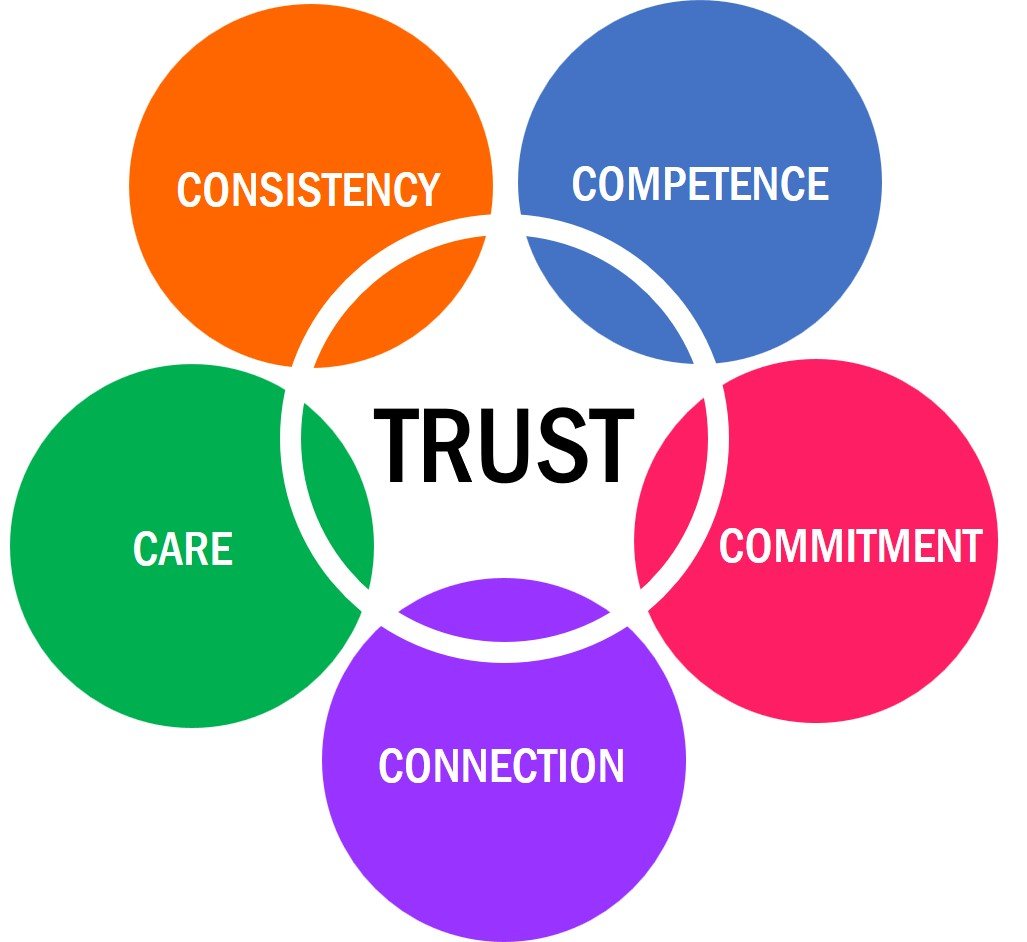
FIVE ‘C’S OF TRUST

Excerpt from ‘COACHING LIFE: Navigating Life’s Most Common Coaching Topics’, by Leslie Rohonczy

Amazon, 2023

CONSISTENCY: This aspect is all about reliability: doing what we say we will, and being intentional about our yeses and our nos. This consistency is observed in our actions, in how we hold ourselves accountable for our commitments and follow through by doing what we say we’ll do, when we say we’ll do it. When people learn that they can’t depend on us to keep our promises – no matter what great excuses we may have – it’s a trust-killer. We tend to judge others’ reliability in terms of time and quality. Slow to return emails? Cancel plans often? Break promises? Show up late to events? What message does our behavior send? We should never make promises we can’t keep, even if we’re just trying to calm a tricky situation.  We’ll build stronger trust with others if they know that we consistently follow through and do what we say we will.

COMPETENCE:  Others will be more concerned with our abilities, standards, and skills: when we know what we’re talking about, people believe that we are a credible source of information and insight. Our competence and credibility are a combination of how we present facts and theory, our skills and knowledge, and our ‘presence’ (the way we look, act, talk, and communicate). Humility is also a key aspect: when we pretend to know something that we actually don’t, and others see through our smoke and mirrors (as they often do), we become untrustworthy to them.

COMMITMENT: Some people will be more focused on the passion in our eyes as we deliver our message, so that they can connect to the deeper purpose that inspires us. Making our commitments visible helps us inspire the trust of others. It’s reassuring to see someone fully committed, because it lets us know that we can depend on them, especially when facing challenges. When our commitment is solid, we can engage in productive conflict that moves everyone forward. Some believe that trust creates harmony, when in fact, trust allows us to have productive conflict that won’t damage our relationship, and often strengthens our connections as a result.

CONNECTION: Speaking of connection, when we focus on creating close, open, and accepting connections, others feel comfortable talking to us about difficult things. People who are good at this aspect of trust walk their talk and are willing to get emotionally close to others. Building this connection requires us to be transparent about our thoughts and emotions. When we’re accepting and non-judgmental, people open up to us more easily because they trust that we won’t judge or criticize them. They feel seen and heard and can be themselves when they most need to.

CARE: Finally, to build vulnerability-based trust, we show that we’re concerned with the welfare of the other person, rather than pushing our own agenda solely for our benefit. Others may perceive us as self-interested if we care more about appearances, about getting our own way, about being liked or creating a favorable impression. Caring people are typically good listeners and genuinely want to understand others’ experiences and emotions. They have a desire to help and consistently show they care through their words and actions.

We each have a preferred aspect that we habitually start with, and so it’s important to understand that what engenders trust for one person might not resonate with another. For example, I look through the lens of consistency first: if you show up on time, keep your promises, and do what you say you’ll do, I trust you. It’s really that simple. But not everyone prioritizes consistency the same way. For example, consistency is the lowest one for my husband (a.k.a. ‘The Big Handsome’), who favors the Care aspect. He monitors for high self-orientation behaviors like someone putting their own needs or interests above the greater good and sees these as signals that they may not be trustworthy. If we can’t connect with someone enough to build trust, it may just be that they’re looking through a different lens than we are.

PRACTICE: PERSONAL TRUST MEASURES

Think about the last time you required someone to trust you. Perhaps it was related to the family budget, a new project at work, or a travel adventure. Find an example that you can evaluate in hindsight, and reflect of these questions:

1.       How did you demonstrate that you care?

2.       How did you attend to consistency?

3.       How did you establish your competence?

4.       How did you demonstrate your commitment?

5.       How did you build your connection?

Now, think about how the other person reacted. What trust aspect(s) do they seem to value most? What indicators do you observe that inform that opinion? How might you adjust your approach next time?