Resilience

GRACE UNDER PRESSURE: Finding Steady Ground at Year-End

(LISTEN TO THE NARRATED AUDIOARTICLE VERSION)

The holidays are rarely peaceful. On the work front, year-end means deadlines, performance reviews, and budget crunches. On the home front, it’s travel plans, family gatherings, and a growing list of to-dos, all wrapped in the expectation to somehow radiate good cheer through it all. It's a perfect storm under the glittering lights of December: professional pressure colliding with personal performance anxiety.

It’s no wonder that even the most grounded among us feel stretched thin. In my coaching practice, I see clients this time of year trying to power through exhaustion, stress, and overwhelm by sheer willpower, convinced that the finish line is just around the corner. But that last-ditch sprint through the holidays may just have you crawling into January depleted, not renewed.


WHEN EVERYTHING PEAKS AT ONCE
This end-of-year frenzy doesn’t just drain our calendars; it drains our cognitive reserves. Decision fatigue sets in after a long stretch of intense thinking, leaving us more reactive, less patient, and more likely to default to old habits. By December, our mental bandwidth is often running on fumes, and our nervous systems are signaling for recovery we rarely allow.

The real challenge isn’t simply managing time; it’s managing energy. Every deadline, conversation, and expectation draws from the same well. Without deliberate restoration, we end up spending emotional energy faster than we can replenish it.

So instead of pushing harder, this is the moment to become more strategic about recovery. Micro-breaks between meetings, shorter decision windows, deliberately slower pacing, and brief moments of mindful breathing actually protect your executive function. At home, try applying the same principles: fewer commitments, more intentional rest, and gatherings that nourish instead of deplete.

This season can be a quiet teacher if you let it: what if the pressure itself is a signal to recalibrate, rather than to double down?


WHAT “GRACE UNDER PRESSURE” ACTUALLY LOOKS LIKE
The phrase 'grace under pressure' often brings to mind the image of staying calm no matter what, maintaining a flawless exterior while the world spins around you. In truth, grace under pressure is not about perfection or polished composure; it’s about staying connected to yourself while everything else demands more of you. It’s about self-awareness in motion, the subtle shift that allows you to pause, breathe, and respond with intention rather than reaction. That moment of mindful presence is what keeps grace genuine instead of performative.

Here’s what it can look like in real life:

A client of mine in the energy sector now blocks “Transition Time” between her last meeting and her evening commute. These "TT" time blocks are sacred to her, and her admin staff knows they are off-limits to rescheduling. It's a ritual that allows her to turn off her laptop, take three minutes to breathe, and visualize leaving her workday behind. “It sounds trivial,” she said, “but it’s the difference between arriving home as the 'Restless Hurricane' (one of her coaching metaphors) or as myself.”

Another client at a financial firm now labels December as a “compassion month.” When tension peaks, she deliberately softens her tone and reminds herself that everyone, including her boss, is probably overtired. By giving others the benefit of the doubt, she releases her grip on judgment and creates space for understanding instead of escalation. The outcome? Fewer conflicts and a noticeable shift in atmosphere: more patience for (and from) others, more meaningful conversations, and a genuine sense of connection on the team.

And one more: a client who used to equate December success with overachievement now uses a single word, “HOMIE”, which stands for 'how much is enough' to help her decide what gets done and what gets dropped. She says it’s the most freeing leadership practice she’s ever tried. So simple, and so effective!


YOUR COACHING CHALLENGE: A MORE HUMAN APPROACH TO YEAR-END CLARITY
This season asks us to do the opposite of what our calendars demand. Instead of accelerating, take stock, and recalibrate. Before the year closes, ask yourself: What actually needs my full attention, and what just feels urgent because of the date on the calendar? Who needs my empathy and attention more than my efficiency and urgent pressure right now? Where am I running on habit instead of intention?

Each day during this busy holiday period, pick one moment to practice grace under pressure with intention:

  • Notice when tension rises or impatience surfaces, like when your inbox pings again at 6 p.m., or when someone’s bad mood collides with yours.

  • In that moment, pause, take a slow breath to the bottom of your lungs, and turn your attention inward.

  • Notice your body: Is your jaw tight? Are your shoulders tense? What is your breath doing?

  • Ask yourself: “What would grace under pressure feel like right now?” Allow the answer to shape your next action, even if that action is simply stillness.

After each practice, take two minutes to reflect on what you noticed:

  • What emotion was most strongly present, and what might be underneath it?

  • What shifted in me when I paused?

  • What will I do differently next time?

Capture a few notes or simply sit with your awareness. Over time, these daily pauses will start to build a steady rhythm of grace, teaching you how presence can be both your anchor and your reset button.


You may find that grace isn’t something you have to earn or schedule. It’s something you create by choosing presence in the middle of pressure.

Wishing you a season of calm energy, smooth edges, and kind hearts.

Reach out for a free exploratory Executive Coaching conversation at www.leslierohonczy.com.

LEADING THROUGH POLARIZATION: Staying Steady When the World Feels Divided

Two smart people sit across from each other in a meeting room. Both are calm. Both are right. And both are getting increasingly frustrated. What begins as a discussion about a company initiative morphs into something else: a collision of values, identity, and certainty. Each leaves the room convinced they were the reasonable one, and the other person is being difficult.

What happens when everyone is certain, and no one is listening?

THE NEW WORKPLACE DIVIDE

It used to be that politics stayed outside the office. Not anymore. From boardrooms to lunchrooms, polarization has seeped into corporate life, fueled by social media and the growing expectation that organizations must take public stands on social issues.

Recent research confirms how polarization can take a measurable toll on performance and retention. The Society for Human Resource Management (SHRM) reported in 2022 that one in four employees had considered leaving a job because workplace discussions around political or social issues became toxic. These trends show that polarization is not just a social problem; it has real consequences for innovation, engagement, and talent stability.

And according to the 2024 Edelman Trust Barometer, 63% of employees say they expect their CEO to take a stand on societal issues, yet only 30% of executives feel confident doing so. And trust in institutions, government, media, and business alike, continues to erode. The same report found that fewer than half of respondents trust “most people” they meet, a striking decline from a decade ago.

The result? A climate of fear and fatigue. Leaders tiptoe around sensitive topics. Employees scan for alignment before speaking openly. Diversity of thought, once celebrated, now feels risky. And polarization settles in like a heavy fog that clouds decision-making, trust, and collaboration across the organization.

But pretending the divide doesn’t exist isn’t neutral; it’s avoidance. So how do we create psychological safety in a world where safety itself can feel political?

WHY POLARIZATION FEELS SO PERSONAL

When someone challenges our deeply held beliefs, it doesn’t just feel like disagreement; it feels like threat. Studies by cognitive neuroscientist Jonas Kaplan and colleagues at the University of Southern California (2016) found that when people’s core beliefs are challenged, the brain activates the same regions associated with physical pain and self-protection. The amygdala lights up, cortisol spikes, and we default to fight, flight, freeze, or submit.

From a coaching lens, this is where identity and “shadow projection” come into play. When we’re triggered by another person’s view, it often isn’t just about their words. It’s about what we’ve disowned in ourselves, the traits or values we reject and then unconsciously project onto others. The conversation stops being about the topic and becomes a battle for belonging.

Social psychologist Jonathan Haidt captures this idea in The Righteous Mind, noting that we tend to be emotional creatures who occasionally think, rather than rational ones who occasionally feel. Our moral intuitions drive us first, and reasoning arrives later, usually to justify what we already believe.

In polarized times, the human brain is doing its job. It’s protecting us. But when we understand this biological response, we can choose curiosity over reactivity, allowing space for difference without making it dangerous.

SKILLS FOR LEADING ACROSS THE DIVIDE

Before diving into practical tools, it’s worth acknowledging that leading through polarization is less about having clever arguments and more about developing emotional stamina. The modern workplace is a microcosm of society’s divisions, and leaders often find themselves caught between opposing expectations from employees, customers, and even shareholders. Holding that tension without losing balance is a core leadership skill. The following practices are designed to help leaders stay steady, keep communication constructive, and rebuild trust when views diverge.

1. Listen for values, not positions.
Underneath every strong opinion is a value trying to express itself. If someone argues passionately about a policy, ask what that issue represents for them. Is it fairness? Safety? Freedom? When you reflect those values back, the tension often diffuses.

2. Frame conversations around shared purpose.
Teams can tolerate disagreement when they’re anchored in something bigger than the argument itself. A leader might say, “We don’t all need to think alike, but we do need to work toward the same outcome.” Purpose restores perspective.

3. Practise the discipline of neutrality.
Neutrality doesn’t mean silence or fence-sitting. It means creating the conditions where every voice can be heard without fear of ridicule or reprisal. The discipline is internal, holding your own judgments lightly, so others can show up fully.

4. Model curiosity over conviction.
When you lead with curiosity (“Help me understand what’s important to you about that”), you lower defences. Neuroscience research from the Centre for Creative Leadership (2023) shows that curiosity increases empathy and trust within teams, particularly in cross-ideological settings.

5. Create structured dialogue spaces.
A senior leader I coached had inherited a team who were divided over a corporate decision, and their team meetings had become emotionally charged. She convened a “listening circle,” where each person had three minutes to share their perspective uninterrupted. The only rule: others could only ask clarifying questions, not rebuttals. By the end, tensions had softened enough to create opportunities to build shared understanding, without the need for everyone to agree on all points.

YOUR COACHING CHALLENGE: FIND THE COMMON SENTENCE

To deepen learning and accountability, journal your reflections after each practice, or share your observations with a trusted peer or coach. This helps integrate the insights and reinforces new habits over time.

  1. Pause and observe. In your next polarizing conversation, notice what is happening in real time.

  2. Notice your reactions. Pay attention to any urge to defend, persuade, withdraw, or mentally check out.

  3. Observe your body. Scan for signals such as a tightening jaw, tense shoulders, fidgeting, shallow breathing, or a raised voice.

  4. Name the value at stake. Ask yourself, “What value of mine feels threatened here, such as fairness, autonomy, safety, or respect?”

  5. Prepare two neutral questions. Before or during the meeting, use values-based questions that focus on shared goals, for example: “What do we both want for this team?” or “What would success look like for everyone here?”

  6. Structure the dialogue. Invite one minute of uninterrupted sharing per person, followed by clarifying questions only. Listen specifically for points of alignment.

  7. Capture the common sentence. Write down one sentence both sides could genuinely say “yes” to, such as, “We both care deeply about this company,” or, “We both want people to feel safe.”

  8. Reflect and plan the next experiment. Journal three prompts: what shifted when I led with curiosity, what I would repeat next time, and what I will change in a higher stakes moment. Share one takeaway with a peer or coach and schedule the next opportunity to practice.

INFLUENCE FATIGUE: Staying Clear-Minded When Everyone’s Competing for Your Buy-In

If you’re in senior leadership, chances are everyone around you is trying to influence you, from your team to your board. The higher up in the organization you go, the more it shows up. Senior leaders face influence from every direction: employees seeking buy-in, peers pitching ideas, leaders setting new expectations, partners promoting initiatives, board members driving accountability, and customers shaping demands. It’s no wonder it can feel relentless. Without a system to manage the constant input, leaders can easily find themselves overloaded, reactive, or simply tuning out. Influence fatigue is real.


THE OVERLOAD PROBLEM

One senior executive I coach described it perfectly: “By lunchtime, I’ve already been pitched, persuaded, or pulled in ten different directions. And by 3 p.m., I’m mentally fried.” Those moments of fatigue don’t come from lack of commitment; they come from the sheer volume of persuasion that hits senior leaders every day.

The desire to influence is everywhere: it shows up in our inboxes, in team meetings and presentations, in hallway conversations and one-on-ones. Nearly every interaction carries an agenda, whether it’s an ask, a pitch, or a subtle call to action.

When everyone is trying to influence us, the mental load can become overwhelming. Research shows that constant exposure to persuasive messages and competing demands taxes the brain’s executive functions, reducing decision-making efficiency and accuracy (Pashler & Johnston, 1998, Annual Review of Psychology; Mark, Gudith & Klocke, 2008, Human Factors). Multitasking and frequent interruptions have been shown to lower productivity by up to 40 percent and significantly increase stress (American Psychological Association, 2019). Over time, this barrage of input erodes focus, weakens problem-solving, and diminishes our capacity to respond thoughtfully. When every conversation carries an influence agenda, the result isn’t engagement, it’s exhaustion.

Coaching reflection: What happens in your brain when everyone around you is trying to influence you? Do you lean in? Shut down? Get annoyed? Something else?


THE NEUROSCIENCE OF RESISTANCE

Understanding these neurological triggers isn’t just about how we influence others; it’s also about how we manage being influenced ourselves. Recognizing when your brain is shifting into stress or threat mode gives you the chance to pause, breathe, and stay anchored in discernment instead of reaction.

In The Influence Triangle (LinkedIn, 2024, link), I wrote that real persuasion doesn’t start with pressure; it starts with presence. The human brain cannot be influenced when it feels cornered or depleted.

When we sense urgency or manipulation, the stress response increases, flooding the system with cortisol and adrenaline. These chemicals narrow attention, limit creativity, and reduce empathy (McEwen, 2017, Annual Review of Neuroscience). It’s why people rarely say “yes” during high-pressure sales calls or heated meetings; they’re neurologically unavailable.

I once coached a VP who couldn’t understand why his brilliant transformation pitch wasn’t landing. His logic was flawless, but his timing wasn’t. He presented at the end of a full-day budget meeting, when cognitive energy was at its lowest. His colleagues weren’t rejecting his idea; they simply didn’t have the bandwidth to process it.

The brain’s openness to influence rests on three levers: timing, emotion, and connection.

  • Timing ensures your message lands when someone has the capacity to hear it.

  • Emotion activates meaning-making pathways in the brain, helping information stick.

  • Connection builds trust, supported by the release of oxytocin, a neurochemical associated with social bonding and cooperation.

When any of these levers are missing, even the best argument falls flat.


WHAT AUTHENTIC INFLUENCE LOOKS LIKE NOW

For senior leaders, being influenced is about discernment. It means knowing which ideas, perspectives, and requests deserve your attention and which can be set aside. With so many competing voices trying to shape your thinking, developing your ability to filter what deserves your attention helps you to stay open without becoming swayed by every strong opinion, emotional appeal, or urgent ask. The key is managing signal versus noise.

HOW TO MANAGE SIGNAL VERSUS NOISE

This is a skill that strengthens over time. The more you practice identifying what deserves your attention, the easier it becomes to separate what’s meaningful from what’s merely loud.

How do we build those discernment muscles? Well, purpose and clarity help us decide which conversations truly deserve our consideration and which ones can pass by without reaction. Here are several questions to help you triage them:

  • Timing: Do I have the cognitive and emotional bandwidth to process this right now? Even great ideas need the right conditions.

  • Energy Cost: How much time or attention will this require? Does the investment match the potential return?

  • Relevance: Does this align with my strategic priorities or current direction? If not, it may not warrant my full attention right now.

  • Credibility: Is the information reliable? Does this person or data point have proven insight or influence?

  • Impact: What would be the consequence of engaging or not engaging with this influence attempt? Will it meaningfully move something forward?

Using these criteria helps us remain open and curious without becoming reactive or depleted. It turns the daily flood of persuasion into manageable, intentional choices.

Authentic leadership influence isn’t just about how much we convince others; it’s also about how thoughtfully we allow ourselves to be influenced. When we stay grounded in discernment, we preserve clarity, purpose, energy, and trust. Others sense that steadiness, and paradoxically, that’s when our own influence becomes strongest.


YOUR COACHING CHALLENGE

Influence fatigue builds from how much you allow others’ persuasion to enter your awareness. Before your next big week of meetings or decisions, try this short exercise.

COACHING PRACTICE: Reset Your Influence Filter

Take ten quiet minutes at the start of the week to set your focus:

  1. List your true priorities. Identify the three areas of work that genuinely require your attention and influence.

  2. Anticipate possible influence attempts. Think ahead to who will likely try to sway your time, decisions, or focus, and note which deserve your full engagement and which can wait.

  3. Name your triggers and vulnerabilities. Notice where you tend to overreact or get pulled into other people’s urgency.

  4. Set your boundaries. Decide what kinds of input you’ll welcome and what you’ll decline, kindly but firmly.

Then experiment with these during the week. Pause once a day and ask, “Am I reacting to influence or responding with intention?” That simple question will help you keep your attention where it belongs: on what truly matters. And the more intentional you are about filtering influence, the more focused you’ll feel as a leader.

THE DOWNSIDE OF RESILIENCE: When to Call ‘Uncle’ and Move On

We celebrate resilience like it’s an Olympic sport. 'Bouncing back', 'pushing through', and 'grinding away' all sound noble, but at some point, determination turns into stubbornness, and perseverance starts to work against us.

Leaders are often praised for their ability to endure the tough stuff (and we're all dealing with some really tough stuff these days, aren't we?) But the longer we’re rewarded for holding the line, the harder it becomes to recognise when the line has moved.


A STORY FROM THE COACHING ROOM

I was fortunate to work with a Director a few years ago who was leading her team through a bold (read: complex and unpopular) transformation mandate. For months, she pushed herself and her people relentlessly to get on board with the process and mindset shifts needed to make it work. When some of her peers showed signs of resistance or slowing down, she dug in even harder. As the organizational changes took shape, she was in the thick of merging teams and shifting headcount, as her span of control broadened. And like a good soldier, she absorbed all of the extra work and kept pushing for more.

At our coaching session, I asked her what mindset was driving her ‘digging in’ behaviour, and she said proudly, “I am modelling resilience for everyone around me.”

By the end of that year, a clear had pattern emerged: after a round of planned headcount reductions, some of her best employees also chose to leave, and the ones who remained were scared, disengaged, and tired. And she hadn’t taken a proper break in over a year herself! This wasn’t about demonstrating resilience anymore; she was unintentionally modelling depletion and martyrdom.

Her a-ha moment came during a triangulation meeting with me and her VP. While we were reviewing her employee engagement survey results, her VP commented, “We admire your stamina, but your team is running on fumes.” She told me afterward that, in that moment, she felt a hot wave of recognition wash over her as she realized that her definition of resilience was in fact just a marathon of sacrificial endurance for its own sake.


NAMING THE SHIFT

This is the moment where resilience starts to change shape. It is the shift from a healthy ability to adapt under stress to an overextended state where our brains and bodies begin to pay a hidden cost. Neuroscience helps explain what happens when persistence becomes counterproductive, and how our wiring pushes us to keep going even when it’s time to stop. These next three ideas reveal why that happens, and what it costs us if we ignore the signs.

  • Stress physiology: Chronic exposure to stress hormones like cortisol impairs the hippocampus, the part of the brain that regulates flexibility and learning. Bruce McEwen’s research on allostatic load shows that over time, the body and mind pay a biological price for constant adaptation.

  • Sunk-cost bias and reward circuitry: Once we have invested time or resources, classic sunk-cost bias kicks in, and even our reward circuits can make disengaging feel costly. Behavioral economist Daniel Kahneman and others have explored how these biases compel us to stay the course even when logic says “cut losses.”

  • Cognitive narrowing: Under sustained stress, the prefrontal cortex shifts into survival mode, favoring short-term fixes and repetitive behaviors instead of creative problem-solving.

The irony is that leaders under prolonged stress often become less adaptable, the very opposite of what resilience was supposed to achieve.


WHEN RESILIENCE TURNS INTO RIGIDITY

Resilience becomes counterproductive when it crosses the invisible line from resourcefulness to resistance.

  • Fighting sunk costs: “We’ve invested too much to stop now” becomes a badge of honour.

  • Over-functioning: Leaders take on more and more to keep things afloat, unintentionally teaching their teams to rely on them.

  • Modelling burnout: Teams mirror what they see. When leaders glorify endurance, employees learn that exhaustion equals commitment.

  • Avoiding change: Perseverance turns into attachment to the familiar. “This is how we’ve always done it” starts to sound like leadership wisdom.

Organizational psychologist Barry Staw first described this pattern as escalation of commitment, and it has been widely popularized by several thought leaders, including Adam Grant. The message is clear: the longer we persist, the harder it becomes to admit that persistence itself might be the problem.


A TALE OF TWO COMPANIES

In the early 2000s, Kodak epitomized corporate resilience. It survived countless market shifts over a century by doubling down on what it knew best: film. The company even invented the first digital camera in 1975 and buried it. Why? Because the business model of selling film was too entrenched to abandon. Resilience had hardened into rigidity.

By contrast, Netflix faced similar uncertainty when DVD rentals began to decline. Instead of doubling down on its original model, it bet on streaming and later, original content. The difference wasn’t intelligence or resources; it was psychological flexibility.

Leaders who treat resilience as an identity often cling to what worked before. Leaders who treat it as a tool know when to put it down.


CULTURAL RESEARCH

The World Health Organization officially classified burnout as an occupational phenomenon in 2019, defining it as “chronic workplace stress that has not been successfully managed.”

Canadian data show sustained strain. In May 2024, one third of Canadian workers were in a high mental-health risk category, underscoring the real cost of endurance without recovery. Yet in leadership programs and performance reviews, “resilience” remains one of the most celebrated traits.

Maybe it’s time we stopped glorifying it and started interrogating it.


THE NEUROSCIENCE OF RECOVERY

Recovery isn’t weakness; it’s recalibration.

  • Rest and neuroplasticity: Sleep and rest restore the prefrontal cortex’s ability to integrate complex data and manage emotional regulation.

  • Emotional regulation: Activities like mindfulness, music, and physical exercise reduce amygdala hyperactivity and reset attention systems.

  • Perspective shifting: Downtime activates the brain’s default network, which supports perspective shifting, creativity, empathy, and strategic insight.

Leaders who build recovery into their rhythm are not “less driven.” They are creating the mental conditions for adaptability, the real heart of resilience.


YOUR COACHING CHALLENGE

Practice: Persistence or Rigidity?

Doing:
Identify one initiative you are holding onto mainly out of persistence. Define three signals that would justify pivoting or letting go and share them with a trusted peer or mentor.

What to Notice:

  • What emotions surface when I imagine stepping back from this initiative?

  • Do my reasons for continuing come from purpose, pride, or fear of loss?

  • How does my team respond when I talk about this work, with energy or fatigue?

Reflection Questions:

  1. What assumptions am I holding onto tightly that no longer serve?

  2. What would it take to release this project with grace and redirect energy elsewhere?

  3. Who could give me honest feedback on whether it is time to pivot?

  4. What might become possible if I stopped equating resilience with endurance?

True resilience is not about bouncing back or enduring more... it’s about knowing when to bend, when to rest, and when to pivot and move on with intention.  It’s the wisdom and courage to release what no longer serves.


Reach out for a free exploratory Executive Coaching conversation. Email: leslierohonczy@live.com

RADICAL SELF-COMPASSION: How High-Achieving Leaders Tame Their Inner Dialog

You’ve got the title, the credentials, and the career wins. And still, a voice in your head whispers, “Not good enough.”

 You’re not alone. I hear some version of this almost daily from the brilliant, high-performing leaders I coach. They’ve led multi-million-dollar transformations, delivered record-breaking quarters, built respected teams, and still feel like they’re faking it.

 Not all the time, of course. But sometimes, in the quiet moments. Or in the Boardroom. Or when getting unexpected feedback. I’ve often said that this harsh inner dialog seems to exist in epidemic proportions. Leadership is hard enough; being your own worst critic makes it exponentially harder.

 Let's look at some of the dangerous myths we find in leadership cultures about the harsh messaging we inflict on ourselves. See if you have any of these limiting beliefs:

  1. If I stop being hard on myself, I’ll lose my edge.

  2. Self-compassion is indulgent or weak.

  3. Without my inner drill sergeant barking in my head, I won’t perform as well.

 These myths need to be retired pronto, because self-compassion is a leadership advantage, not a weakness.


YOUR INNER DIALOG

Most of us have an internal narrative that runs in the background, until that uncomfortable moment when we're feeling vulnerable, and it leaps onto center stage. It's usually the result of a limiting belief that’s been rolling around inside of us (perhaps unexamined), influencing how we perceive ourselves and others. 

 Your inner dialog might sound like “You should’ve known that.” Or “They’re going to figure out you’re not as good as they thought you were.” This persistent mental commentary typically has an uncomfortably pointed message and zero nuance, all delivered via shame, comparison, and second-guessing. And while it might feel like this is a key part of how you protect yourself from failure or humiliation, what it’s really doing is just keeping you small.

 If you’ve ever held back a comment in a senior meeting, over-prepared out of fear of looking incompetent, or felt like a fraud despite plenty of positive feedback to the contrary, you’re familiar with this inner dialog.


HOW INNER DIALOG HIJACKS YOUR LEADERSHIP

For many leaders, the inner dialog gets louder as they climb higher, where the risks are greater, and the expectations are higher.

 Here’s what I often see with my coaching clients:

  • Perfectionism posing as excellence: You rework the presentation ten times, not because it’s not good, but because that narrative says it’s never good enough.

  • Silencing yourself in the room: You hold back bold ideas because that limiting belief says, “Say that, and you’ll look foolish.”

  • Over-functioning for approval: You carry too much for your team. You hustle for validation instead of leading from a centred, grounded stance.

  • Withholding feedback: You avoid tough conversations because you tell yourself that you're not experienced enough to deliver them well.

 And as if that weren't compelling enough, know this: your inner dialog isn't just harsh; it’s contagious. As leaders, when we operate from self-judgment, we unintentionally create cultures where others do the same.


THE RADICAL SELF-COMPASSION ANTIDOTE

I use the word “radical” deliberately. Not because it’s trendy, but because it feels radical to treat ourselves with compassion in a world that trains us to be relentlessly hard on ourselves.

 To be clear, self-compassion isn’t self-pity. And it’s not letting yourself off the hook. It’s the quiet discipline of truthfully acknowledging your intentions, your effort, and your limits, and leading yourself the way you’d lead someone you deeply respect.

 Dr. Kristin Neff, Associate Professor of Educational Psychology at the University of Texas at Austin and pioneer in the field of self-compassion research, defines self-compassion with three elements:

  1. Mindfulness: noticing when you’re struggling

  2. Common humanity: remembering that imperfection is part of being human

  3. Self-kindness: responding to your mistakes with understanding instead of judgment

 And the data backs it up. Leaders who practice self-compassion are more resilient, more adaptable, and more likely to take bold risks because they aren’t afraid that a mistake will destroy their credibility.


PRACTICES TO DIAL DOWN THE DIALOG

When you catch yourself in the grip of a limiting belief or a harsh inner dialog, try this practice:

 1. Identify the Message.
Write down your inner dialog’s message, exactly as you hear it. Use the same tone and words that arise in you. For example, "You haven't prepared enough, and now the Board is going to see how incompetent you really are." This simple act of writing down the message creates needed distance and clarity.

2. Rewrite the Script.

Reframe the harsh message with one that is more positive and less judgmental. For example, “I might mess up. And I’ll recover. I’ve done it before.”
“I’ve prepared for this. I’ve earned my seat at this table.”

3. Switch the Lens.

Consider, “If a colleague or friend said this about themselves, what would I say?”
Now, say that to yourself.

4. Bring in the Body.
Unclench your jaw. Soften your shoulders. Ground your feet. Take some deep breaths all the way to the bottom of your lungs. These micro-shifts signal safety to your nervous system and help reduce your uncomfortable emotions.

5. Remember Who You Are.
You don’t have to become someone else to lead powerfully. You need to become more you. Lead from the place of authenticity: your values, wiring, and presence.


WHAT THIS MEANS FOR YOUR LEADERSHIP

When we practice self-compassion, we don’t lower the bar, we raise it. We stop wasting energy in a constant war with ourselves. We show up bolder. We recover faster. We create psychological safety by modelling it. And we give the people around us permission to do the same.

 You don’t have to bully yourself into better performance. You don’t need to wait until you feel 'worthy' to speak up. And you certainly don’t have to silence your doubts or needs to be taken seriously.

 There’s a better way. If you’re ready to explore how to identify limiting beliefs that are getting in your way, let’s talk. It might be the most radical (and effective) move you make this year.

YOUR BRAIN IS WIRED FOR ANXIETY: 6 Simple Questions to Stop the Spiral

Leslie Rohonczy, IMC™, PCC, Executive Coach, Leadership Expert, Speaker, Author

If you’ve been feeling overwhelmed lately (and let’s be honest – who isn’t these days), you’re not alone. The world feels like a pressure cooker on the verge of exploding, and even the strongest among us are feeling the heat. Unprecedented levels of uncertainty, political upheaval, economic instability, and global tensions can make even the most resilient leaders feel anxious. But here’s the thing: anxiety thrives in ambiguity. When everything feels out of control, our minds spin stories of worst-case scenarios, feeding a cycle of stress that can feel impossible to escape.

The good news? You don’t have to tackle everything at once. Research shows that our brains can only process a limited amount of information at a time. This is known as cognitive load. When we try to manage everything at once, decision fatigue sets in, making it harder to think clearly or take effective action. By focusing on just one thing at a time, we can reduce mental overwhelm and make it easier to regain control. Instead, you can break it down into something much more manageable; just one thing at a time.

This exercise, which I call the One Thing Practice is like a mental reset button, giving you a chance to pause, assess, and shift your mindset before stress takes the wheel. By answering six simple questions, you’ll create a sense of clarity and control, even in turbulent times. Let’s walk through them together.

1. Name the thing I’m anxious about.

When stress hits, our minds tend to generalize: “Everything is a mess.” “Nothing is going right.” “The world is falling apart.”

But what exactly is causing your anxiety? Naming it is the first step in reclaiming control. Instead of saying, “I’m stressed about the state of the world,” get specific: “I’m worried that the financial downturn will impact my job security.” Or “I’m anxious about how a new policy change will affect my business.”

Once you’ve named it, you’ll notice that your stress becomes something you can begin to examine and explore, rather than experiencing it as an overwhelming cloud of fear.

2. Name one thing I can do to prepare for it.

Now that you’ve identified the source of your anxiety, it’s time to shift into action. What’s one small, concrete step you can take to feel more prepared?

If you’re worried about job security, can you update your resume? Strengthen your network? If economic uncertainty is affecting your business, can you revisit your budget or explore ways to diversify revenue streams?

The message here is that action reduces anxiety (though it doesn’t eliminate it entirely; some anxiety is natural.) Even the smallest step forward reminds you that you are not powerless.

3. Name one reason that it won’t be as bad as I fear.

Our brains are wired to anticipate worst-case scenarios, but reality is rarely as catastrophic as we imagine. Consider this: how many times have you worried about something that never actually happened?

Let’s say you’re worried about an upcoming presentation you have to make to the Board. Your brain is already crafting the script for a horror film: the lights come up, your mind goes blank, and the audience stares in awkward silence as you struggle to remember even one of your key messages. Harsh judgment is revealed on the faces of the Board members and your boss, as they roll their eyes and shake their heads in disappointment. Roll credits.

Your mind might be telling you: “I’ll freeze, forget everything, and embarrass myself.” But in reality, you’ve prepared, you’ve done this before, and even if you stumble, people are usually far more forgiving than we assume.

Challenge your fear with logic. Ask yourself: What’s another possible outcome that’s not worst-case?

4. Name one reason I know I can handle it.

This is where you tap into your resilience. You’ve faced challenges before. You have overcome obstacles. You have proof that you are capable, even when things get tough.

Think about a past situation where you faced uncertainty and made it through. Maybe you successfully navigated a career change, managed a crisis, or led your team through a tough period. You are stronger than you think. And you already have experience proving it.

If it helps to look at others’ experiences and approaches to resilience, think about some of the real Canadians whose examples shine a light on the path forward. Leaders like Arlene Dickinson, who built a multi-million-dollar marketing empire despite early financial struggles, proving that resilience and reinvention go hand in hand. Or Terry Fox, whose determination to run across Canada despite losing a leg to cancer inspired a global movement in cancer research. Or Clara Hughes, who transformed personal struggles with mental health into advocacy, using her platform to champion resilience and well-being. Just like them, you have faced challenges, adapted, grown stronger, and inspired others with your resilience. Your past experiences are proof that you can handle this too.

5. Name one upside to the situation.

Even in difficult times, there is always a silver lining—though sometimes you might need to squint to see it. Finding an upside doesn’t mean pretending everything is great, however. It’s about recognizing that even tough situations can lead to unexpected benefits. Maybe this challenge forces you to develop a new skill, strengthen relationships, or rethink outdated strategies that no longer serve you. What is one possible positive outcome of this situation?

A challenging economic climate might push you to be more innovative. A leadership struggle could highlight opportunities for growth. Even personal setbacks often lead to greater self-awareness and resilience.

This doesn’t mean dismissing the difficulty – it means acknowledging that opportunities often come disguised as obstacles. To help uncover the upside, ask yourself: What new skills or strengths might I develop as a result of this challenge? How might this experience shift my priorities for the better? What doors could this situation open that I wouldn’t have considered before? If I look back on this a year from now, what might I appreciate about what I learned or how I grew?

6. Name one thing I’m grateful for because of it.

Gratitude is one of the most powerful tools for shifting perspective, especially when stress tries to convince us that everything is negative. Instead of focusing on what’s lost or uncertain, gratitude helps us anchor to what remains steady and meaningful. It might be the support of a close friend, the lessons gained from a tough experience, or even the personal growth that comes from pushing through adversity. Even in stressful situations, there is something to be grateful for. This doesn’t mean ignoring or downplaying the difficulty of what you’re facing. Instead, it’s about finding balance—acknowledging the challenges while also recognizing the positives that exist alongside them. What is it?

Maybe this challenge is forcing you to slow down and focus on what truly matters. Maybe it’s revealing who your real support system is. Maybe it’s teaching you something invaluable about yourself and your ‘wiring’.

Speaking of wiring, did you know that gratitude rewires stress? When we consciously shift our focus to what we appreciate, we break the cycle of fear and reframe our experience.

Putting It All Together

This practice is simple, but don’t underestimate its power. In just a few minutes, you can shift from feeling overwhelmed to feeling focused and in control. The next time anxiety creeps in, pause and walk yourself through these six questions. Write them down. Reflect on your answers. Notice how your mindset changes.

One thought at a time. One step at a time. No need for superhero-level resilience, just a willingness to take the next right step. Practicing these six questions consistently helps build long-term resilience, training your brain to approach stress with clarity instead of panic. Over time, you’ll find that shifting your perspective becomes second nature, making you more adaptable and confident in the face of uncertainty. And with this new awareness, you stand at a new vantage point, from which you can take a step in any direction, toward more anchored choices. That’s all it takes to move forward.

If this practice resonates with you, I encourage you to share it with someone who might need it today. The world needs more calm, clear-headed leaders right now, and that can start with you.

Interested in more leadership and mindset strategies? Subscribe to my blog or reach out to explore executive coaching and leadership development opportunities tailored to your needs.


NAVIGATING TRUMP’S TRADE WAR: Grounded Strategies for Canadian Executives

Leslie Rohonczy, IMC™, PCC, Executive Coach, Leadership Expert, Speaker, Author

In a move driven by short-term political interests, Donald Trump’s latest round of tariffs targeting Canada, Mexico, and China has thrown our economic landscape into turmoil. As markets react, Canadian businesses are bracing for uncertainty and rethinking their strategies for resilience.

But Donald Trump’s trade war isn’t just a policy decision – it’s a disruption sending shockwaves through global markets. Canadian leaders now face an era where economic and political uncertainty isn’t just a possibility; it’s a daily reality. Supply chains are disrupted, key industries face instability, and businesses are left wondering how to adapt in a climate of unpredictability.

This fundamental shift in the way global trade and leadership operate is creating ripple effects of protectionist policies, retaliatory tariffs, and market instability that not only impacts corporate strategy, but also the livelihoods of Canadian families (Canada announces robust tariff package in response to unjustified US tariffs, 2025.

As an executive leader, you may find yourself wondering: How do I navigate this turmoil while maintaining stability for my organization and my team? The good news? You’re not alone. And you have more choices than you may realize.

THE NEW REALITY: CHALLENGES FACING CANADIAN EXECUTIVES

Change isn’t just coming – it’s already here. Many Canadian leaders find themselves:

  • Grappling with career transitions and shifting roles as industries restructure in response to new tariffs and market instability, particularly in manufacturing, agriculture, and natural resources (Canadian factory PMI tumbles as tariff uncertainty hits sentiment, 2025.)

  • Struggling to keep employees engaged amid uncertainty, as fear of job losses and financial strain grows – especially in trade-dependent regions like Ontario, Alberta, and British Columbia.

  • Managing organizational change with limited clarity on the path forward due to fluctuating trade agreements and unpredictable policy shifts, including Canada’s ongoing negotiations within USMCA (United States-Mexico-Canada Agreement).

  • Facing decision fatigue, making high-stakes choices daily about cost-cutting, diversifying markets, supply chain adjustments, and workforce management in response to the impact of tariffs on steel, aluminum, and automotive exports.

At the same time, leaders must balance financial sustainability, regulatory changes, and technological advancements that are reshaping industries at an unprecedented pace. The ability to stay grounded, agile, and forward-thinking will determine who thrives in this new reality (PwC Canada CEO Survey: Adapting to economic uncertainty, 2025.)

STAYING GROUNDED AS THE GROUND SHIFTS

1. NAVIGATE WITH A STRONG INTERNAL COMPASS

Your past experiences – both successes and failures – are invaluable. Reflect on what worked, and what didn’t. Honest self-assessment allows you to see where your strengths lie and where growth is needed. Leadership resilience starts with self-awareness.

In the face of shifting trade policies, having a clear set of leadership principles can serve as your anchor AND your compass. Take time to revisit your core values. What principles have guided your best decisions in the past? Aligning your leadership with these values fosters consistency, even in turbulent times (see my previous article that covers key leadership strategies in Leading Through Economic Uncertainty.)

2. RETHINK GOALS: FROM SURVIVAL TO STRATEGY

The brain craves direction. Neuroscience tells us that goals tied to clear rewards become habits more easily. Whether you’re leading a transformation or stabilizing your company, frame objectives in a way that motivates both yourself and your team: are you moving toward opportunity (growth mindset) or away from risk (fixed mindset)? The distinction matters.

For example, instead of reacting to trade restrictions with fear-driven cuts, reframe your approach: How can we reposition our business to capitalize on new markets or emerging trade agreements? Set three levels of goals with this question in mind: 1) short-term (adjusting strategy for immediate shifts); 2) mid-term (exploring alternative suppliers or partnerships, particularly within Canada and Europe through CETA, and especially as Provincial trade barriers fall); and 3) long-term (future-proofing your business against similar disruptions by diversifying exports beyond the U.S.). This structure ensures that no matter how unstable the present feels, you always have a guiding vision.

3. COLLABORATE OR COLLAPSE: WHY TEAMWORK MATTERS MORE THAN EVER

Many organizations are still structured around outdated competitive silos. But high-performing leaders know that success is collective. Redefine success within your teams by rewarding collaboration. Shared goals breed stronger, more adaptable teams.

And think beyond your own structure and resources: in the wake of supply chain disruptions, many Canadian companies have turned to industry alliances and local partnerships to navigate the challenges. Consider implementing cross-functional teams that bring together diverse perspectives from operations, finance, and strategy, with external partners and industry advisors, to create solutions that benefit your organization and the whole industry. Look to government-supported initiatives such as Canada’s Trade Commissioner Service (TCS) and expertise from Canadian crown corporation Export Development Canada (EDC) for insights and funding options that can support businesses through this transition (Canada's big banks push for reforms in Ottawa to confront tariff risks - Reuters).

4. THE EMPATHY ADVANTAGE: LEADING WITH HUMANITY IN TURBULENT TIMES

People don’t just follow plans; they follow people. Employees are experiencing economic anxiety and are worried about job stability, rising costs, and business viability. Acknowledge their concerns. Adapt your communication to show that you understand their challenges. Trust is built in conversations, not in directives.

Regularly check in with your team – not just about work, but about their well-being. A simple “How are you managing these changes?” can open up valuable insights and strengthen trust. Transparency about company decisions in response to the trade war can also help alleviate uncertainty and prevent misinformation (See how Canadians are adapting in: Economic uncertainty has 83% of Canadians changing their financial habits, 2025.

HOW EXECUTIVE COACHING CAN FUTURE-PROOF YOUR LEADERSHIP

Even the best leaders need a space to step back, reflect, and refine their strategies. Executive coaching provides that, offering tailored guidance, accountability, and fresh perspectives. Through deep conversations, structured frameworks, and actionable strategies, executive coaching helps leaders:

  • Gain clarity in decision-making amid economic and trade instability.

  • Build confidence in leading through uncertainty and market shifts.

  • Strengthen their leadership EQ ‘super-power’: developing your emotional intelligence can guide employees through financial and operational stress.

  • Identify blind spots that may be limiting strategic thinking in crisis management.

Coaching isn’t about fixing what’s broken – it’s about elevating what already exists. Leaders who invest in their own development create stronger, more resilient organizations that can withstand geopolitical turbulence. (Discover how strong leadership is shaping the future in Celebrating visionary leadership at a critical moment for Canada, 2025).

THE CONVERSATION THAT COULD CHANGE EVERYTHING

You don’t have to navigate this alone. The strongest leaders are not those who stand alone – they are the ones who know when to seek support, challenge their perspectives, and adapt to change with purpose. If you’re ready to explore how executive coaching can help you lead with clarity, confidence, and resilience, let’s talk. Schedule a free discovery consultation to see how you can turn today’s uncertainty into tomorrow’s strength. Powerful coaching conversations can make all the difference.

LEADING THROUGH ECONOMIC UNCERTAINTY

Strengthening Our Canadian Leadership Mindset

LESLIE ROHONCZY, IMC™, PCC, Executive Leadership Coach | FEBRUARY 2025


I’ve noticed a shift in the focus of many of my executive coaching clients in the past several weeks. Because the global business and political landscape is evolving so rapidly, and even erratically at times, Canadian executives and senior leaders are wrestling with next-level economic uncertainty.

While this current crisis may feel familiar in some ways to the economic challenges that we experienced during the COVID-19 global health crisis a few years back, this is significantly different. During Covid, we faced a common threat that united industries and nations. Specifically, Canada and our U.S. counterparts were in the Covid battle together; brothers and sisters, fighting side by side as members of the same family; looking out for one another. Doesn’t it feel like that was light-years ago?

Our current economic pressures, shifting trade policies, political changes, and global instability demand a mindset shift so significant that it will define not just the future of our businesses, but the resilience of Canada’s economy itself. And while these changes bring risks, they also present tremendous opportunities: greater clarity, adaptability, and strength – as individual leaders, as Canadian organizations, and as a nation.

Using Ken Wilber’s Integral Theory as a framework, let’s look at leadership mindset across four critical perspectives of the Integral Quadrants model: Action, Systems, Relationships, and Values.

1. ACTION: Embracing Agility, Accountability, and Ownership

Uncertainty can be paralyzing, but it’s time for leaders to lean into action. The question isn’t if the landscape will change – it’s how fast and how well we adapt. We don’t have the luxury of waiting for complete clarity before we act.

Key Mindset Shifts:

  • Control the Controllable: Instead of fixating on external forces like tariffs or supply chain disruptions, focus on what you can control – efficiency, innovation, and strategic positioning.

  • Act Before You’re Ready: Take calculated risks and iterate quickly rather than waiting for perfect conditions.

  • Adopt a Learning Mentality: Every challenge presents an opportunity for reinvention. Embrace experimentation and learning to drive transformation. Try experimenting with reframing the challenge as a chance to develop local manufacturing partnerships, lobby for inter-provincial trade reforms, reduce reliance on foreign supply chains, and strengthen your industry.

Executive Coaching Reflection Questions:

  1. What assumptions about the future might be limiting my options, and how can I reframe them to uncover new opportunities?

  2. How will we challenge those assumptions to uncover new opportunities?

2. SYSTEMS: Thinking in Complexity, Acting with Precision

Uncertainty requires leaders to step back and see the broader system at play – political forces, economic trends, industry shifts – and make data-informed but decisive moves.

Key Mental Models:

  • Zoom Out, Then Zoom In: Toggle between macro and micro views. Analyze global trends but translate insights into specific, actionable decisions.

  • Decisiveness Over Perfection: Waiting for perfect data leads to stagnation. Instead, make high-probability bets based on emerging patterns.

  • Scenario Thinking as a Superpower: Plan for multiple outcomes to give you an edge when volatility strikes. For example, when you recognize that your traditional supply chains are fragile, experiment with AI-driven forecasting and diversifying supplier regions, to help you transform uncertainty into a competitive edge.

Executive Coaching Reflection Questions:

  1. How am I balancing immediate pressures with long-term strategic vision, when making decisions?

  2. What evidence, criteria, or data points do I typically rely on?

  3. What other information might I explore to gain a fuller perspective?

3. RELATIONSHIPS: Leading with Emotional Intelligence and Stability

Markets fluctuate, but people are the heart of your business. Whether it’s your employees, your customers, or your stakeholders, they are all navigating this uncertainty along with you, and this is your opportunity to provide calm, transparent, and values-driven guidance.

Key Leadership Attitudes:

  • Transparency Builds Trust: Uncertainty is unsettling, but withholding information is worse. Leaders who share challenges openly build credibility and loyalty. Be as transparent as you are able, without putting your team or company at risk.

  • Empathy Over Authority: Instead of just driving performance, seek to identify and understand the emotional toll of this uncertainty. From that vantage point, lead with humanity. Employees and customers are loyal to leaders and companies who care about their well-being.

  • Confidence Without False Promises: As employees and investors look to you for assurance, demonstrate your confidence while staying honest about challenges. If you’re facing supply shortages, lead with radical transparency – openly communicate challenges while directing the pivot to Canadian suppliers. This is likely to increase customer trust, build stronger employee engagement, and strengthen your reputation for integrity.

Executive Coaching Reflection Questions:

  1. How am I fostering trust and psychological safety within my leadership team and through my organization?

  2. Am I sharing with enough transparency, and how do I know what’s ‘enough’?

4. VALUES: Leading with Purpose and Resilience During Uncertainty

At its core, leadership is about more than just profitability – it’s about principles. In times of upheaval, strong leaders ground themselves in what truly matters.

Key Leadership Principles:

  • Commit to National Resilience: Investing in Canadian talent, manufacturing, and innovation isn’t just patriotic – it’s smart business.

  • Lead with Long-Term Ethics: In a crisis, the temptation is to focus on short-term survival. Strong, resilient leaders make decisions that align with their values and their company’s legacy.

  • Champion Collective Strength: Uncertainty is best navigated through partnership, not isolation. Industry collaboration strengthens national stability. Instead of outsourcing to the U.S., invest in a Canadian R&D hub – securing government incentives and attracting top talent to future-proof your company while reinforcing Canada’s innovation economy.

Executive Coaching Reflection Question:

  1. What are the foundational core values of my business?

  2. How are my decisions reinforcing my core values and long-term vision?

  3. What upcoming decisions may create pressure on my core values? How will I prepare mitigants for that?

Strengthening Leadership Mindset in Uncertain Times

While uncertainty is challenging, it is also an opportunity to refine and grow your leadership. By cultivating a mindset of adaptability, strategic thinking, emotional intelligence, and purpose-driven leadership, you can guide your business – and Canada – toward a more resilient future.

Want to strengthen your leadership resilience and impact in the face of uncertainty? Executive coaching is a powerful tool in developing the clarity, confidence, and strategic insight to thrive in an evolving landscape. Schedule a discovery call with Leslie Rohonczy today to explore how executive coaching can help you lead with confidence.

BREAKING BUSY: Toxic Productivity and the Dark Side of Hustle Culture

by Leslie Rohonczy, Executive Coach, IMC, PCC | ©2024 | www.leslierohonczy.com

 In a world that glorifies hustle, many of us have fallen into the toxic productivity trap: the relentless drive to be constantly busy and accomplished, often at the expense of our well-being. This obsessive pursuit of success can become a destructive cycle, leaving us feeling guilty when we're not working, dissatisfied and exhausted when we are.

But what if there was a way to break free from the chains of toxic productivity? What if we could redefine success in a way that allowed us to mindfully embrace downtime, set boundaries, allow support, and hold ourselves with compassion?


The Productivity Pressure

For many, the pressure to be productive is a constant companion. It urges us on, driven by societal expectations, cultural norms, and the pervasive influence of social media that features perfect, shiny people in states of perpetual productivity. The underlying message is clear: to be valuable, we must be busy, accomplished, and continuously achieving.

I’ve wrestled with toxic productivity for most of my life. I remember always feeling ‘antsy’ in stillness and rarely let myself become truly bored. If boredom somehow snuck through my defense shields, I would twitch and whinge for awhile, and then try to find ways to self-sooth, usually through creative ideation (aka having a party in my head) just so that I would feel productive in some way. Of course, that’s been beneficial in some ways: for channeling creativity, innovation, and problem-solving, for example. But this kind of productivity also has a dark side: it’s been a relentless taskmaster that leaves no room for stillness; only a subtle (and sometimes not so subtle) gnawing feeling of guilt tied to the perception of laziness, or an anxious feeling that I’ve wasted precious time that could have been used more productively. And when I haven’t kept it in check, this constant drive has led to stress, overwhelm, and a sense of not being ‘enough’, no matter how much I achieved.

Even now, people frequently comment on my busyness and level of output. There’s no denying that a part of me that finds it energizing to list the ‘productive’ activities I love so much: executive coaching, team and leadership development sessions, mentoring coaches, making Coaching Minute videos, songwriting, recording and producing original music, rehearsals and live performances, teaching music, writing articles like this one, book events, painting and making jewellery. FUN!! And yet… there’s also considerable discomfort when I read it all in one sentence, because it reveals how deeply I’ve internalized the need to be constantly producing. The concept of 'rest' becomes intertwined with laziness, further fueling a toxic cycle of productivity, guilt and anxiety.

Perhaps this experience resonates for you, too.


The Personal Experience of Toxic Productivity

The internal conflict between the urge to 'do' and the need to 'be' is a common struggle. On one hand, there is a drive to meet deadlines, achieve goals, and maximize every moment. On the other, there’s a longing for peace, for time spent in the present without the looming shadow of the next task. This dichotomy can lead to significant mental and emotional distress. When we're not actively producing, we might feel a pervasive sense of worthlessness or fear that we're falling behind. This can manifest in various ways: stress, burnout, irritability, and physical health issues. When this happens, we know that our productivity has become toxic.

Toxic productivity can show up in different ways: you may seem to others to really have it all together, but you may secretly be battling a constant need to outperform your last achievement. Perhaps you come across as always on top of your game, but you are sacrificing your personal life and mental health to maintain that image. And as much as you’d like to think you’ve got it under control, toxic productivity is not a solitary experience. Many people around us, regardless of their background or profession, can be impacted by our toxic productivity, as they struggle with similar feelings.

The signs of toxic productivity include restlessness and difficulty relaxing, a constant need to be busy, resistance or discomfort with boredom, feeling guilty during downtime, and an inability to enjoy leisure activities without thinking you should be working or producing something useful.

Addressing toxic productivity requires a multifaceted approach. Here are some strategies to help break free from its grip:


Redefine Success

Success has long been equated with constant productivity and visible achievements. However, this narrow definition overlooks the importance of personal fulfillment and well-being as measures of true success. When we expand our understanding of what it means to lead a successful life, we recognize that a balanced integration of achievement with personal satisfaction, happiness, and health is what defines true success.

Consider my client, Laurie, a C-suite executive who, after years of non-stop work, realized she was deeply unhappy despite a long list of professional accomplishments. She began to redefine success by setting goals that included spending quality time with her family, travelling to bucket list destinations, pursuing hobbies, and prioritizing her mental health. As she shifted her focus, Laurie found that she felt more content and balanced in all aspects of her life. She was surprised to discover that her productivity didn't diminish, as she had expected it would; instead, it became more meaningful as it was aligned with her broader sense of purpose and values.

By redefining success, we begin to value moments of joy and relaxation as much as we value career milestones. Wouldn’t it be great if we could feel equally fulfilled by completing a 30-minute meditation as we would by signing a new client. Radical, I know! But this shift allows us to see downtime not as wasted time, but as essential to our overall success.

Redefining success can help mitigate the anxiety associated with feeling unproductive. When we no longer see productivity as the sole measure of our worth, we free ourselves from the constant pressure to perform. This liberation can lead to a healthier, more sustainable work and personal life.

Ultimately, redefining success is about creating a life that feels meaningful and fulfilling, beyond just the narrow definition and metrics of productivity. It encourages us to celebrate our achievements in all areas of life, including those that might not traditionally be recognized, such as personal growth, relationships, and self-care.


Set Boundaries

Boundaries are crucial for maintaining a healthy balance between our work and personal lives. Creating clear lines that separate work time from leisure time, ensuring that one does not encroach on the other, is essential for preventing burnout and preserving mental health.

Travis, the owner of an online marketing business, and self-proclaimed king of the side hustle, used to work around the clock, often sacrificing weekends and evenings to meet client demands. He was proud of the fact that he was a workaholic, and held it as a badge of honour, until he had a medical emergency that was stress-induced. Realizing the toll this was taking on his health and relationships, Travis knew he had to start setting some firm boundaries. He adjusted his pace and communicated his specific working hours to his clients. Outside of these hours, he focused on personal activities and rest. Travis feared he might lose clients by not being constantly available to them, however, to his surprise, most clients respected his boundaries, and his productivity improved significantly during his set working hours. He felt more energized and motivated, and his creativity flourished as he gave himself permission to recharge.

In addition to time-focused boundaries, there are others to experiment with, like creating the physical space for work that is separate from areas designated for relaxation. This can be challenging, especially for those working from home, but even small changes can make a big difference. For example, using a specific desk and chair for work, not having a cell phone beside his bed to charge, and avoiding bringing work-related activities into the family room or bedroom will help us reinforce the mental and physical distinction between work and personal time.

Boundaries are not just about limiting work hours; they also protect and generate specific, intentional time for rest and leisure. By setting boundaries, we prioritize our well-being and ensure that we have the necessary space to recharge. This practice can significantly reduce the feelings of guilt associated with downtime, as we come to see it as a vital part of our overall productivity, health, and self-care.


Practice Mindfulness

My client, Emma, found herself constantly anxious about work. She was a rising star who believed it was her extreme level of productivity that was fuelling her success. Emma longed to be in a steady, loving relationship, but there was just no room in her life for someone else. Emma realized she needed to make some changes, and she began by incorporating some mindfulness activities into her daily routine, beginning with a simple 4-minute breathing meditation (https://youtu.be/ZM3eYRODNbc) in the morning and evening. Over time, she added short meditation sessions and mindful walks during her lunch breaks. These practices helped her feel more grounded and less overwhelmed by her to-do list. And they also helped bring her more clarity and innovation ideas. Emma was thrilled to realize that she had become even more successful by producing less.

Mindfulness involves being fully present in the moment and accepting it without judgment. It can be a powerful tool to combat toxic productivity by helping us focus on the present rather than worrying about future tasks or dwelling on past performance. Mindfulness teaches us to observe our thoughts and feelings without getting caught up in them. For instance, when we notice the feeling of guilt about not working, we can acknowledge it without letting it dictate our actions. After all, this guilty feeling is just an emotion you’re experiencing in the moment, not a directive to take action. This perspective allows us to choose a more compassionate response to ourselves and our need for rest.

Mindfulness isn’t all about sitting cross-legged and chanting ‘ohmmm’ however. We can develop the ability to be mindful and fully present right there in the thick of it! Being fully present while we’re doing tasks can improve our focus and levels of output, lead to more efficient and effective work, and reduce the overall time spent on each task, which in turn, can create more space for relaxation and leisure activities without compromising our productivity. Mindfulness enhances overall quality of life by encouraging us to savour moments of joy and relaxation, making them more fulfilling.


Embrace Downtime

Despite how it may feel, downtime is not a luxury; it's a necessity. Periods of rest are essential for our mental, emotional, and physical well-being. Making time to recharge and enjoy life is a true measure of success, rather than a threat to our productivity.

David, the VP of a software engineering firm, used to feel guilty every time he took a break. He was driven by the belief that constant work was the only path to success. After experiencing some early signs of burnout, David wanted to change his approach, and began an executive coaching program focused on improving his work/life balance. The simple practice of scheduling regular breaks throughout his day had a profound effect on his wellbeing. David ran with the program, and re-dedicated his weekends to rest, family, and playing sports. Over time, he noticed a significant improvement in his energy levels, personal and professional relationships, and overall job satisfaction. David was promoted to CFO shortly after and vowed to maintain this healthy balance. His commitment to protecting downtime had an ancillary effect: because he was able to model healthier behaviours for his team, the engineering firm’s corporate culture, recruiting efforts, and employee retention improved as a result.

Embracing downtime means giving ourselves permission to rest. It involves recognizing that taking a break does not make us lazy; it makes us human. Rest helps our bodies and minds recover and refuels our energy. Engaging in hobbies, spending time in nature, reading, or simply doing nothing can be valuable ways to recharge and enhance our overall sense of well-being. When we view rest as a crucial part of our productivity cycle, we can value it just as much as the work. This shift in perspective can reduce feelings of guilt and anxiety associated with rest, leading to a healthier, more balanced approach to life. Incorporating regular downtime into our schedules can also improve our relationships. When we’re not constantly preoccupied with work, we can be more present with our loved ones, fostering deeper connections and a greater sense of support and fulfillment.


Seek Support

Seeking support is a vital step in addressing toxic productivity. It involves reaching out to friends, family, or mental health professionals to share our experiences and gain perspective. Support systems can provide encouragement, validation, and practical advice for managing the pressures of productivity.

Talking about our feelings can be incredibly liberating. When we share our struggles, we often find that others have experienced similar issues, which can reduce the sense of isolation. Friends and family can often contribute valuable insights and support that help us navigate the pressures of productivity more effectively.

And when friends and family aren’t enough, professional support, such as therapy or coaching, can also be valuable. Mental health professionals can help us identify unhealthy patterns and develop strategies to change them. They can provide tools for managing stress, setting boundaries, and practicing self-compassion.

Support groups can also offer a sense of community and shared experience. Being part of a group where others understand our struggles can be incredibly validating and empowering, as members share practical tips and encouragement for making positive changes.

Consider Maria, a marketing director at a highly successful agency who felt overwhelmed by her workload. During coaching discussions, we discovered that her anxiety response was far beyond the scope of what can be managed through coaching alone, so I encouraged her to seek out a therapist. Through therapy, Maria learned some critical coping strategies that helped her manage her significant anxiety, and through coaching, she learned to set and hold healthier boundaries. She also joined a support group for women who were facing similar challenges, which provided a sense of community and shared understanding. This three-pronged approach to support made a tremendous difference to Maria’s quality of life.

Seeking support can transform our relationship with productivity by helping us recognize that we don’t have to face these challenges alone. It can provide the reassurance and tools we need to prioritize our well-being and redefine our approach to work and rest.


Cultivate Self-Compassion

When we’re in the throes of toxic productivity, self-compassion rarely gets a seat at the table – striving and critical self-judgment take up all the space. But cultivating self-compassion is a powerful antidote to the toxic cycle: treating ourselves with the same kindness and understanding that we would offer to a friend means that we recognize and tolerate our imperfections and struggles, without the guilt-inducing layers of harsh judgment.

Take the example of James, a writer who often berated himself for not meeting aggressive, self-imposed deadlines. His inner critic was relentless, leaving him feeling inadequate, and leading to signs of burnout. After learning about self-compassion as part of his assigned coaching practices, James started speaking to himself differently; with kindness and compassion; with patience, acknowledging his efforts, even when he didn’t meet his goals. This shift in mindset helped him feel more at peace and less stressed.

Self-compassion involves recognizing that everyone makes mistakes and experiences setbacks. It’s about understanding that these moments are part of being human, not signs of failure. Cultivating self-compassion changes the way we view productivity. Instead of seeing it as a measure of our worth, we can see it simply as one aspect of our lives, which reduces the pressure to constantly perform and produce.

Ultimately, self-compassion can help us build a more positive relationship with ourselves. It encourages us to celebrate our efforts and achievements, no matter how small, to be gentle with ourselves when we fall short, and to examine our personal definition of success.

Remember, in the midst of all of the doing, it’s okay to just be. Embrace the present moment and embrace rest as a vital part of a successful, fulfilling and balanced life.


FREE COACHING PRACTICE: JAR MEDITATION

 by Leslie Rohonczy, Executive Coach, IMC, PCC | ©2024 | www.leslierohonczy.com

In our fast-paced world, finding moments of stillness and clarity can seem like a luxury. Yet, these moments are essential for our mental and emotional well-being. One powerful practice that can help us cultivate a sense of inner peace and allow for new insights to drop into us, is meditation. Today, we're going to explore a technique that will help you experience meditation in a different way.

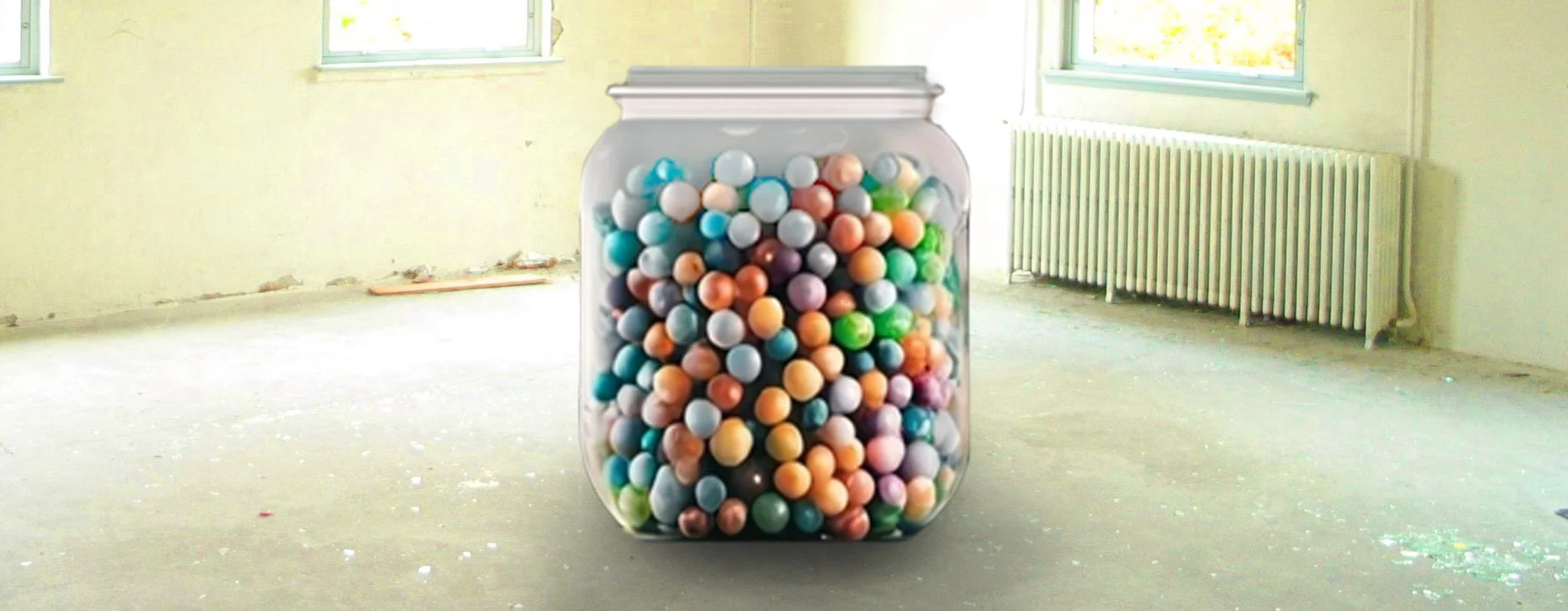
Imagine yourself standing in the middle of a huge room. It's spacious, and completely empty, except for one thing—a large glass jar. This jar represents your mind, and it holds your thoughts, represented by different colourful bubbles.

As you stand in the room, allow yourself to become aware of your thoughts. Just notice them, as you think about your day, your life, your worries, your dreams—anything that happens to float by or that typically occupies your mind.

Now, as these thoughts pop up, one by one, imagine that you are gently placing each thought bubble into the jar. Visualize each thought taking on this round shape as you do this—positive or negative, it doesn't matter. Once you've filled the jar with your thoughts, step back and observe. Notice that you're not engaging with the thoughts anymore; you're simply watching them, neutrally observing.

Now, imagine yourself slowly backing away from the jar. You move towards the door and can still see the jar with your swirling thoughts, as you step outside through the door. In this state of neutral observation, you're detached from the thoughts, just observing without judgment or analysis.

Spend a few peaceful moments (30 seconds, or 30 minutes; it’s up to you) in this calm state, then allow yourself to say thank you to the day, and return into the large room. Thank the room for holding this space for you, and send your gratitude to the jar that is holding all of your thoughts.

And if there are some thoughts that you feel would be better off remaining in the jar, leave them there. You can always come back for them another time if you really need them. But for now let them remain here. Feel the lightness in your body; in your heart; in your mind.

Remember, meditation is not about suppressing or controlling your thoughts. It's about cultivating awareness and acceptance of whatever arises in your mind. By focusing outside the jar of your thoughts, and observing them from a distance, you'll gain valuable insight into your inner world.

So, the next time you feel overwhelmed or stressed, find a quiet space, close your eyes, and visualize yourself in that vast room, with your jar of thought bubbles. Allow yourself to become aware of your thoughts, then gently place them into the jar where you can just observe them, as they are. With practice, you'll find yourself feeling more centered, grounded, and able to tap into your wisdom and find greater clarity in your life.

AFTER THE STORM: INSIGHTS FROM THE YELLOW BRICK ROAD

POLARIZATION, ENTITLEMENT, AND THE POST-COVID MENTAL HEALTH CRISIS

by Leslie Rohonczy, Executive Coach, IMC, PCC | ©2024 | www.leslierohonczy.com


I have an insatiable curiosity. I love to immerse myself in human behavior and neuroscience research, books, and podcasts. I try to tie threads of understanding together, to make sense of the world at a deeper level. In fact, this intrinsic longing for sense-making is what drives blog posts like this one. I am curious about the myriad factors that influence our behaviours, and what makes us humans behave the way we do, and… how in the hell we wound up here.

Over these past four years, I have sometimes felt like Dorothy in the tornado scene from The Wizard of Oz, swept up in the swirling funnel cloud of fear and chaos that threatens what I care about most. I know I’m not alone.

The mental health ramifications of the Covid-19 pandemic are profound and well documented. In mid-2020, when I was part of the Covid-19 response team at one of Canada’s crown corporations, I recall reading forecasts from mental health experts warning of an impending ‘mental health pandemic’ that would surely come on the heels of Covid, and that the trauma and isolation inflicted by this global crisis would create mental health challenges the likes of which we’ve never seen. Fast forward four years, and we find ourselves here, amidst a relentless upsurge in entitlement, polarization, depression, anxiety, and societal upheaval.

We can’t claim to be surprised. They warned us it was coming.

We are collectively navigating this tumultuous aftermath, often reacting instinctively, without fully understanding the underlying forces driving our restlessness, fear, suspicion, or entitled behaviour. We’re all walking this metaphorical yellow brick road, trying to figure out how we as individuals, and as a society, can get back home to the familiarity and comfort of our ‘normal’ lives.

The ferocity of the Covid-19 tornado, swirling with ideological polarization, has torn a swath of devastation through the fabric of our society. While some of our well-worn societal structures were already decayed and better off levelled to the ground – the notion that 'workers need to be physically present in an office to be productive', for example – countless facets of our society now resemble battlegrounds torn up by irreconcilable ideological divides. It's as if the tornado has knocked down some of our pillars of reason and cooperation, leaving us standing in the rubble, on separate islands.

The polarization that has gripped us as a society is fueled by misunderstanding and a rapid rise in ideological divides. Some estimates I’ve read stated that it’ll likely be ten years before the effects of this crisis level out. In this heightened state, we tend to dismiss people and ideas that don’t align with ours, and gravitate toward like-minded people, as a defense mechanism. It just feels safer, and validating, especially in a world where so little feels safe or assured.

And the media – both social and traditional – play a significant role in the storm. We see a proliferation of polarizing platforms who exploit and exacerbate this division, while balanced news outlets struggle with shrinking budgets, resources, and workforces. Social media platforms in particular are a breeding grounds for conflict, with blame and misinformation spreading faster than the Wicked Witch’s flying monkeys.

And behind the proverbial curtain, politicians and world leaders furiously spin dials and flip switches in response. Some manipulate the levers of power to exploit polarization for their own political and personal gains, while others genuinely try to create a sense of normalcy for their people. What the heck is ‘normal’ now, anyway?

Polarization shows up in different ways. In some countries, political parties are so polarized that violence and vitriol between people with different alliances and opinions is commonplace. At work, we see employees blaming leaders; protesters blaming police; and even within our own families, there are things we’re no longer able to discuss without spitting venom all over each other. You may have noticed that people seem to be on high alert more than ever before, constantly on the lookout for how they’ve been victimized. And when they find something, whether warranted or not, it becomes an opportunity to unleash righteous indignation and fury. Toto, we’re definitely not in Kansas, anymore.

Meanwhile, a sense of entitlement seems to have emerged as a pervasive force, with some individuals and groups laying claim to privileges previously unimagined in the pre-Covid era – again, ‘working from home’ springs to mind, albeit from the perspective of some employees demanding fully remote work arrangements. Entitlement, driven by a sense of injustice and fear, has only deepened our divisions.

Yet, amidst this cacophony of political rhetoric and societal discord, a glimmer of hope emerges. Beneath the surface, there is a growing desire to dispel misunderstandings and foster dialogue, to help us realize that, like the Scarecrow who longs for a brain, we can challenge our unconscious beliefs, and make informed decisions. As Maya Angelou famously wrote, “when we know better, we do better.”

And like the Tin Man who longs for a heart, we yearn for compassion in a world gripped by fear. Despite pervasive divisions and animosity, a collective human heart beats within us, craving connection and understanding. Through empathy, patience, curiosity, and kindness, we can find ways to melt the icy barriers of polarization and build bridges of understanding.

And, like the Cowardly Lion in our story, we seek courage in the face of adversity – not just for the physical threat posed by the Covid virus, but courage to navigate the mental health fallout in its wake. Like the Cowardly Lion finding his roar, we too can summon the courage to confront the storm head-on.

By standing up to our fears, challenging assumptions, growing our emotional intelligence, bravely and compassionately challenging limiting beliefs, and embracing dialogue and compromise, we will not only weather this current storm; we will emerge stronger from it.

Let’s start conversations at the dinner table. Let’s encourage teachers and coaches to help our kids understand the emotional reactions they’re experiencing. Let’s make it safe for people to explore beliefs or opinions that are different than our own. And let’s help each other get curious about what nuggets of truth these differing perspectives are built upon.

Just like Dorothy’s quest to find her way home, amid the longing for a return to a sense of stability and normalcy, what we’re seeking may lie inside of us, not outside.  

There’s no place like home.

There’s no place like home.

There’s no place like home.

FOREBODING JOY

by Leslie Rohonczy, Executive Coach, IMC, PCC | ©2024 | www.leslierohonczy.com


Have you ever experienced a moment in time when you are filled with joy, and then all of a sudden, you are overcome by a sense of impending doom as a result? It’s almost as if we expect to have to pay a toll for the good thing that’s happening to us.

This is called ‘foreboding joy’, and it may sound a bit paradoxical at first, but understanding this emotion can be a game-changer in life and leadership.

So, what exactly is foreboding joy? Well, it’s a complex emotion that often leaves us feeling torn between the desire to fully embrace the happiness in a specific moment, and the fear of something bad happening as a result. In fact, joy our most vulnerable human emotion! And when we can no longer tolerate the vulnerability that joy brings us, it becomes foreboding.

At its core, foreboding joy is rooted in this vulnerability – that innate human experience of exposing ourselves to the unknown, of opening our hearts to the possibility of both joy and discomfort. Brené Brown, a leading researcher in the field of vulnerability, describes it as the birthplace of courage, compassion, and connection. Yet, when we encounter moments of pure joy, our aversion to feeling vulnerable kicks in, which only intensifies a feeling of vulnerability, which then triggers a sense of foreboding that feels threatening and can overwhelm us. And it often happens in a split second, catching us unaware or unprepared.

So, how do we navigate this delicate dance between joy and fear? One of the most effective tools I’ve seen is mindfulness – the practice of being fully present and engaged in the moment. When we experience foreboding joy, our minds tend to spiral into thoughts of what could go wrong, or what will inevitably come along and take this delicious joy away.

Mindfulness offers us an anchor; a way to ground ourselves in the here and now. By tuning into our senses, our breath, and our experience of the moment, we can quiet the anxious whispers of fear and fully immerse ourselves in the richness of joy.

But mindfulness is just the beginning. To truly navigate foreboding joy, we must also cultivate self-compassion, the ability to feel gratitude within our joy, and discernment to helps us challenge the disaster-izing that commonly accompanies foreboding joy.

Too often, we berate ourselves for feeling fearful or anxious, judging our emotions as weaknesses to be overcome. Yet, true resilience lies in embracing our humanity – in recognizing that it's okay to feel vulnerable, even in moments of joy or triumph. When we treat ourselves with kindness and understanding, we create a space for healing and growth, allowing ourselves to move through this fear with courage and grace. We also create the ability to deepen the experience of our joy-filled moments, as a result.

As we journey deeper into the heart of foreboding joy, self-reflection becomes our compass. When we feel the familiar tug of vulnerability, we can pause and ask ourselves these powerful questions to help us stay connected to our joy:

  • What am I most grateful for in this moment of joy? What else? And what else?

  • How might you challenge your fear with evidence that proves the opposite is actually true?

  • What does my fear tell me about how meaningful this is to me?

By exploring these questions with curiosity and openness, we unearth hidden treasures of resilience and strength, reclaiming our power to fully embrace life's joyful moments.

But perhaps the most profound lesson of foreboding joy is this: joy is a spontaneous eruption of intoxicating emotion. In a world filled with uncertainty and unpredictability, we can’t control what the future holds. We can’t orchestrate it to happen when we want (or need) it most. What we can control is how we choose to show up in our present moments – with courage, with compassion, and with an unwavering commitment to living life authentically.

So, the next time you find yourself suppressing joy, as a ‘hedge’ technique, or hesitate to fully embrace a joyful moment, remember this: recognizing, naming, and understanding this emotion as ‘foreboding joy’ is the first step towards overcoming it. It's about acknowledging that it's okay to feel joy… simply as it is… without the fear of it costing us something precious in return. You don't need to earn your joyful moments or prove your worthiness of them – joy is your birthright as a human being! Embrace your vulnerability and lean into your joy with abandon. Then see what you notice about how that changes your experience of it.

In the end, it's not the absence of fear that defines us, but our willingness to dance with it – to embrace the full spectrum of our human emotion and emerge stronger, wiser, and more alive than ever before. So, the next time you notice the feeling of foreboding emerging through your joy, take a deep breath, and remember this: you deserve to live a life of happiness and fulfillment – without the need to pay a toll for your joy.

BAG OF STONES Practice

By LESLIE ROHONCZY, Executive Coach (PCC), Integral Master Coach (IMC); Author of Coaching Life: Navigating Life’s Most Common Coaching Topics


PRACTICE: ‘BAG OF STONES’

When we experience overwhelm, it can feel like we’re carrying the weight of the world on our back. I wrote ‘Bag of Stones’ (see video below), as a powerful coaching practice to help us navigate our overwhelm and figure out how to lighten our load. Give this guided visualization a try, to help you identify what’s most important to you, what you no longer find useful, and what you can let go of. You’ll need a pen and your journal to answer the following questions:

Imagine you are a traveler walking along a path, and you’re wearing a large backpack. It’s uncomfortably heavy, and the longer you wear it, the more your back aches. You know it’s time to lighten your load, so you place it on the ground, open the top, and inside you discover three bags. The first one is made of the finest silk; the second is made of sturdy cotton, and the third is made of old burlap.

1.       You open the silk bag and discover that it contains riches beyond your wildest dreams: diamonds, rubies, and emeralds. These precious items represent the things that are most important in your life; things that fill you up and make you feel nourished, grounded, connected, and fulfilled. For me, these are my family, my music collaboration, and my creativity. What are your treasures? Name them, and then imagine repacking each precious item one at a time, pausing to deeply feel gratitude for each one before you place it back in the silk bag. Imagine placing the silk bag back into your backpack to bring along with you.

2.       You open the second bag and discover that it contains many smooth stones that have been polished by time. These represent the things that may have been useful in the past, but no longer serve you anymore. However, they may be valuable for somebody else who is not as far along the path as you are. For me, it was striving for career achievement. I’m done with this kind of striving, but it could be useful to someone at the beginning of their career who is trying to make their mark in the world. What stones are you ‘done’ with? Name them, and then visualize yourself leaving them at the side of the road to offer to another traveler. Visualize placing the empty cotton bag back in your backpack.

3.       You open the burlap bag, and discover it’s full of dirty, jagged rocks that represent your limiting beliefs, bad habits, unproductive behaviors, negative or painful experiences, self-judgment, and unhealthy relationships that you don’t need to carry around anymore. These rocks just create pain that distracts you from the true treasures in your life. What do your jagged rocks represent? Name each one, and then visualize throwing them over a nearby cliff, one by one. Place the empty burlap bag back in your backpack. Then strap this lighter backpack on your back and continue your journey, feeling a sense of lightness in your body and spirit.