Inner Critic

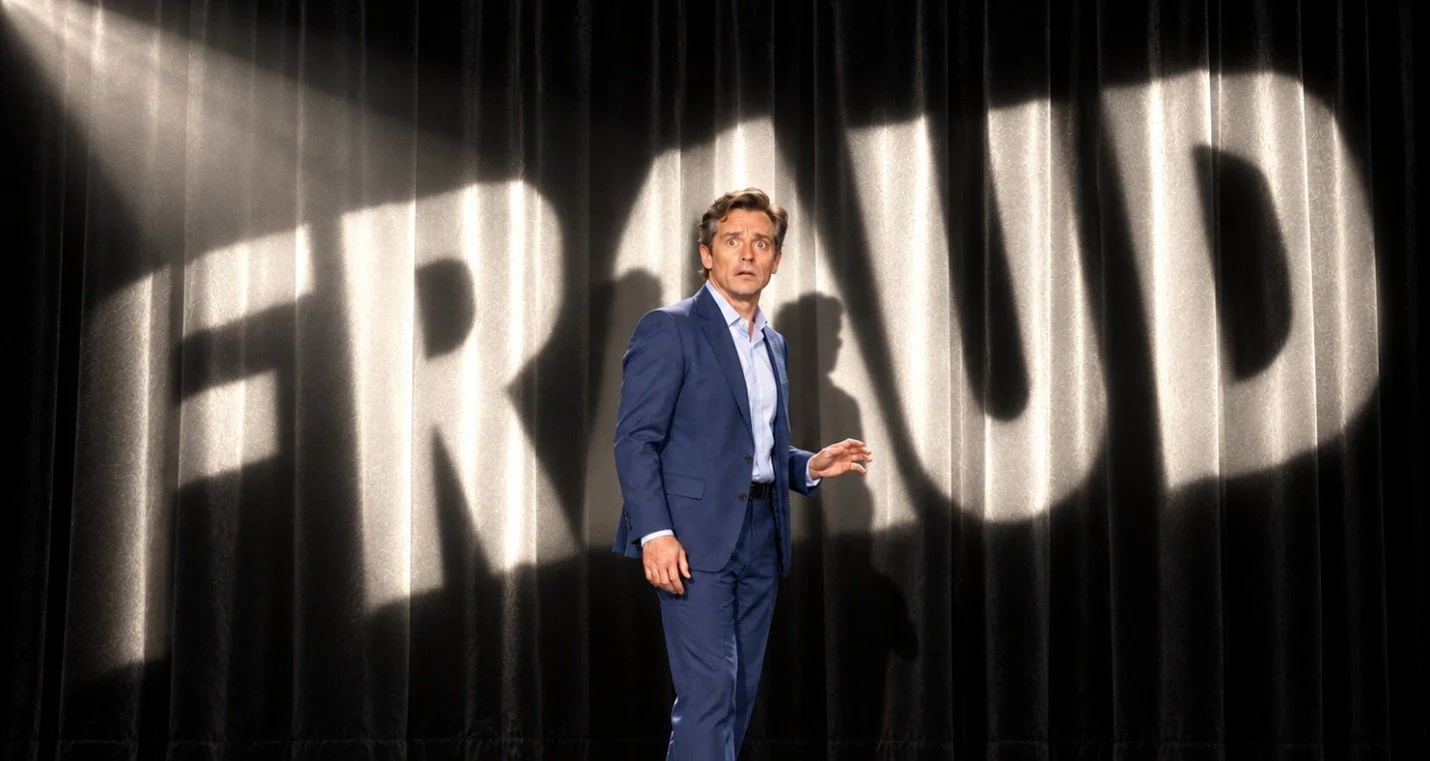
DO YOU FEEL LIKE A FRAUD? How the Imposter Response Changes As You Rise

By Leslie Rohonczy, IMC™, PCC

Executive Coach | Leadership Development Expert | Author | Speaker | ©2026 | www.leslierohonczy.com


Has this ever happened to you: You walk out of a meeting convinced you sounded like an idiot, only to have someone tell you how valuable your contribution was. You suspect they’re just being generous. You were there. You heard yourself.

Or someone challenges your recommendation, and suddenly you’re defending it with everything you're worth, far more fiercely than it probably deserves. And you know you could reconsider, but now it feels like your credibility is on trial.

The fear of being exposed can make us react in seemingly opposite ways: hold back or double down. It can follow us through promotions, borrow from our strengths, and become harder to recognize as we gain authority. By then, other people may be working around a fear we haven’t yet admitted to ourselves.

The imposter response changes as leadership demands change. And the fear of being exposed can show up as hesitation in one leader and excessive certainty in another. Getting promoted doesn’t settle the question of whether you belong. Sometimes, it simply raises the stakes.

Imagine two leaders preparing for a difficult discussion. One rehearses her recommendation repeatedly, then introduces it with, “This might be a stupid idea, but…” The other arrives with a firm position and pushes back against every question. He’s determined that nobody will see him hesitate.

They look very different. Yet both could be wrestling with the same fear: What happens when people discover I’m not as capable as they think?

We tend to recognize the imposter response when someone minimizes their accomplishments or doubts their qualifications. It’s harder to spot when it arrives wearing authority and insisting on the last word.


WHAT ARE WE RESPONDING TO?

In my book, Coaching Life, I describe the imposter response as the fear of being found out, despite evidence of our capability. We explain away accomplishments as luck, good timing, or other people overestimating us. Somehow, our successes never quite count as proof.

I prefer the term “imposter response” instead of the familiar “imposter syndrome.” The original researchers called it the “impostor phenomenon,” but “syndrome” became the popular label, making the experience sound like a disorder. I think that “response” better captures what I want us to explore: what makes us feel exposed, and what we do to protect ourselves when that happens. It directs attention toward what we’re experiencing and the choices we make in how we respond.

There’s also a useful distinction between our inner critic and our imposter response. Our inner critic is the voice inside most of us that judges us. Our imposter response is preoccupied with how to avoid the shame of being exposed.

Looking at the imposter response through the lens of leadership, our efforts to avoid feeling exposed can create extra work for the people we lead. It can weaken their trust in our judgment and make them reluctant to tell us what we need to hear.


THE PROMOTION CHANGES THE QUESTION

Early in our careers, it's pretty easy to demonstrate our competence. We know how to do the work, and we can point to what we’ve produced. As we move into leadership, it gets harder to point to something and say, “I did that.” More of our contribution comes through other people’s work, and it can take months to see whether a decision paid off. We’re still contributing, but the evidence may look very different from how we used to prove that we were good at our jobs.

What we fear people will discover about us can change, too. A new manager might worry about leading former peers, while a senior executive fears being asked a question they can’t answer. Here are some ways those fears can show up at different leadership levels or when we enter unfamiliar territory.

  • FIRST LEADERSHIP ROLE: “Who am I to lead people who know more than I do?” We might cling to being the expert, do work that belongs to others, or avoid giving difficult feedback because we doubt our authority to give it.

  • LEADING OTHER MANAGERS: “If I’m not directly involved, how will anyone see my value?” We might oversee work too closely or insert ourselves into decisions our managers are equipped to make. Delegating can feel like making ourselves irrelevant.

  • SENIOR EXECUTIVE LEADERSHIP: “I’m expected to have answers I don’t have.” We might overprepare to avoid being caught off guard, conceal uncertainty, or delay a decision because we’re afraid of getting it wrong. We might also project more certainty than the evidence warrants.

  • ENTERING AN UNFAMILIAR ORGANIZATION OR MANDATE: “My previous success might not count here.” We might rush to prove our value before understanding what’s needed, copy the prevailing leadership style, or hold back a different perspective because we’re unsure how it will be received.

These are possible patterns, rather than a predictable progression. A seasoned executive can feel entirely capable leading a major transformation and suddenly fraudulent when presenting to a new board.

The underlying question is worth noticing: What do I believe I have to prove to deserve this role?

If the answer is “I must always know more than my team,” each capable person we hire becomes a potential threat. If it’s “I must be indispensable,” successful delegation becomes uncomfortable. We might even pull work back just as someone else begins to handle it well.

I explored a related tension in LEADING EXPERTS?: our responsibility for the work can exceed our personal expertise. How we handle that gap becomes part of the leadership others experience.


DOUBT DOESN’T ALWAYS LOOK DOUBTFUL

You can’t reliably judge someone’s self-trust by how confident they appear. A forceful delivery can be an attempt to conceal considerable fear, while someone who acknowledges uncertainty may be quite comfortable with their own capability.

Our responses can also borrow from our strengths. If we’re driven and action-oriented, we might work harder, take charge faster, and become increasingly controlling. If relationships matter deeply to us, we might look for reassurance or avoid a necessary conversation because someone’s disappointment would feel like a verdict on our worth.

An analytical leader might keep researching until there’s no possibility of being wrong. Someone who usually thinks out loud might fill every pause, afraid that silence will suggest they have nothing useful to contribute.

Thoroughness can become a delay that everyone else has to accommodate. Helpfulness can become taking over. Determination can make us remarkably difficult to advise.

None of these behaviors proves an imposter response is present. But they invite a better question: When I feel exposed, which of my strengths do I push beyond the point of being useful?


FEELING UNDESERVING CAN DISTORT THE EVIDENCE

There’s a trap here: once we believe we don’t belong, we can become unreliable interpreters of our own performance. Praise gets dismissed as kindness. A successful outcome gets credited entirely to the team, or to luck, with no acknowledgment of our contribution. One difficult meeting becomes evidence that the promotion was a mistake.

Feedback can become equally difficult to use. We may hear a specific development need as confirmation that we’re fundamentally unqualified. Or defend ourselves so strongly that we miss something we genuinely need to learn.

Accurate self-assessment requires room for both capability and limitation. “I handled that well” and “I need help with this” should be able to coexist without either cancelling the other out.

There's a caveat in all this: before we conclude that our confidence needs work, we need to ask what’s happening around us. Are we second-guessing ourselves because we lack experience, or is it really because our boss keeps overruling decisions we were authorized to make? Do we doubt our expertise because there’s a gap in our knowledge, or because our ideas are regularly dismissed until someone else repeats them?

Those circumstances call for different responses. We can work on self-trust while also challenging behavior that undermines it. If we treat every doubt as a personal shortcoming, we risk taking responsibility for conditions we should question, and trying to earn credibility from people who keep changing the requirements.

Starting from “I’m the problem” can prevent us from seeing any of those accurately. The useful inquiry is more specific: What evidence tells me I need to develop? What evidence shows I’m already capable? What conditions are making it harder to succeed?


WHEN OTHER PEOPLE HAVE TO HELP US FEEL CAPABLE

When our accurate self-assessment skills feel shaky, it feels like such a relief to get reassurance and a sense of control. We check, check again, request another revision, or step into a decision that someone else could've made. From our side, it feels like being responsible. From the team’s side, it becomes extra work they have to do to help settle our discomfort.

Imagine a director asking a manager to develop a recommendation. The manager does the work and presents a solid proposal. The director requests more detail, then another option, then another meeting. Sure, further analysis might be warranted, but suppose the real obstacle is that the director feels exposed approving something they couldn’t have developed themselves. That manager is now doing two jobs: solving the business problem and helping the director feel safe enough to accept the solution.

Over time, people may learn to praise an idea before questioning it, or seek approval they don’t need. They let the leader to make the final “improvement” because it feels safer. Their attention shifts toward managing the leader’s emotional needs along with the work.

We all need support. The concern is whether people can disagree with us or work independently without having to repair our sense of worth afterward. A useful pause before intervening is: What will this improve for the work? What relief am I hoping it will give me?

Sometimes both answers are legitimate. Sometimes that second question explains an intervention the work never needed.


HOW MUCH PROOF IS ENOUGH?

The demand to keep proving ourselves can be difficult to satisfy. We succeed, then decide the assignment wasn’t challenging enough, or that we simply got lucky. We receive recognition, then question whether the person really understands our work.

When we're in the habit of disqualifying the evidence, yet another achievement won’t settle the case. That’s why the developmental work needs to go beyond collecting reassurance. We can practice assessing our contribution fairly, naming a genuine gap without turning it into a personal indictment, and allowing others to contribute without interpreting their capability as evidence against our own.

This may mean asking a question we think we should already know the answer to. It may mean accepting a good recommendation while acknowledging that we need help understanding part of it. Or letting someone finish a task without adding our fingerprints.

Those choices can feel uncomfortable. They also allow the work to proceed without requiring everyone to participate in our ongoing audition. Our teams need access to our judgment, but if we’re using that judgment primarily to defend our credibility, how much of it is available for the responsibilities we were hired to carry?


YOUR COACHING CHALLENGE

Choose one recent leadership moment when you felt you had something to prove. Use the questions from this article to examine that moment in writing. Stay with that situation throughout, so you can trace how your fear influenced what you did.

  1. WHAT FELT AT RISK? What happens when people discover I’m not as capable as they think? What did you imagine would happen if you couldn’t answer the question, needed help, or made a mistake? Then answer: What do I believe I have to prove to deserve this role?

  2. HOW DID YOU PROTECT YOURSELF? When I feel exposed, which of my strengths do I push beyond the point of being useful? Describe what you actually did. Perhaps you kept checking, defended a weak recommendation, or took over work someone else could handle. What did that require from the people around you?

  3. DOES YOUR ASSESSMENT HOLD UP? What evidence tells me I need to develop? What evidence shows I’m already capable? What conditions are making it harder to succeed? Give each question equal attention. Notice whether you can readily list your shortcomings but struggle to acknowledge your contribution, or whether you’re blaming yourself for circumstances you need to address.

  4. WHAT WILL YOU DO DIFFERENTLY NEXT TIME? Before acting, ask: What will this improve for the work? What relief am I hoping it will give me? Choose one response to practice the next time you feel exposed. Make it specific: “I’ll ask for the explanation I need instead of pretending I understand,” or “I’ll leave the decision with its owner, even if being less involved makes me uncomfortable.” Afterward, compare what you feared with what actually happened. What did you learn, and did your different response give someone else more freedom to do their job?

You don’t have to feel fully confident before changing how you lead. You can start by noticing when your need to feel capable is making it harder for someone else to shine.

If you’d like support exploring how your imposter response affects your leadership, reach out for a free exploratory executive coaching conversation at leslierohonczy.com.

For more leadership articles, connect with Leslie Rohonczy on LinkedIn, or visit www.leslierohonczy.com

I THOUGHT I HAD TO HAVE THE ANSWERS: The Surprising Cost of Expecting Yourself to Know It All

(LISTEN TO THE NARRATED AUDIOARTICLE VERSION)

Much earlier in my career, when I was leading my first team, I believed that being credible meant being prepared, composed, and always a step ahead of everyone in the room. If someone asked a hard question, I felt an unrelenting pressure to respond quickly with the right answer, even when my thinking was still forming. I never named that pressure. Hell, most of the time I wasn’t even aware it was driving me around like a bumper car. It just felt like part of the job. So, I just worked harder, sped myself up, and carried it all on my back.

It took me longer than I care to admit to see how exhausted that belief was making me. It wasn’t because the work itself was hard, it was because of what I thought leadership required of me.

I see this pattern often in the leaders I work with. These are seasoned, senior leaders who feel an unspoken obligation to be the one who knows; the one who reassures; the one who steadies everyone else. From the outside, it presents as confidence. From the inside, though, it can feel like a constant buzzing in your brain that never fully stops.

What surprised me was this. The exhaustion wasn’t coming from the complexity I was living in. It came from the idea that I was supposed to have everything already figured out.

I absorbed this idea about leadership early on, that it meant having answers, that uncertainty was risky, and that pausing too long might reveal something I should have sorted by now. So we compensate, we explain, and we offer smart perspectives that are technically solid but not always fully landed, frankly.

And people can feel the difference, even if they can’t quite name what’s off.

I learned this the hard way when I became a new manager, leading a team for the first time, and trying to be everything to everyone. I was the one filling every silence, answering every question, smoothing every edge. If there was uncertainty in the room, I absorbed it and tried to resolve it on the spot. On the surface, I suppose it may have looked like leadership to some. But in my body, it made me feel wobbly and weak, because it felt like I was carrying the weight of everyone's success and career aspirations on my back. That was the signal that finally clicked for me. Leadership was never meant to be a one-person load-bearing exercise where you protect everyone from uncertainty, so they don’t have to navigate it. 

And I was actually taking something away from my employees by being the one with all the answers: their chance to think it through for themselves, to sit in the discomfort of uncertainty, and to build their judgement and problem-solving chops in real time.

I've always believed that a leader's job is to create more leaders, not more followers. And yet there I was, unintentionally training others to hand their uncertainty over to me. I had become a pressure valve for the system.

When a leader consistently absorbs uncertainty like that, it shapes behaviour. People learn, without anyone ever saying it out loud, that you will hold the complexity, make the call, and carry the consequences. Over time, that chips away at your employees' autonomy, decision-making confidence, and a real sense of ownership. Capable, thoughtful people start to wait and seek permission, instead of thinking for themselves. That dynamic was unsustainable, not just for me, but for the team.

In fact, the leaders people trust the most are not the ones who respond the fastest. Research on psychological safety, led by Amy Edmondson at Harvard Business School, consistently shows that leaders who slow the pace, tolerate uncertainty, and invite thinking build higher levels of trust and engagement. They’re the ones who are willing to stay with a question for a moment. They can say, “I’m still thinking about that,” without apologizing or feeling the pressure to fill the white space, and without making anyone else wrong for not knowing, either.

Hey, don’t get me wrong. I would never ask you to walk into important conversations unprepared. This isn’t about being vague or winging it; it’s about knowledge versus judgment. There's a difference between knowing things and wanting others to see that you know the answers, versus exercising your judgment and making enough space for others to think, wrestle, and arrive at their own conclusions. Knowledge can sound confident and polished. Judgement shows up as steadiness and gives people enough orientation so that they can build the muscles to think for themselves. The importance of autonomy shouldn't be overlooked; it's one of the three most important human needs, and a huge factor in how we stay motivated and engaged at work.

While it's just a fact that I know lots of things, it's also true that I’m still learning plenty more. What has changed is my relationship to proving what I know. My role now feels less about projecting certainty and more about staying curious, asking powerful questions, and creating conditions where stronger thinking can happen, including my own.

That shift gave me back more energy than I expected, and it made my leadership feel sustainable in a way it never had before. And now, after all these years working with executives, senior leaders, and their teams, I can spot this pattern quickly, not because I have it all figured out, but because I’ve lived it from the inside and see how often it shows up in people who care deeply about doing a good job.

That expectation is powerful, and it’s rarely questioned. If you’re feeling the pressure to have all the answers in your leadership role, the following coaching challenge is designed to help you notice it, understand what’s driving it, and decide what you want to do differently.

YOUR COACHING CHALLENGE

This week, imagine that you are sitting on your own shoulder, observing yourself in action as you go through your days (I always picture the alien in Men in Black, with the tiny second head that pops out from behind his regular head). You are looking for moments where you notice the pressure to have the answers showing up. You may notice a tension in your body; a shift in your tone or behaviour. When you notice it, pause and reflect on these questions (take them one at a time):

  1. What do you notice about what triggers the pressure to have the answers?

  2. Where does the pressure typically show up in your body?

  3. What might be underneath, driving that pressure? (You might see themes emerge, like a fear of letting someone down, or of looking unprepared, or it may be something else entirely.)

  4. When you step in to carry that pressure for others, what might you be taking away from them, particularly related to their autonomy, confidence, or opportunity to think things through for themselves?

If this reflection resonates and you want support exploring how to lead with more ease and grounded judgment, reach out for a free exploratory Executive Coaching conversation at www.leslierohonczy.com.

RADICAL SELF-COMPASSION: How High-Achieving Leaders Tame Their Inner Dialog

You’ve got the title, the credentials, and the career wins. And still, a voice in your head whispers, “Not good enough.”

 You’re not alone. I hear some version of this almost daily from the brilliant, high-performing leaders I coach. They’ve led multi-million-dollar transformations, delivered record-breaking quarters, built respected teams, and still feel like they’re faking it.

 Not all the time, of course. But sometimes, in the quiet moments. Or in the Boardroom. Or when getting unexpected feedback. I’ve often said that this harsh inner dialog seems to exist in epidemic proportions. Leadership is hard enough; being your own worst critic makes it exponentially harder.

 Let's look at some of the dangerous myths we find in leadership cultures about the harsh messaging we inflict on ourselves. See if you have any of these limiting beliefs:

  1. If I stop being hard on myself, I’ll lose my edge.

  2. Self-compassion is indulgent or weak.

  3. Without my inner drill sergeant barking in my head, I won’t perform as well.

 These myths need to be retired pronto, because self-compassion is a leadership advantage, not a weakness.


YOUR INNER DIALOG

Most of us have an internal narrative that runs in the background, until that uncomfortable moment when we're feeling vulnerable, and it leaps onto center stage. It's usually the result of a limiting belief that’s been rolling around inside of us (perhaps unexamined), influencing how we perceive ourselves and others. 

 Your inner dialog might sound like “You should’ve known that.” Or “They’re going to figure out you’re not as good as they thought you were.” This persistent mental commentary typically has an uncomfortably pointed message and zero nuance, all delivered via shame, comparison, and second-guessing. And while it might feel like this is a key part of how you protect yourself from failure or humiliation, what it’s really doing is just keeping you small.

 If you’ve ever held back a comment in a senior meeting, over-prepared out of fear of looking incompetent, or felt like a fraud despite plenty of positive feedback to the contrary, you’re familiar with this inner dialog.


HOW INNER DIALOG HIJACKS YOUR LEADERSHIP

For many leaders, the inner dialog gets louder as they climb higher, where the risks are greater, and the expectations are higher.

 Here’s what I often see with my coaching clients:

  • Perfectionism posing as excellence: You rework the presentation ten times, not because it’s not good, but because that narrative says it’s never good enough.

  • Silencing yourself in the room: You hold back bold ideas because that limiting belief says, “Say that, and you’ll look foolish.”

  • Over-functioning for approval: You carry too much for your team. You hustle for validation instead of leading from a centred, grounded stance.

  • Withholding feedback: You avoid tough conversations because you tell yourself that you're not experienced enough to deliver them well.

 And as if that weren't compelling enough, know this: your inner dialog isn't just harsh; it’s contagious. As leaders, when we operate from self-judgment, we unintentionally create cultures where others do the same.


THE RADICAL SELF-COMPASSION ANTIDOTE

I use the word “radical” deliberately. Not because it’s trendy, but because it feels radical to treat ourselves with compassion in a world that trains us to be relentlessly hard on ourselves.

 To be clear, self-compassion isn’t self-pity. And it’s not letting yourself off the hook. It’s the quiet discipline of truthfully acknowledging your intentions, your effort, and your limits, and leading yourself the way you’d lead someone you deeply respect.

 Dr. Kristin Neff, Associate Professor of Educational Psychology at the University of Texas at Austin and pioneer in the field of self-compassion research, defines self-compassion with three elements:

  1. Mindfulness: noticing when you’re struggling

  2. Common humanity: remembering that imperfection is part of being human

  3. Self-kindness: responding to your mistakes with understanding instead of judgment

 And the data backs it up. Leaders who practice self-compassion are more resilient, more adaptable, and more likely to take bold risks because they aren’t afraid that a mistake will destroy their credibility.


PRACTICES TO DIAL DOWN THE DIALOG

When you catch yourself in the grip of a limiting belief or a harsh inner dialog, try this practice:

 1. Identify the Message.
Write down your inner dialog’s message, exactly as you hear it. Use the same tone and words that arise in you. For example, "You haven't prepared enough, and now the Board is going to see how incompetent you really are." This simple act of writing down the message creates needed distance and clarity.

2. Rewrite the Script.

Reframe the harsh message with one that is more positive and less judgmental. For example, “I might mess up. And I’ll recover. I’ve done it before.”
“I’ve prepared for this. I’ve earned my seat at this table.”

3. Switch the Lens.

Consider, “If a colleague or friend said this about themselves, what would I say?”
Now, say that to yourself.

4. Bring in the Body.
Unclench your jaw. Soften your shoulders. Ground your feet. Take some deep breaths all the way to the bottom of your lungs. These micro-shifts signal safety to your nervous system and help reduce your uncomfortable emotions.

5. Remember Who You Are.
You don’t have to become someone else to lead powerfully. You need to become more you. Lead from the place of authenticity: your values, wiring, and presence.


WHAT THIS MEANS FOR YOUR LEADERSHIP

When we practice self-compassion, we don’t lower the bar, we raise it. We stop wasting energy in a constant war with ourselves. We show up bolder. We recover faster. We create psychological safety by modelling it. And we give the people around us permission to do the same.

 You don’t have to bully yourself into better performance. You don’t need to wait until you feel 'worthy' to speak up. And you certainly don’t have to silence your doubts or needs to be taken seriously.

 There’s a better way. If you’re ready to explore how to identify limiting beliefs that are getting in your way, let’s talk. It might be the most radical (and effective) move you make this year.

THE UNSCRIPTED LEADER: When Over-Preparing is Under-Performing

Leslie Rohonczy, IMC™, PCC, Executive Coach, Leadership Expert, Speaker, Author


 You’ve done the prep. Nailed the slides. Practiced every line. But if you’re being honest, there’s still that low buzz of anxiety in your body, making you feel unsettled, as if you’re holding your breath, hoping nothing goes off-script.

 It makes sense. When the stakes are high, over-preparing feels like a smart move. But trying to control every variable can quietly choke off your impact. Leaders who script everything often miss the moments that matter most; those unscripted, human, real-time moments where connection, trust, and credibility are built.

 And the leadership landscape today is anything but predictable. We’re navigating this post-pandemic, post-election, mid-polarization, emerging recession time that impacts every aspect of our businesses: supply chains, staffing, climate, policy, trade, employee wellness, and shareholder value. Everything is in flux. Leaders are asked to make bold decisions with often blurry or incomplete information, and to communicate clearly and confidently amid constant change. It's a big ask to show up with poise when predictability has left the building.

 But the greatest pressure may not be coming from 'out there'. It’s likely an 'inside' job.

 Feeling the need to over-prepare, over-script, and rehearse every move to avoid being seen as anything less than polished is a common executive coaching topic. One client, a brilliant and capable executive, would script every communication, rehearse for days, and second-guess himself constantly. He wasn’t lacking competence; in fact, he was overflowing with skills, capability, and drive. But he was trapped by a perfectionist inner critic. Wired for achievement and image-conscious, the more he tried to get it right, the more disconnected and stressed he became.

 This is the moment we’re in: external turbulence colliding with an internal craving for control and validation. But here’s a little nugget to hold onto the next time you’re feeling the urge to over-prepare:

 Detouring into uncertainty doesn't take you off the path. It is the path.

 So, how do you lead without a script? How do you stay fully present and in your body, in the moment, and in relationships, when the certainty you usually rely on isn’t there? How do you keep your voice clear and grounded when the pressure is rising and the path ahead is anything but obvious?

 As an executive coach, I meet clients right at this crossroads. It’s not that they need more information; they’re already swimming in data. Through coaching, they develop integration; a clearer sense of who they are as leaders; a vision for how they want to lead; and a way to tap into their internal compass to help them explore new paths with genuine curiosity. Most of all, they learn how to trust that they will find the words, the insightful perspectives and ideas, the next step, and their confidence in the moment; not because it was rehearsed, but because it was real.


 What Over-Preparing Steals from You

It might feel like you're taking the responsible approach, and of course, some preparation is necessary! But too much of it can dull your leadership edge.

 Here’s what can get lost in the process due to over-preparation:

  • Spontaneity. Over-scripting blocks the kind of responsive, in-the-moment connection that builds trust.

  • Presence. If you're focused on remembering your lines, you're not actually in the moment with your people, and they can often (more often than you may realize) feel the distance.

  • Curiosity. Over-prepared leaders tend to stick to their script, rather than listening for new data or perspectives that might improve outcomes or understanding.

  • Authenticity. This might be the most important one of all. When everything is polished and pre-planned, the unique qualities that make you you often disappear. And in times of change, that's exactly what people want to follow: realness, not rehearsed perfection.

 In other words, over-preparing might feel safe, but it quietly erodes the very things that make your leadership impactful.

 Here’s what I’ve learned: Leading without a script requires three things that coaching builds powerfully over time:


1.      VOICE CLARITY: Knowing What You Stand For
In times of uncertainty, people don’t just need direction, they need anchoring. Coaching helps leaders articulate their core values, strengths, and leadership principles so they can speak from a place of alignment, not performance. When your inner clarity is strong, you don’t need a script. You just need to show up.

 One leader I coached said, "I kept looking for the 'right' message. What I needed was to say something true, not perfect." Once she found the courage to name what she did know, and what she didn’t, her team leaned in, not away.


2.      PRESENCE UNDER PRESSURE: Staying Regulated When Others Are Spinning
When tension is high, people look to leaders not just for answers, but for energy regulation. Coaching helps leaders understand their own emotional wiring, build tools for emotional regulation, and manage their inner state so they can model calm in the chaos.

 One VP I worked with love the coaching practice that she called her "One-Minute Reset", a quick breathing practice combined with a reset phrase that she used before tough town halls or uncertain board presentations. She stopped trying to deliver the perfect answer. She showed up grounded, and her credibility soared.


3.      STRATEGIC EXPERIMENTATION: Leading with Curiosity Instead of Control
Leaders often think their value comes from having the answers. But in today's environment, it's more valuable to ask the right questions. Coaching supports a mindset shift: from prediction to experimentation. From control to curiosity.

 Instead of locking into a brittle plan, great leaders run their leadership like an innovation lab. They test. They learn. They adjust. Coaching provides the space to reflect on what’s working, what’s not, and what to try next.


Leading Without a Script

Leading without a script isn’t the same as leading without a net. In fact, leading without a script might just be your next level of leadership development. It is certainly a call to deepen your self-awareness and build a stronger presence through bolder experimentation. In an era of uncertainty, the leaders who rise aren’t the ones who always have the perfectly polished answer. They’re the ones who keep showing up, grounded, human, and clear on who they are.

 Leadership without a script isn’t a sign of failure. It’s an invitation to lead with more clarity, more presence, and more courage than ever before. If you’re tired of performing and ready to lead from a place of confidence and real connection, Executive Coaching can help. Let's talk about how to develop your leadership to be less filtered, more comfortably unscripted, and authentically you. 

 Reach out for a free exploratory conversation at www.leslierohonczy.com.

YOUR BRAIN IS WIRED FOR ANXIETY: 6 Simple Questions to Stop the Spiral

Leslie Rohonczy, IMC™, PCC, Executive Coach, Leadership Expert, Speaker, Author

If you’ve been feeling overwhelmed lately (and let’s be honest – who isn’t these days), you’re not alone. The world feels like a pressure cooker on the verge of exploding, and even the strongest among us are feeling the heat. Unprecedented levels of uncertainty, political upheaval, economic instability, and global tensions can make even the most resilient leaders feel anxious. But here’s the thing: anxiety thrives in ambiguity. When everything feels out of control, our minds spin stories of worst-case scenarios, feeding a cycle of stress that can feel impossible to escape.

The good news? You don’t have to tackle everything at once. Research shows that our brains can only process a limited amount of information at a time. This is known as cognitive load. When we try to manage everything at once, decision fatigue sets in, making it harder to think clearly or take effective action. By focusing on just one thing at a time, we can reduce mental overwhelm and make it easier to regain control. Instead, you can break it down into something much more manageable; just one thing at a time.

This exercise, which I call the One Thing Practice is like a mental reset button, giving you a chance to pause, assess, and shift your mindset before stress takes the wheel. By answering six simple questions, you’ll create a sense of clarity and control, even in turbulent times. Let’s walk through them together.

1. Name the thing I’m anxious about.

When stress hits, our minds tend to generalize: “Everything is a mess.” “Nothing is going right.” “The world is falling apart.”

But what exactly is causing your anxiety? Naming it is the first step in reclaiming control. Instead of saying, “I’m stressed about the state of the world,” get specific: “I’m worried that the financial downturn will impact my job security.” Or “I’m anxious about how a new policy change will affect my business.”

Once you’ve named it, you’ll notice that your stress becomes something you can begin to examine and explore, rather than experiencing it as an overwhelming cloud of fear.

2. Name one thing I can do to prepare for it.

Now that you’ve identified the source of your anxiety, it’s time to shift into action. What’s one small, concrete step you can take to feel more prepared?

If you’re worried about job security, can you update your resume? Strengthen your network? If economic uncertainty is affecting your business, can you revisit your budget or explore ways to diversify revenue streams?

The message here is that action reduces anxiety (though it doesn’t eliminate it entirely; some anxiety is natural.) Even the smallest step forward reminds you that you are not powerless.

3. Name one reason that it won’t be as bad as I fear.

Our brains are wired to anticipate worst-case scenarios, but reality is rarely as catastrophic as we imagine. Consider this: how many times have you worried about something that never actually happened?

Let’s say you’re worried about an upcoming presentation you have to make to the Board. Your brain is already crafting the script for a horror film: the lights come up, your mind goes blank, and the audience stares in awkward silence as you struggle to remember even one of your key messages. Harsh judgment is revealed on the faces of the Board members and your boss, as they roll their eyes and shake their heads in disappointment. Roll credits.

Your mind might be telling you: “I’ll freeze, forget everything, and embarrass myself.” But in reality, you’ve prepared, you’ve done this before, and even if you stumble, people are usually far more forgiving than we assume.

Challenge your fear with logic. Ask yourself: What’s another possible outcome that’s not worst-case?

4. Name one reason I know I can handle it.

This is where you tap into your resilience. You’ve faced challenges before. You have overcome obstacles. You have proof that you are capable, even when things get tough.

Think about a past situation where you faced uncertainty and made it through. Maybe you successfully navigated a career change, managed a crisis, or led your team through a tough period. You are stronger than you think. And you already have experience proving it.

If it helps to look at others’ experiences and approaches to resilience, think about some of the real Canadians whose examples shine a light on the path forward. Leaders like Arlene Dickinson, who built a multi-million-dollar marketing empire despite early financial struggles, proving that resilience and reinvention go hand in hand. Or Terry Fox, whose determination to run across Canada despite losing a leg to cancer inspired a global movement in cancer research. Or Clara Hughes, who transformed personal struggles with mental health into advocacy, using her platform to champion resilience and well-being. Just like them, you have faced challenges, adapted, grown stronger, and inspired others with your resilience. Your past experiences are proof that you can handle this too.

5. Name one upside to the situation.

Even in difficult times, there is always a silver lining—though sometimes you might need to squint to see it. Finding an upside doesn’t mean pretending everything is great, however. It’s about recognizing that even tough situations can lead to unexpected benefits. Maybe this challenge forces you to develop a new skill, strengthen relationships, or rethink outdated strategies that no longer serve you. What is one possible positive outcome of this situation?

A challenging economic climate might push you to be more innovative. A leadership struggle could highlight opportunities for growth. Even personal setbacks often lead to greater self-awareness and resilience.

This doesn’t mean dismissing the difficulty – it means acknowledging that opportunities often come disguised as obstacles. To help uncover the upside, ask yourself: What new skills or strengths might I develop as a result of this challenge? How might this experience shift my priorities for the better? What doors could this situation open that I wouldn’t have considered before? If I look back on this a year from now, what might I appreciate about what I learned or how I grew?

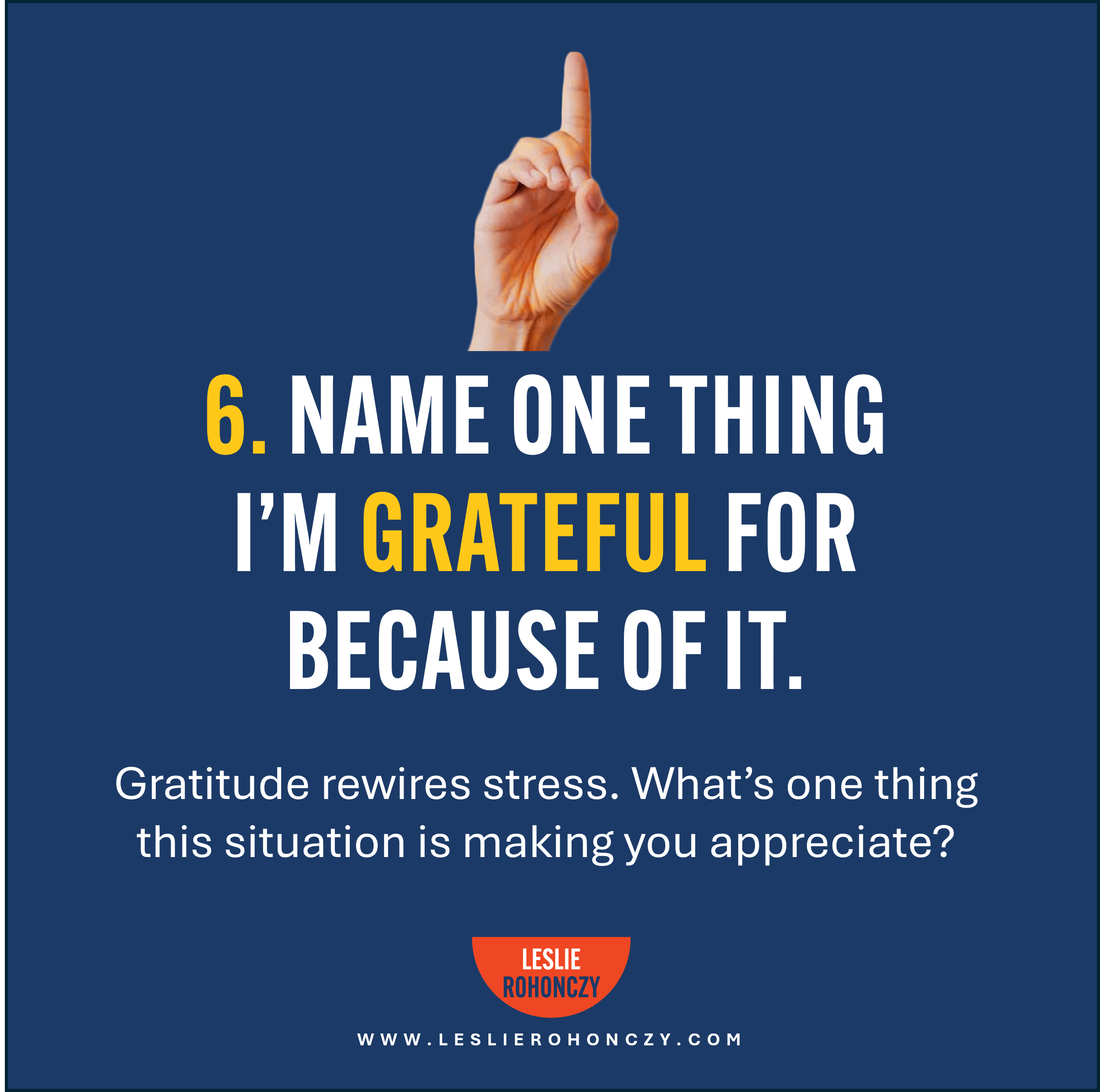
6. Name one thing I’m grateful for because of it.

Gratitude is one of the most powerful tools for shifting perspective, especially when stress tries to convince us that everything is negative. Instead of focusing on what’s lost or uncertain, gratitude helps us anchor to what remains steady and meaningful. It might be the support of a close friend, the lessons gained from a tough experience, or even the personal growth that comes from pushing through adversity. Even in stressful situations, there is something to be grateful for. This doesn’t mean ignoring or downplaying the difficulty of what you’re facing. Instead, it’s about finding balance—acknowledging the challenges while also recognizing the positives that exist alongside them. What is it?

Maybe this challenge is forcing you to slow down and focus on what truly matters. Maybe it’s revealing who your real support system is. Maybe it’s teaching you something invaluable about yourself and your ‘wiring’.

Speaking of wiring, did you know that gratitude rewires stress? When we consciously shift our focus to what we appreciate, we break the cycle of fear and reframe our experience.

Putting It All Together

This practice is simple, but don’t underestimate its power. In just a few minutes, you can shift from feeling overwhelmed to feeling focused and in control. The next time anxiety creeps in, pause and walk yourself through these six questions. Write them down. Reflect on your answers. Notice how your mindset changes.

One thought at a time. One step at a time. No need for superhero-level resilience, just a willingness to take the next right step. Practicing these six questions consistently helps build long-term resilience, training your brain to approach stress with clarity instead of panic. Over time, you’ll find that shifting your perspective becomes second nature, making you more adaptable and confident in the face of uncertainty. And with this new awareness, you stand at a new vantage point, from which you can take a step in any direction, toward more anchored choices. That’s all it takes to move forward.

If this practice resonates with you, I encourage you to share it with someone who might need it today. The world needs more calm, clear-headed leaders right now, and that can start with you.

Interested in more leadership and mindset strategies? Subscribe to my blog or reach out to explore executive coaching and leadership development opportunities tailored to your needs.


WHAT’S YOUR IMPOSTER RESPONSE?

by Leslie Rohonczy, Executive Coach, IMC, PCC | ©2024 | www.leslierohonczy.com

Are you wrestling with imposter ‘syndrome’? Many of us grapple with self-inflicted shame, feeling like frauds and fearing that someone will eventually stumble upon our terrible secret: “I don’t know what I’m doing; I don’t deserve to be here; and it’s just a matter of time before I get found out!”  We explain away our accomplishments as the result of serendipitous luck, or clever trickery, and believe that eventually we will be exposed when someone realizes that we don’t have a hot clue what we’re doing. It often hits people that outwardly look like they have it all going on: high achieving, academically accomplished bright lights who secretly doubt their own abilities despite obvious evidence to the contrary, and who instead believe they are inadequate, incompetent, flawed, failures. Roughly 85% of working adults admit to feeling inadequate or incompetent at work, and almost 70% don't feel they deserve their current success. Of these, one in four said they experience these feelings often, or all the time.

 When clients arrive with a self-diagnosis of imposter ‘syndrome’, I prefer to reframe it as an imposter ‘response’ to what they’re experiencing (it should never have been pathologized as a clinical diagnosis in the first place). Imposter response can manifest differently depending on a person’s background, personality, life experience and circumstances, but the common denominator is the fear of being ‘found out’. The imposter response is related to our inner critics: while our inner critic is focused on self-judgment, our imposter response is preoccupied with what to do about it to avoid shame. And in working with hundreds of individuals over the years, I’m convinced that culturally, we are experiencing epidemic proportions of imposter response at this time in our modern world.

 Here are five imposter response types, based loosely on the work of Dr. Valerie Young. Notice the sense of striving that is the common thread in each of them and how they all ultimately create shame (although what they strive for is different).

THE SILVER MEDALIST

I’ve called this the silver medalist, rather than gold, because winning a silver medal feels like profound inadequacy. The silver medalist has lost their event to the gold medalist – it feels worse than the bronze medalist, who had to win their competition to reach the podium. The feeling of failure attached to this imposter response is palpable. Silver Medalists strive for perfection and focus on ‘how’ they’re getting things done. They will set excessively ambitious goals for themselves, and then experience unbearable self-doubt and anxiety; often they will compensate by over-controlling, becoming impatient, and feeling that no one else is capable. Work must be done perfectly every time, and they take no joy in their success, feeling like they could always have done a better job. These are the micromanagers who won’t delegate, and if they do, they will be unsatisfied with the result from others. One tiny mistake in an otherwise excellent performance feels like failure, which triggers shame.

THE SUPERHERO

If we are convinced that we’re a phony going undetected among authentic colleagues, we protect our dirty little secret by striving to work harder than everyone else around us. This ‘superhero’ type usually has consequences on physical and mental health and can impact relationships. Superheroes are typically workaholics who rarely find time for self-care, hobbies, or relaxation. They don’t feel worthy of their titles so must prove their worth through acts of continuous striving, rather than from the output of the work itself. Their focus is on measuring their worth by how many things they can juggle and do well. When they miss the unrealistically high mark, they feel shame for not being capable of perfectly handling everything.

THE VIRTUOSO

The belief that they need to be a natural born genius causes this type to harshly judge how quickly and easily they perform, without considering how much effort or expertise is truly needed to excel in an area. If Virtuosos take ‘too long’ to pick up a new skill, they feel ashamed. They combine unreasonable expectations with harsh self-judgement about the need to perform perfectly right away. The Virtuoso is an action-oriented perfectionist that focuses on how quickly and easily something gets accomplished. If they struggle to ramp up or learn a new skill and can’t create a masterpiece right away, they equate that to failure, which triggers shame.

THE SOLOIST

Some people want to be perceived as independent and hold the belief that asking others for help exposes them as frauds. Soloists carry a very heavy load because they believe that they must prove their worth, that it’s all up to them, that no one else is going to come and rescue them, so they must do for themselves. They often refuse help, and if they end up requiring assistance from someone else, they feel diminished as a result. To feel accomplished, the Soloist must do it alone; to need help is to be a failure, which evokes shame.

THE GURU

Gurus measure their competence by what they know, and how well they can do something. They believe they can never know enough information, and are afraid of being perceived as inexperienced, ill-informed, unaware, or downright wrong. Their constant thirst for more training, certification or knowledge prevents them from really experiencing the weight of their expertise fully. Their focus is on what they can do, and how much they know. When Gurus can’t meet the unattainable expectation to know absolutely everything, they feel like failures, which triggers shame.

HOW TO QUIET YOUR IMPOSTER RESPONSE

If you’ve experienced imposter response, you probably chalked your success up to external influences, chance, charisma, connections, dumb luck, or your finely-honed ability to skate your way through life. But the imposter’s true dragon slayer lies within us, not outside of ourselves. Here are a few ideas you can experiment with.

  • Accept that you in fact are an imposter at various times in your life – and that’s normal. We all are, in some way. But if we let our imposter drive this bus, it will rob us of the chance to really feel our accomplishment.

  • At the root of the imposter response is an inability to internalize success (‘thanks, but I just got lucky’; ‘thanks, but it’s not perfect’; ‘thanks, but I got it at a thrift shop’). It’s often lauded as humility (however false it may be). Owning our victories takes authenticity and personal integrity.

  • Some people feel the need to seek validation from others, even clinging to backhanded compliments or slightly positive feedback. Allow yourself to feel great when someone pays you a compliment, but don’t rely on external validation as the measure of your self-worth.

  • Sometimes we can fall into the trap of setting the bar low, or even failing intentionally. Experiment with embracing the challenge – all in. If you succeed, you will have internalized it as a personal win. And if you don’t, it’s an opportunity to acknowledge your bravery in daring to try.

  • Some who struggle with their impostors become paralyzed in thought about what they want to do, waiting until they feel more ‘ready’. What might you have to loosen your grip on, to allow yourself to experiment?

The more we can get into motion and take specific actions that move us towards our goals, the less of a hold our imposter will have on us. In fact, authenticity is the Imposter’s kryptonite. When we decide that we will live our authentic truth every day, we align our thoughts and behaviors with our values, creating a sense of true freedom to be exactly who we are meant to be.


If you’re curious to explore how your imposter response may be getting in your way, contact me for a free coaching consultation. I’d love to help you tame your imposter response and build greater confidence, self-awareness, and strategies for success.

 LESLIE ROHONCZY | Executive Coach (PCC), Integral Master Coach™ (IMC)

613-863-8347 | LESLIEROHONCZY@LIVE.COM | WWW.LESLIEROHONCZY.COM