Mindset

WHAT’S YOUR IMPOSTER RESPONSE?

by Leslie Rohonczy, Executive Coach, IMC, PCC | ©2024 | www.leslierohonczy.com

Are you wrestling with imposter ‘syndrome’? Many of us grapple with self-inflicted shame, feeling like frauds and fearing that someone will eventually stumble upon our terrible secret: “I don’t know what I’m doing; I don’t deserve to be here; and it’s just a matter of time before I get found out!”  We explain away our accomplishments as the result of serendipitous luck, or clever trickery, and believe that eventually we will be exposed when someone realizes that we don’t have a hot clue what we’re doing. It often hits people that outwardly look like they have it all going on: high achieving, academically accomplished bright lights who secretly doubt their own abilities despite obvious evidence to the contrary, and who instead believe they are inadequate, incompetent, flawed, failures. Roughly 85% of working adults admit to feeling inadequate or incompetent at work, and almost 70% don't feel they deserve their current success. Of these, one in four said they experience these feelings often, or all the time.

 When clients arrive with a self-diagnosis of imposter ‘syndrome’, I prefer to reframe it as an imposter ‘response’ to what they’re experiencing (it should never have been pathologized as a clinical diagnosis in the first place). Imposter response can manifest differently depending on a person’s background, personality, life experience and circumstances, but the common denominator is the fear of being ‘found out’. The imposter response is related to our inner critics: while our inner critic is focused on self-judgment, our imposter response is preoccupied with what to do about it to avoid shame. And in working with hundreds of individuals over the years, I’m convinced that culturally, we are experiencing epidemic proportions of imposter response at this time in our modern world.

 Here are five imposter response types, based loosely on the work of Dr. Valerie Young. Notice the sense of striving that is the common thread in each of them and how they all ultimately create shame (although what they strive for is different).

THE SILVER MEDALIST

I’ve called this the silver medalist, rather than gold, because winning a silver medal feels like profound inadequacy. The silver medalist has lost their event to the gold medalist – it feels worse than the bronze medalist, who had to win their competition to reach the podium. The feeling of failure attached to this imposter response is palpable. Silver Medalists strive for perfection and focus on ‘how’ they’re getting things done. They will set excessively ambitious goals for themselves, and then experience unbearable self-doubt and anxiety; often they will compensate by over-controlling, becoming impatient, and feeling that no one else is capable. Work must be done perfectly every time, and they take no joy in their success, feeling like they could always have done a better job. These are the micromanagers who won’t delegate, and if they do, they will be unsatisfied with the result from others. One tiny mistake in an otherwise excellent performance feels like failure, which triggers shame.

THE SUPERHERO

If we are convinced that we’re a phony going undetected among authentic colleagues, we protect our dirty little secret by striving to work harder than everyone else around us. This ‘superhero’ type usually has consequences on physical and mental health and can impact relationships. Superheroes are typically workaholics who rarely find time for self-care, hobbies, or relaxation. They don’t feel worthy of their titles so must prove their worth through acts of continuous striving, rather than from the output of the work itself. Their focus is on measuring their worth by how many things they can juggle and do well. When they miss the unrealistically high mark, they feel shame for not being capable of perfectly handling everything.

THE VIRTUOSO

The belief that they need to be a natural born genius causes this type to harshly judge how quickly and easily they perform, without considering how much effort or expertise is truly needed to excel in an area. If Virtuosos take ‘too long’ to pick up a new skill, they feel ashamed. They combine unreasonable expectations with harsh self-judgement about the need to perform perfectly right away. The Virtuoso is an action-oriented perfectionist that focuses on how quickly and easily something gets accomplished. If they struggle to ramp up or learn a new skill and can’t create a masterpiece right away, they equate that to failure, which triggers shame.

THE SOLOIST

Some people want to be perceived as independent and hold the belief that asking others for help exposes them as frauds. Soloists carry a very heavy load because they believe that they must prove their worth, that it’s all up to them, that no one else is going to come and rescue them, so they must do for themselves. They often refuse help, and if they end up requiring assistance from someone else, they feel diminished as a result. To feel accomplished, the Soloist must do it alone; to need help is to be a failure, which evokes shame.

THE GURU

Gurus measure their competence by what they know, and how well they can do something. They believe they can never know enough information, and are afraid of being perceived as inexperienced, ill-informed, unaware, or downright wrong. Their constant thirst for more training, certification or knowledge prevents them from really experiencing the weight of their expertise fully. Their focus is on what they can do, and how much they know. When Gurus can’t meet the unattainable expectation to know absolutely everything, they feel like failures, which triggers shame.

HOW TO QUIET YOUR IMPOSTER RESPONSE

If you’ve experienced imposter response, you probably chalked your success up to external influences, chance, charisma, connections, dumb luck, or your finely-honed ability to skate your way through life. But the imposter’s true dragon slayer lies within us, not outside of ourselves. Here are a few ideas you can experiment with.

  • Accept that you in fact are an imposter at various times in your life – and that’s normal. We all are, in some way. But if we let our imposter drive this bus, it will rob us of the chance to really feel our accomplishment.

  • At the root of the imposter response is an inability to internalize success (‘thanks, but I just got lucky’; ‘thanks, but it’s not perfect’; ‘thanks, but I got it at a thrift shop’). It’s often lauded as humility (however false it may be). Owning our victories takes authenticity and personal integrity.

  • Some people feel the need to seek validation from others, even clinging to backhanded compliments or slightly positive feedback. Allow yourself to feel great when someone pays you a compliment, but don’t rely on external validation as the measure of your self-worth.

  • Sometimes we can fall into the trap of setting the bar low, or even failing intentionally. Experiment with embracing the challenge – all in. If you succeed, you will have internalized it as a personal win. And if you don’t, it’s an opportunity to acknowledge your bravery in daring to try.

  • Some who struggle with their impostors become paralyzed in thought about what they want to do, waiting until they feel more ‘ready’. What might you have to loosen your grip on, to allow yourself to experiment?

The more we can get into motion and take specific actions that move us towards our goals, the less of a hold our imposter will have on us. In fact, authenticity is the Imposter’s kryptonite. When we decide that we will live our authentic truth every day, we align our thoughts and behaviors with our values, creating a sense of true freedom to be exactly who we are meant to be.


If you’re curious to explore how your imposter response may be getting in your way, contact me for a free coaching consultation. I’d love to help you tame your imposter response and build greater confidence, self-awareness, and strategies for success.

 LESLIE ROHONCZY | Executive Coach (PCC), Integral Master Coach™ (IMC)

613-863-8347 | LESLIEROHONCZY@LIVE.COM | WWW.LESLIEROHONCZY.COM

PERSONAL MOTIVATION FOR LEADERSHIP

by Leslie Rohonczy, Executive Coach, IMC, PCC | ©2024 | www.leslierohonczy.com

PRACTICE OBJECTIVE

To explore your personal motivation for seeking a leadership position;

To acknowledge and grow awareness of the strengths and limitations these motivations may represent in this next career move.


OVERVIEW

Why do you want this leadership role? You may be considering a career move from individual contribution into a leadership role. Or you may already be a leader who wants to advance to the next level of leadership in your career. You have the ambition and drive but may not be aware of what’s driving this striving. It may be helpful to understand your motivations at a deeper level.


When asked why they want to become a leader (or VP, executive, or board member), most people give one of two standard answers: “I want to make a difference’ or, ‘I want to help people grow and succeed’. Both of these are honorable and admirable intentions, of course. And they’re also table stakes: the ‘must-have’ essentials of leadership. But what about YOU? What is it that you want for yourself from this new leadership role? It’s equally important to know your own personal motivations before you take on a leadership role.


INSTRUCTIONS

This coaching practice will help you understand the underlying motivations, and what might help you be successful at that new level. Grab your journal and complete the following statements – but

here’s the catch: you must answer them from your OWN perspective, NOT on behalf of someone else.

“When I’m a leader…  I’ll feel…

  I’ll be…

  I’ll get…

  I’ll know…

  I’ll believe…

  I’ll do…

  I’ll see myself…


REFLECTION QUESTIONS

  1. What theme(s) do you notice about your statements?

  2. How might each theme show up in you as you strive for this leadership role (how they might support you, or how they may get in your way)?

  3. What will you adjust in order to be successful in this new role (eg: grow EQ awareness, build specific skills, dial up or down certain behaviours, challenge limiting beliefs)?

THE SUCCESSION DILEMMA

Succession Planning: Leadership, Mindset, Culture, Strategy

by Leslie Rohonczy, Executive Coach, IMC, PCC | ©2023 | www.leslierohonczy.com

Many organizations are struggling with succession planning currently – even those with robust leadership development and succession planning activities are experiencing an exodus of their people. What I’ve noticed is that the organization’s culture can make a big difference in retention and succession: things like fostering psychological safety and openness to experimentation, integrated career development that combines experiential learning programs and direct recognition and constructive feedback from leaders.

As noted in the Conference Board of Canada research released earlier this year, talent retention is one of the top challenges for CEOs. But with well-cultivated succession planning strategies typically requiring 12 to 36 months of preparation and development, that can seem daunting when your organization is facing a leadership pipeline crisis.

In fact, I’ve heard comments from senior leaders like, “We know we need to focus on succession planning, but we’re fire-fighting constantly.” “We’re so short-staffed, there’s no time or resources for this level of strategic planning.” “We just don’t know where to start.”

If that feels familiar, you’re not alone. So what do we do about it? Here are four areas of focus for you to consider, along with some deep reflection questions in this article, to help you think about how to apply these best practices to your own specific organizations.


1.  TAKE A STRATEGIC VIEW OF SUCCESSION PLANNING

  • Build your succession plans for the organization you’re GOING to be in 5 years. What leadership attributes will THOSE future leaders need to have to be successful in that new version of your organization? Then make sure those attributes are reflected in your business strategy, operational plans, and leadership development systems. And if you bring someone in from outside your organization, make sure they have the scarce skills that will be needed in 5 years, AND that they’re willing to coach and mentor their peers and direct reports.

  • Move succession planning from a reactive activity to a proactive strategic enabler, so you don’t scramble every time an executive or expert threatens departure. High performing organizations make succession planning part of their culture: everyone is aware it exists, and for what purpose. And be as transparent as possible with your succession plans, to create “succession-awareness”. Sometimes departments end up competing for the same person because they haven’t talked about which position would be most beneficial for the organization AND the individual, which can cause rework, frustration, and engagement challenges.

  • Link succession planning to career development: This one is typically under-leveraged: more and more, employees expect organizations to provide career development as part of their employment experience. The companies I’ve seen that are doing this really well link succession planning activities to career development, as an investment in growing their employees’ careers.  This is especially true with the younger generation of leaders, who will leave for other opportunities if they feel their leader or organization isn’t investing in their development.

  • Create partnerships with similar organizations to exchange resources for cross-pollination and learning assignments, which can help engagement and retention. Some of these individuals who come from different sectors can be a great source of new leaders into your succession pipeline.


2.  RETIREMENT AND VOLUNTARY TURNOVER

  • Leverage the deep experience of retirees, semi-retired, or imminent retirees with a very specific purpose: to develop and mentor employees with high leadership potential and to identify gaps in your current succession planning strategy.

  • In return, provide flexibility and support to them: part-time work, self-employment, “bridge jobs,” fully remote work; improved ergonomics, increased flexibility, and vacation time. Increase your support and coverage for psychological services such as paid mental health and wellness days, personal days, or physical wellness activities.

  • Review your compensation strategy and recognition programs to make sure you’re offering competitive salaries, benefits, and bonuses. Review your recognition program (or implement one if you don’t have one) to retain high quality talent.

  • Provide role-specific training and development opportunities and listen to your younger leaders – they are looking for specific things in their training and development. Prepare people to take over jobs that they’re not yet obvious successors for. Intentionally start growing people several layers down in your organizations, so that they are ready and prepared to take over future roles. Consider implementing an Emerging Leaders program.

  • Create intentional cross-pollination assignments within your organization that allow high-potential individuals to diversify their awareness and experience, embedding internal mobility into the culture. This helps them feel that the organization is investing in them, and it typically boosts employee experience scores as well, and helps with overall organizational resilience.

  • Review the outgoing person’s portfolio of work and methods to determine what work that can stop, and which knowledge and tasks should be transferred to their successor. Include the accountability for key relationship transfer: determine the relationships that are key to high performance in this role and expect departing leaders to hand off these key relationships as part of their succession plan.


3. HOLISTIC SUCCESSION PLANNING & LEADERSHIP DEVELOPMENT

  • Practice transparency about the intentions behind succession planning and how it works, to normalize the idea of succession planning as a career enabler. It’ll also mitigate employee anxieties around job security and changing roles.

  • Expand succession planning to all leadership levels, not just executive- and senior management-level roles. Some of the best leaders I’ve seen were junior managers that were given the opportunity to grow their leadership chops through succession opportunities.

  • And while you’re at it, train all leaders on the best practices for succession planning – it will have 2 important benefits: 1) they can improve their methods for replacing team members, which builds team agility and resilience, and helps them handle fluctuations in staffing, and 2) it grows leaders with a ‘succession-planning mindset’ as they climb their own leadership ladders. When they end up in a top job, they will have embodied succession planning as part of the leadership culture, because they’ve seen firsthand how it is a key success enabler.

  • Speaking of leadership development, require every leader to have an individual development plan (IDP) which includes career aspirations, gaps, strengths as identified by assessment tools, training required, experiential learning assignments, coaching, and mentoring. This will help decision-makers and sponsors know where interests lie. Leaders should have regular one-on-one discussions with their own leaders using the IDP document as a framework for the discussion.

  • Expect leaders to identify and actively develop their future successors. Of course, you’ll need to make sure that the selection process is unbiased, and that you have a formal competency framework that defines the skills, experience, and expertise required for promotion.

  • Measure KBIs: You’re probably quite familiar with KPIs – key performance indicators that track financial and operational progress. But try experimenting with KBIs: key behavioural indicators will tell you about the health of your organization’s leadership cadre, and how your strategy is being understood, implemented, and executed. Consider doing ‘stay interviews’ (for example, www.StayTalent.com), to identify the leadership behaviours of your top performers, and then use those attributes for recruitment and succession selection.


4. COMMON SUCCESSION PLANNING PITFALLS

What I’ve shared above are some of the succession best practices, but let’s look at what often holds companies back from doing succession planning well. Here are a few of the pitfalls I’ve seen:

  • Not planning for the future version of your organization: Your organization is not static; nor are your customers, suppliers, or your industry. Plan for the organization you will be (or want to be) in five years and build your leadership role profiles and recruiting strategy accordingly.

  • Lack of implementation & administrative resources: An effective succession program can be costly. Lack of resources is the most common pitfall I’ve seen and can cause or certainly exacerbate the gaps in your leadership succession pipeline.

  • Misplaced ownership of succession planning: this is not a task to be delegated to HR. Succession plans must be owned and managed by the organization’s leadership team. Ideally, the process can be facilitated by HR or an external consultant, to ensure assessments are equitable and relative, using proven evaluation criteria.

  • Focusing on senior leadership only instead of investing in growing individuals with potential earlier in their careers is a short-sighted pitfall.

  • Hunting Unicorns: Avoid ‘idealizing’ the role, especially by expecting the incoming person to have what the outgoing leader had. This may disqualify great potential candidates.

  • Sponsorship & Advocacy: When deciding who to promote to leadership, some decision-makers may not be as familiar with individuals’ potential. Direct leaders often feel they must advocate for their employee’s promotion to leadership. Sometimes egos are involved, and the leader with the best pitch (not necessarily the best candidate) gets their person promoted.

  • Not leveraging retirees: untapped gold, as previously mentioned.


REFLECTION QUESTIONS

Now that you’ve read some of the best practices and pitfalls, it’s time to reflect on your own organization. Take the necessary time to reflect on each of these fifteen questions. Use them to spark discussions at your management meetings. Get input from your leadership cadres and employees. Use them to make some strategic decisions about how you will implement a succession mindset into your corporate culture.

  1. What leadership behaviours and attributes are most valued in your organization currently? Which of these attributes will likely still be relevant to your organization in five years, and which are currently outdated, weak, or missing altogether?

  2. How could your organization explicitly link career development opportunities with succession planning? How might you message that to your leaders and employees?

  3. What training, development opportunities & feedback do high performers at your organization get?

  4. How will you decide whether to hire externally, or develop and grow your succession pipeline from within? And what will you equip your organization with, to grow the next generation of leaders?

  5. What communication messaging will help you create a culture of succession transparency and awareness in your organization? What might get in your way?

  6. As a leader exits, what methods, criteria, and discussions will help you determine what practices, leadership functions, or tasks can be reduced or eliminated?

  7. Consider the robustness of your leadership development system: what aspects are strong (or are over-strengths)? What aspects need strengthening? What aspects need to be implemented?

  8. How do you currently grow and develop emerging leaders through formal training, experiential learning, coaching & mentoring, and on-the-job stretch assignments?

  9. What’s your organization’s current leadership development balance, and what would help move you closer to the ideal 70-20-10? (70% on-the-job knowledge experiences, 20% interactions with others (coaching & mentoring), 10%: formal learning events.)

  10. What problems keep the senior leadership team up at night, and who might have a unique perspective on what to do about it, as part of a stretch growth assignment to incubate new leaders?

  11. How does your organization view experimentation? Would unintended results from flexing new muscles or trying out a new behaviour be considered failure? If so, how might the senior leaders of your organization model it for the rest of the leadership cadre?

  12. How are you normalizing succession planning in your organization, and what indicators are you watching that will tell you it is becoming part of your leadership culture?

  13. What are the top 3 reasons that people leave your organization? What are your mitigants?

  14. What action can you take within your sphere of influence to reduce this voluntary turnover?

  15. What systems need to be updated to meet your organization’s projected reality in 5 years? (eg: compensation strategy, flex hours, training and development opportunities, workplace mental health support, recognition programs)?

FIXED VERSUS GROWTH MINDSET

by Leslie Rohonczy, Executive Coach, IMC, PCC | ©2024 | www.leslierohonczy.com 

According to neuroscientific research into leadership over several years, when humans face engagement challenges, or experience difficulty with change, we typically see it as either a threat (distress) or a challenge (eustress). When our brains perceive a threat or the possibility that our needs will not be met, it can create a ‘fixed’ mindset: our pre-frontal cortex goes ‘off-line’ while the more primitive brain circuits take over. This is the conditioned emotional response of the amygdala (our reptilian brain), and the typical emotionally driven actions that result. The amygdala activates brainstem stress systems, which in turn activate the sympathetic nervous system.

         It’s been documented by neuroscientists that being socially excluded can temporarily drop our IQ by almost fifteen points, because our brains use so much processing power for the ‘fight, flight, freeze, submit’ response. Our pre-frontal cortex diverts energy from its rational executive function under social stress. And when we feel threatened, our limbic system processes potential danger with momentary heightened alertness, but this decreases our ability for wider perception, understanding, creativity and collaboration. We can experience tunnel vision, it becomes difficult to see issues and solve problems, we can’t think as clearly, our ability to solve problems decreases, and we aren’t as good at working with others.

         In a fixed mindset, we may doubt our abilities, worry about others’ perceptions of us, and shy away from taking a chance. Our inner critic is driving the bus, especially when we feel we may lose status, independence, connection to others, or could be treated unfairly. We focus on the problem, become mired in details, feel anxious and defensive, and can lash out or run away while trying to maintain the status quo by focusing on what there is to lose. There is a sense of moving ‘away from’ the issues with a fixed mindset. Moving away from threat is a stronger, faster, longer lasting, and more common driver than a reward response, which requires our awareness and intention.

         With a growth mindset, there is a feeling of moving ‘toward’ the reward that can be obtained through growing perception, insights, and collaboration with others. When we build and embrace a growth mindset, we believe something is just a challenge to overcome. We trust that we can get better and improve and see it as a great opportunity to develop new skills and awareness. We see that we’ve moved forward from where we were before. A growth mindset sees a challenge, focuses on the solutions and end goal, and finds ways to make thing better. We feel open and determined, and we can experience our negative emotions as a propeller to move us into greater engagement and growth.

         You’ll be able to tell which mindset you’re in by asking yourself the following question: “Do I want to ‘be good’ and ‘prove’ my worth and that I’m better than others?” (a fixed mindset) or “do I want to ‘get better’ and ‘IM-prove’ my own performance and skills?” (a growth mindset).

Fixed VS Growth Mindset

COACHING CHALLENGE

Here’s a simple two by two model that can help you identify where you’re at, and the stance necessary to grow. The first axis is whether something is known to you or unfamiliar, and the second axis is about the instinct to move towards or away from it.

         The upper left ‘Explore’ quadrant represents a growth mindset and requires a stance of courageous curiosity. There is something unknown to us here, but we find it intriguing or inviting in some way, so we move toward it with curiosity. This is where we find innovative ideas and untapped resources.

         The upper right quadrant also represents a growth mindset, and this stance allows us to ‘Exploit’ opportunities and known resources. It leverages what’s known on behalf of moving forward with agency and action. This quadrant is often the most comfortable because we are familiar with the circumstance and willing to move forward. The downside is that we may avoid the unknown in exchange for what feels comfortable.

         Our lower right ‘Avoid’ quadrant is born from a protective stance that is focused on circumventing known pitfalls. It can make us feel safer but runs the risk of keeping us from living into our fullest potential. And it does nothing to prepare us for or protect us from the unknowns that can arise.

         And finally, the lower left ‘Ignore’ quadrant represents a fixed mindset. It’s a fear-based stance about what is unfamiliar or unknown. In this quadrant, our instinct may be to keep ourselves at a safe distance, securely tucked inside our bubble of ignorance. We may even consider moving to the ‘Avoid’ quadrant, but what might better serve us is to leverage the ‘Explore’ quadrant, to get curious about what is unknown.

Each of these quadrants is useful in its own right, depending on our circumstances, and it’s helpful to be able to recognize which stance we’re in, so that we can make conscious choices that broaden our perspective.

Excerpt from COACHING LIFE: Navigating Life’s Most Common Coaching Topics, by Leslie Rohonczy. Available in paperback or audiobook: Amazon.ca, Audible, iTunes

WHAT'S YOUR PLAN??

BUILDING YOUR CAREER PATH

by Leslie Rohonczy, Executive Coach, IMC, PCC | ©2023 | www.leslierohonczy.com

Taking ownership of our career means setting a clear vision, unpacking our true motivation for that vision, developing a plan that we can work daily, periodically looking at progress against our goals and adjusting, staying resilient and committed, and seeking support and advice from trusted mentors who are further along the path that we want to travel. 

There’s a famous quote from Albert Einstein that says, “Strive not to be a success, but rather to be of value.” I like this quote because it speaks to the mindset shift that is required away from the self-orientation of “What can I get for myself” (more money, better perks, fancy title, etc.) to thinking about the value that we can bring to the organization that will pay our salary. Our motivation in seeking career development is the key that either can unlock our success or keep us locked in our current holding patterns.

If you’re looking to find more motivation or inspiration for your career development, think about why you wanted your current job in the first place. What attracted you most to it? What are you losing out on if you stay in this role? You might also experiment with setting some new goals and looking at what potential benefits they may bring you. As you ideate, try to stay positive, without allowing any “yabut” thinking in to stink up your vision (“yeah, but…I’m not good at public speaking”, “yeah, but…it’ll take too long to figure out”, “yeah, but…I tried something similar ten years ago and failed.”)

As James Clear said in his best-selling book Atomic Habits, “you do not rise to the level of your goals; you fall to the level of your systems.” In the career context, our goal is the desired outcome, and the system is the collection of actions and daily habits we use to make it happen. Here are a few ideas to get you started.

  • DREAM IT: picture yourself in this ideal future state: how will you behave, talk, dress, sit? What kinds of things will you be doing every day? What people or systems will you interact with? What personal values will guide you through your day?

  • LOOK BACK: what kind of work did you find most satisfying and why? What past experiences or training do you consider to be strengths? What kind of work made you unhappy in the past? Who has been helpful to you and how?

  • LOOK NOW: what value, impact, experience, or skills do you offer? What gives you the most satisfaction in your current role? What would you like more of, or less of, in your role?

  • LOOK AHEAD: What do you hope to learn? What is in your way of attaining this future state? How will you navigate the barriers in your way? What is already in place to help you?

  • NAME YOUR GOAL: say it out loud. Write it down. Get used to letting it roll off your tongue. Tell others.

  • SCALE YOUR GOAL: big dreams are great, but don’t forget to set realistic sub-goals to help you get there.

  • LEVERAGE YOUR NETWORK: ask a friend, your leader, or another colleague to introduce you to people who can help you move closer to your career goal. Find a mentor. Hire a coach.

  • EXPLORE MULTIPLE CHANNELS: there are many ways to connect with others. Book a career discussion with your Human Resources advisor. Send your resume and cover letter to a recruiter in a target organization. Be brave and leverage unplanned opportunities, like bumping into someone at the coffee shop, or asking a peer for feedback after your presentation.

  • MAKE IT A HABIT: how will you hold yourself accountable for taking small steps every day toward your ideal career? How will you reward yourself for this consistent effort? How could you be even bolder?

  • TRACK YOUR PROGRESS: what criteria or measurable milestones will you use to know you’re moving in the right direction? What adjustments do you need to make? What will you most need to hear when the going gets tough?


Leslie Rohonczy is a certified Integral Master Coach™ who brings more than 30 years of business & leadership experience to her coaching practice. Leslie is also a talented composer, recording artist, and vocal & performance coach. Leslie’s coaching informs her music, and her coaching-inspired music helps to enrich her coaching program design. Leslie has released seven original albums containing coaching-inspired music and lyrics, that are featured in Leslie’s book, Coaching Life: Navigating Life’s Most Common Coaching Topics, available on https://www.amazon.ca/dp/B0BXN7F5TZ

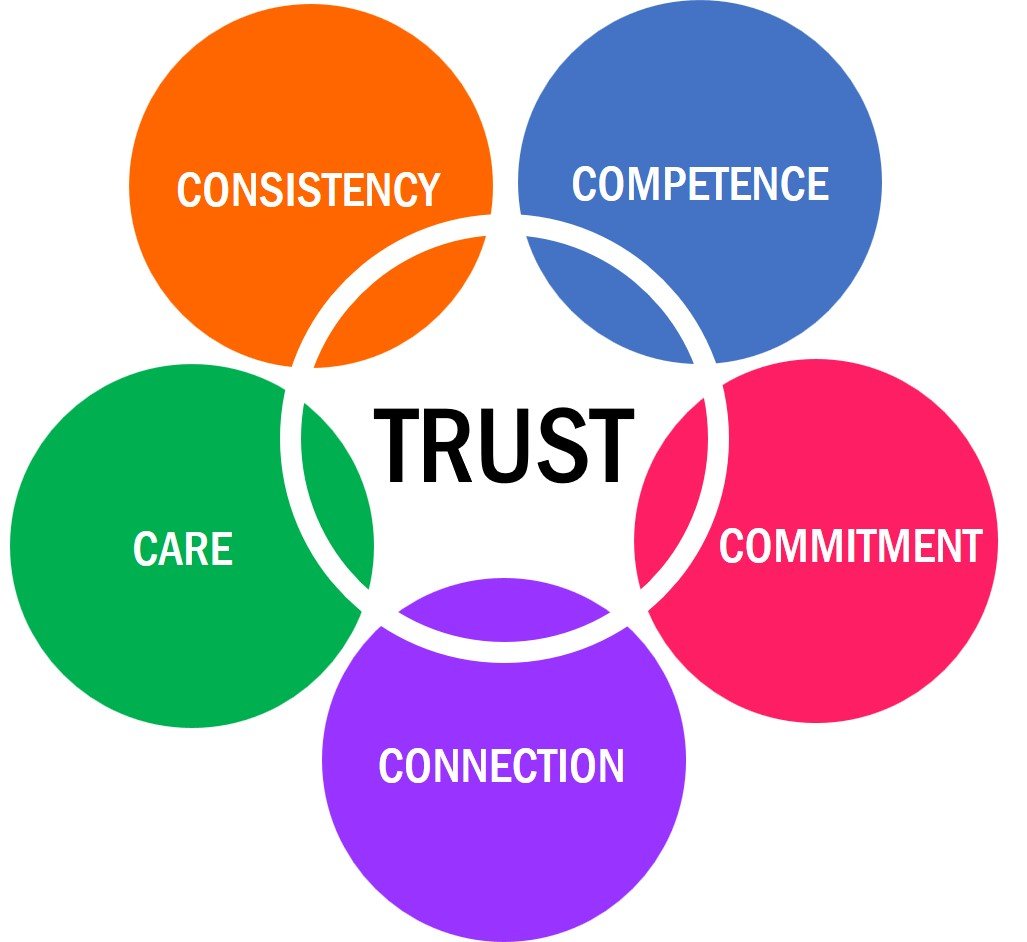
FIVE 'C'S OF TRUST

by Leslie Rohonczy, Executive Coach, IMC, PCC | ©2023 | www.leslierohonczy.com

Vulnerability-based trust is the most powerful kind of trust we can cultivate; it means that we feel safe enough to reveal our vulnerability to someone else and know that they won’t use it against us.  Each of us pays attention to distinct aspects of trust, depending on our own unique wiring. As you read the following ‘Five C’ descriptions, see if you can sense your own primary trust attribute, and which one might be your lowest.

FIVE ‘C’S OF TRUST

Excerpt from ‘COACHING LIFE: Navigating Life’s Most Common Coaching Topics’, by Leslie Rohonczy

Amazon, 2023

CONSISTENCY: This aspect is all about reliability: doing what we say we will, and being intentional about our yeses and our nos. This consistency is observed in our actions, in how we hold ourselves accountable for our commitments and follow through by doing what we say we’ll do, when we say we’ll do it. When people learn that they can’t depend on us to keep our promises – no matter what great excuses we may have – it’s a trust-killer. We tend to judge others’ reliability in terms of time and quality. Slow to return emails? Cancel plans often? Break promises? Show up late to events? What message does our behavior send? We should never make promises we can’t keep, even if we’re just trying to calm a tricky situation.  We’ll build stronger trust with others if they know that we consistently follow through and do what we say we will.

COMPETENCE:  Others will be more concerned with our abilities, standards, and skills: when we know what we’re talking about, people believe that we are a credible source of information and insight. Our competence and credibility are a combination of how we present facts and theory, our skills and knowledge, and our ‘presence’ (the way we look, act, talk, and communicate). Humility is also a key aspect: when we pretend to know something that we actually don’t, and others see through our smoke and mirrors (as they often do), we become untrustworthy to them.

COMMITMENT: Some people will be more focused on the passion in our eyes as we deliver our message, so that they can connect to the deeper purpose that inspires us. Making our commitments visible helps us inspire the trust of others. It’s reassuring to see someone fully committed, because it lets us know that we can depend on them, especially when facing challenges. When our commitment is solid, we can engage in productive conflict that moves everyone forward. Some believe that trust creates harmony, when in fact, trust allows us to have productive conflict that won’t damage our relationship, and often strengthens our connections as a result.

CONNECTION: Speaking of connection, when we focus on creating close, open, and accepting connections, others feel comfortable talking to us about difficult things. People who are good at this aspect of trust walk their talk and are willing to get emotionally close to others. Building this connection requires us to be transparent about our thoughts and emotions. When we’re accepting and non-judgmental, people open up to us more easily because they trust that we won’t judge or criticize them. They feel seen and heard and can be themselves when they most need to.

CARE: Finally, to build vulnerability-based trust, we show that we’re concerned with the welfare of the other person, rather than pushing our own agenda solely for our benefit. Others may perceive us as self-interested if we care more about appearances, about getting our own way, about being liked or creating a favorable impression. Caring people are typically good listeners and genuinely want to understand others’ experiences and emotions. They have a desire to help and consistently show they care through their words and actions.

We each have a preferred aspect that we habitually start with, and so it’s important to understand that what engenders trust for one person might not resonate with another. For example, I look through the lens of consistency first: if you show up on time, keep your promises, and do what you say you’ll do, I trust you. It’s really that simple. But not everyone prioritizes consistency the same way. For example, consistency is the lowest one for my husband (a.k.a. ‘The Big Handsome’), who favors the Care aspect. He monitors for high self-orientation behaviors like someone putting their own needs or interests above the greater good and sees these as signals that they may not be trustworthy. If we can’t connect with someone enough to build trust, it may just be that they’re looking through a different lens than we are.

PRACTICE: PERSONAL TRUST MEASURES

Think about the last time you required someone to trust you. Perhaps it was related to the family budget, a new project at work, or a travel adventure. Find an example that you can evaluate in hindsight, and reflect of these questions:

1.       How did you demonstrate that you care?

2.       How did you attend to consistency?

3.       How did you establish your competence?

4.       How did you demonstrate your commitment?

5.       How did you build your connection?

Now, think about how the other person reacted. What trust aspect(s) do they seem to value most? What indicators do you observe that inform that opinion? How might you adjust your approach next time?

IMPACTFUL LEADERSHIP CH.E.C.K. LIST

By LESLIE ROHONCZY, Executive Coach (PCC), Integral Master Coach (IMC); Author of Coaching Life: Navigating Life’s Most Common Coaching Topics


Here’s an interesting lens through which to look at the role of a leader: the Impactful Leadership CH.E.C.K. List. These five high-performing leadership competencies can help employees become successful, and organizations achieve their strategic objectives.


CH  |  CHALLENGE WITH COMPASSION

Explore your own leadership assumptions and potential limiting beliefs: whose assumptions are they, and what’s driving them? How do you know they’re real? What evidence or proof can you find to confirm or disprove them?

What limiting belief prevents you from acting, or causes you to second-guess your decisions? Challenge processes and simplify how work gets done: are ‘old ways’ getting in the way of new growth and potential?

How might employees change the way they work to improve efficiency and effectiveness, customer experience, and their own employee engagement? How might you?

Increase the level of challenge, responsibility, and support: how might you offer employees more responsibility as a growth opportunity? What do you need to do differently during this growth opportunity, to support their learning? How can you support the decisions they make, without punishing mistakes during this learning opportunity?


E  |  EMPOWER WITH CLARITY

Be discerning about the important decisions that belong at your leadership level, and push decision-making down to appropriate lower levels where you can. If we’re positioned as the decision-maker for all things, we become the bottleneck that slows the team down, and our employees don’t learn the critical decision-making skills that will allows them to become decisive high performers.

Avoid overturning employee-made decisions wherever you can. One of the quickest ways to kill an employee’s trust and self-confidence is to first empower them to decide, and then to overturn it because it’s not how you’d have done it. Let them experiment and learn where possible (and it’s likely more possible than you may think) and hold them accountable for the outcomes in a positive, growth-minded way.

Facilitate the plan-do-check-adjust learning process (PDCA)  by asking employees to explain how they will plan their approach, then allow them room to enact that plan, and to check their own results and invite feedback from others, and finally, to adjust their approach based on their insights. Asking questions along the way helps employees synthesize their thinking as they go, and helps you track and stay connected to your team’s work.


C  |  COACH WITH COURAGE

One of the most top-of-mind topics for employees is their professional development and career progression. Spending time coaching employees on how to be successful builds trust and helps them feel supported. Investing in their growth is good business.

Have courageous conversations. Don’t shy away from providing observations and feedback about what could be holding them back. We need to provide clear feedback with purpose, to help employees succeed, and we need to be even more open to receiving their feedback! Courageous conversations are a two-way street.

Connect the dots for employees to help them understand the organization’s purpose, mission, vision, and values and how their work contributes to achieving the strategic direction and core mandate. Watch for ‘orphan’ work that the employee is doing and ask curious questions about how that work connects to the team’s objectives; stay open to the answers – they may be off-track, in which case you can redirect them; or they may be exploring a new opportunity that could bring much-needed innovation.

K  |  KNOWLEDGE SHARING

Develop your storytelling super-power. When we can share real examples from your experiences – without making yourself the ‘hero’ of the story – you can impart the learning that really resonates (humans learn best through stories, after all).

Model what it looks like to be a ‘continuous learner’, by regularly sharing new information and a-has with employees. Sharing your personal gaps and how you’re working to close them can reinforce to the people you lead that curiosity, learning, experimenting, failing, and sharing perspectives are normal and expected parts of your team culture.

Lean into humility and seek out feedback from employees on how to become a better leader-coach for their specific employee needs. When you ask, and then receive this feedback, you may notice the urge to defend or explain. Instead, explore what was unknown, or uncomfortable – that’s where the gold nuggets are for growth as leaders. Come back to employees after reflecting on their feedback, to share insights, and to thank them for creating this new awareness!


CHECK AND ADJUST

One of the fastest and most effective ways to change a behavior or build a new muscle is by observing yourself in action, reflecting on what you intended and what results you actually noticed, deciding what minor adjustments to make, then trying again. It should be a continuous cycle of noticing and improving, rather than a ‘one-and-done’ activity that checks a box.

In addition to your own ‘noticing’, it’s also a great practice to seek feedback from employees on how you’re showing up, and what adjustments they would recommend or appreciate.

Develop a system to help you track your progress: define what you’re working on in a single sentence (e.g.: growing trust with employees), and what observable indicators you’ll watch to tell you how your development is going (e.g.: employee opinion surveys; one-on-one employee meetings focused on development, not just output; reduction in conflict requiring your intervention).

BAG OF STONES Practice

By LESLIE ROHONCZY, Executive Coach (PCC), Integral Master Coach (IMC); Author of Coaching Life: Navigating Life’s Most Common Coaching Topics


PRACTICE: ‘BAG OF STONES’

When we experience overwhelm, it can feel like we’re carrying the weight of the world on our back. I wrote ‘Bag of Stones’ (see video below), as a powerful coaching practice to help us navigate our overwhelm and figure out how to lighten our load. Give this guided visualization a try, to help you identify what’s most important to you, what you no longer find useful, and what you can let go of. You’ll need a pen and your journal to answer the following questions:

Imagine you are a traveler walking along a path, and you’re wearing a large backpack. It’s uncomfortably heavy, and the longer you wear it, the more your back aches. You know it’s time to lighten your load, so you place it on the ground, open the top, and inside you discover three bags. The first one is made of the finest silk; the second is made of sturdy cotton, and the third is made of old burlap.

1.       You open the silk bag and discover that it contains riches beyond your wildest dreams: diamonds, rubies, and emeralds. These precious items represent the things that are most important in your life; things that fill you up and make you feel nourished, grounded, connected, and fulfilled. For me, these are my family, my music collaboration, and my creativity. What are your treasures? Name them, and then imagine repacking each precious item one at a time, pausing to deeply feel gratitude for each one before you place it back in the silk bag. Imagine placing the silk bag back into your backpack to bring along with you.

2.       You open the second bag and discover that it contains many smooth stones that have been polished by time. These represent the things that may have been useful in the past, but no longer serve you anymore. However, they may be valuable for somebody else who is not as far along the path as you are. For me, it was striving for career achievement. I’m done with this kind of striving, but it could be useful to someone at the beginning of their career who is trying to make their mark in the world. What stones are you ‘done’ with? Name them, and then visualize yourself leaving them at the side of the road to offer to another traveler. Visualize placing the empty cotton bag back in your backpack.

3.       You open the burlap bag, and discover it’s full of dirty, jagged rocks that represent your limiting beliefs, bad habits, unproductive behaviors, negative or painful experiences, self-judgment, and unhealthy relationships that you don’t need to carry around anymore. These rocks just create pain that distracts you from the true treasures in your life. What do your jagged rocks represent? Name each one, and then visualize throwing them over a nearby cliff, one by one. Place the empty burlap bag back in your backpack. Then strap this lighter backpack on your back and continue your journey, feeling a sense of lightness in your body and spirit.